Best customer engagement platforms for mobile and web in 2026
Last update: August, 2026
TL;DR: A best customer engagement platform list is useful only when it narrows the definition and makes the comparison criteria clear. This one adopts three criteria: omnichannel messaging built into the platform itself, a unified customer profile from a built-in CDP, and analytics that break results down by channel, campaign, and funnel drop-off. Helpdesks, survey tools, and CDP-only platforms are excluded based on that definition. Netmera and five other platforms get measured against it, along with what to check before choosing one.
This post covers the best customer engagement platforms available in 2026 using a clear, and tighter definition. This matters because as customer data volumes grow and AI capabilities become table stakes, choosing the wrong foundation becomes an expensive mistake.
The platforms included here combine:
(1) omnichannel messaging across push, email, SMS, WhatsApp, in-app, and web
(2) a unified customer profile built from behavioral, transactional, and demographic data through a built-in CDP
(3) analytics that connect individual channel activity to downstream revenue outcomes: conversion rates, funnel drop-offs, ARPU, and retargeting on non-converters. Helpdesks, survey tools, and CDP-only platforms are not included.
What unified customer engagement software is designed to solve
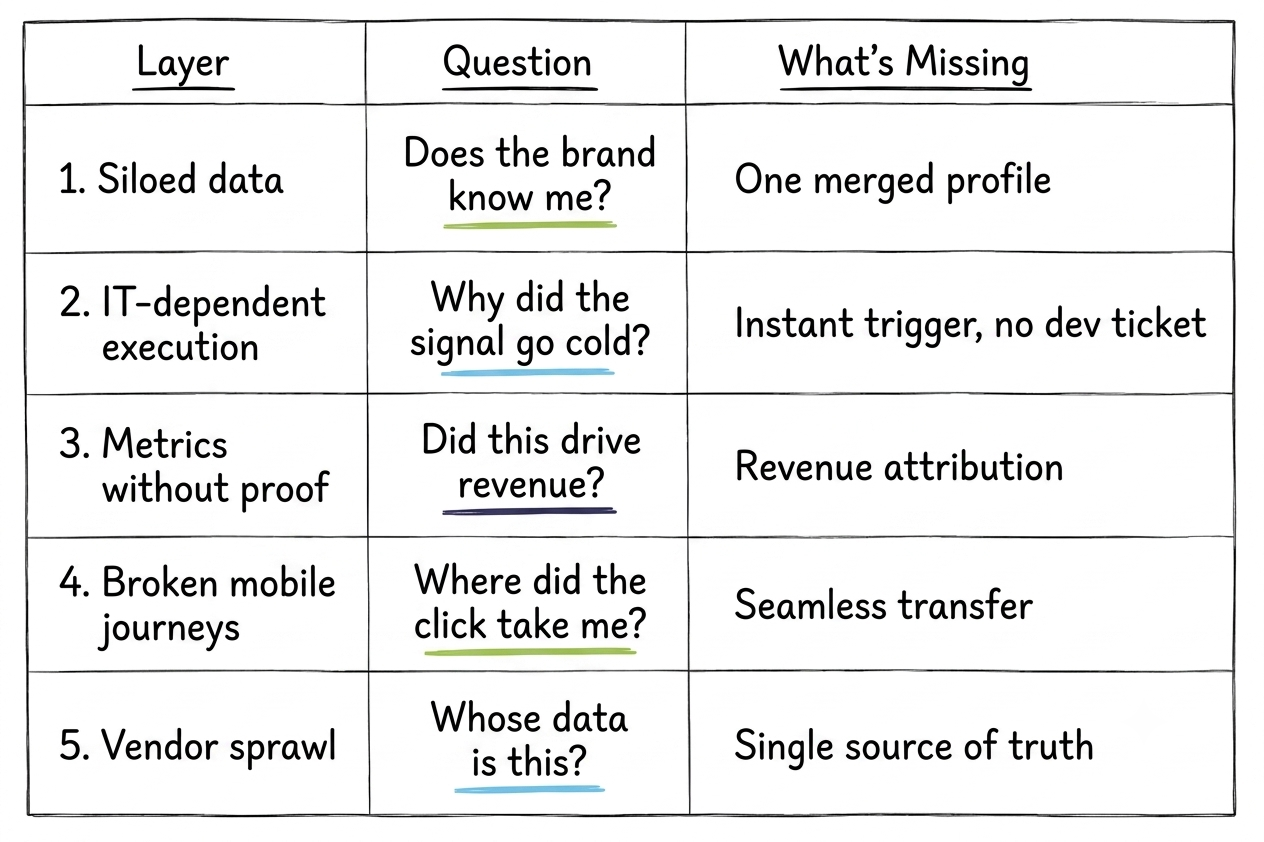
Siloed data. A user browses a product on the website, adds it to the cart in the app, then receives an email promoting the very same item they just bought. This happens because neither tool has a complete view of the user. The experience tells the user: this brand doesn’t know who you are or what you’re interested in.
IT-dependent campaign execution. A marketer identifies a churn signal. Launching a campaign that responds to it means raising a developer ticket to tag the new event, wait for it to reach the CDP, and connect it to the right channel tool. That ticket waits for sprint prioritization, and the signal goes stale while it moves through the queue.
Surface metrics without revenue proof. Teams running omnichannel customer engagement across separate point solutions know this well: campaign execution happens in one tool, analytics in another. That means exports, manual joins, and one-off integrations every time anyone needs to answer the question “did this drive revenue?”
Broken mobile journeys. A user clicks an SMS campaign, downloads the app, and lands on the homepage instead of the promoted content. McKinsey’s 2025 research: over 80% of consumers use multiple channels during product research or purchase, which means every broken handoff shows up somewhere in the funnel.
Vendor sprawl and blast messaging round out the list. When each channel runs on a different tool, no single system knows what a user did on any other channel. Building a segment that reflects real behavior across channels means exporting from four or more places and reconciling it by hand, a job which is quite time-consuming and inefficient.
In a previous post, we discussed what a customer engagement platform with built-in cdp offers, and how to evaluate vendors (a checklist). The post also includes customer stories across finance, telecom and ecommerce.
How this list was built
Three criteria determined inclusion: native channels across customer touchpoints, a unified customer profile/built-in CDP, and analytics that break down results by channels, campaigns and drop-offs. We looked into the platforms where all three are offered in the same place.
Netmera appears first because we wrote this post and this is our website. We know our own platform from the inside, with a depth of product knowledge we cannot match for any other tool here. For every other platform on the list, we rely on third-party reviews, analyst reports, vendor documentation, and buyer conversations.
Netmera: Omnichannel customer engagement platform built for mid-markets and enterprises
What Netmera is and who it’s built for
Netmera is a customer data and engagement platform for digital marketing, CX, and product teams at mid-markets and enterprise companies. An activation centric built-in CDP layer unifies customer data in real time. Omnichannel engagement runs across push, email, SMS, WhatsApp, in-app, and web. Analytics connect campaign activity to outcomes: conversion rates, ARPU, purchase frequency, and retargeting on non-converters. All three run in one system.
The platform was built for mobile-first from the start, and has since developed web engagement tools, web personalization, and AI product search and recommendation capabilities for websites.
Primary markets include Türkiye, MENA, Azerbaijan, Africa, and the UK, with enterprise deployments in banking, fintech, retail, ecommerce, telecoms, media, and OTT. At scale, the platform handles over 30 billion behavioral data points and sends 30 billion notifications monthly.
Unified data without IT dependency
Behavioral data enters Netmera from mobile SDKs, Tagless Data Capture, REST API, FTP file imports, and webhooks. All of it feeds into a single customer profile, updated in real time.
Case study: BeIN CONNECT built a segmentation strategy that identified at-risk users and surfaced personalized content recommendations.
This behavior-based win-back sequence increased new subscriptions by 3x, active users grew 15%, and retention improved 10%. Knowing which users to target, with which content, through which channel, is the work the unified profile makes possible.
With Tagless Data Capture, behavioral data from websites and apps flows without developer tagging cycles, so new events are available for segmentation on the same day.
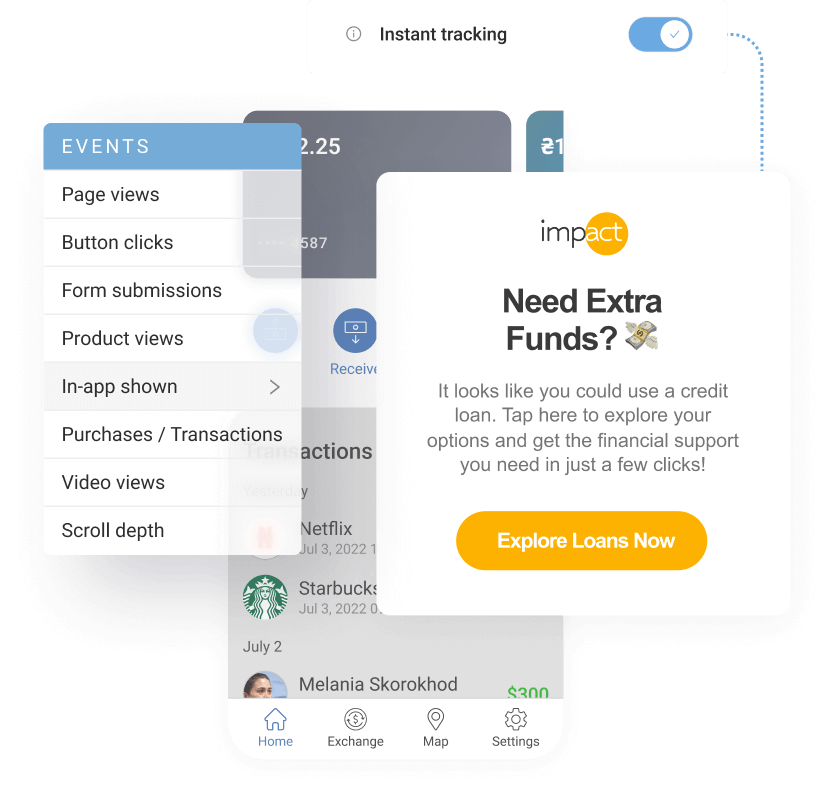
Event types generated and tracked in Netmera
Once the SDK is integrated, Netmera starts tracking events in three categories. Automated events, like app installs, app opens, push receipts, and time in app, are captured without any setup.
Pre-defined events cover the standard actions most apps need to measure, from login and search to purchase and cart changes, and teams turn these on as needed.
For anything outside that list, Netmera’s global event collection recognizes events sent through a generic events and params structure and registers them automatically as custom events, available in Event Insight for analysis. New event types don’t need a predefined schema before they can be tracked.
Cross-channel journey automation
Netmera’s Journey Builder is a no-code, drag-and-drop tool with event-based and time-based entry triggers, dynamic branching based on user actions across channels, and real-time analytics at each step.
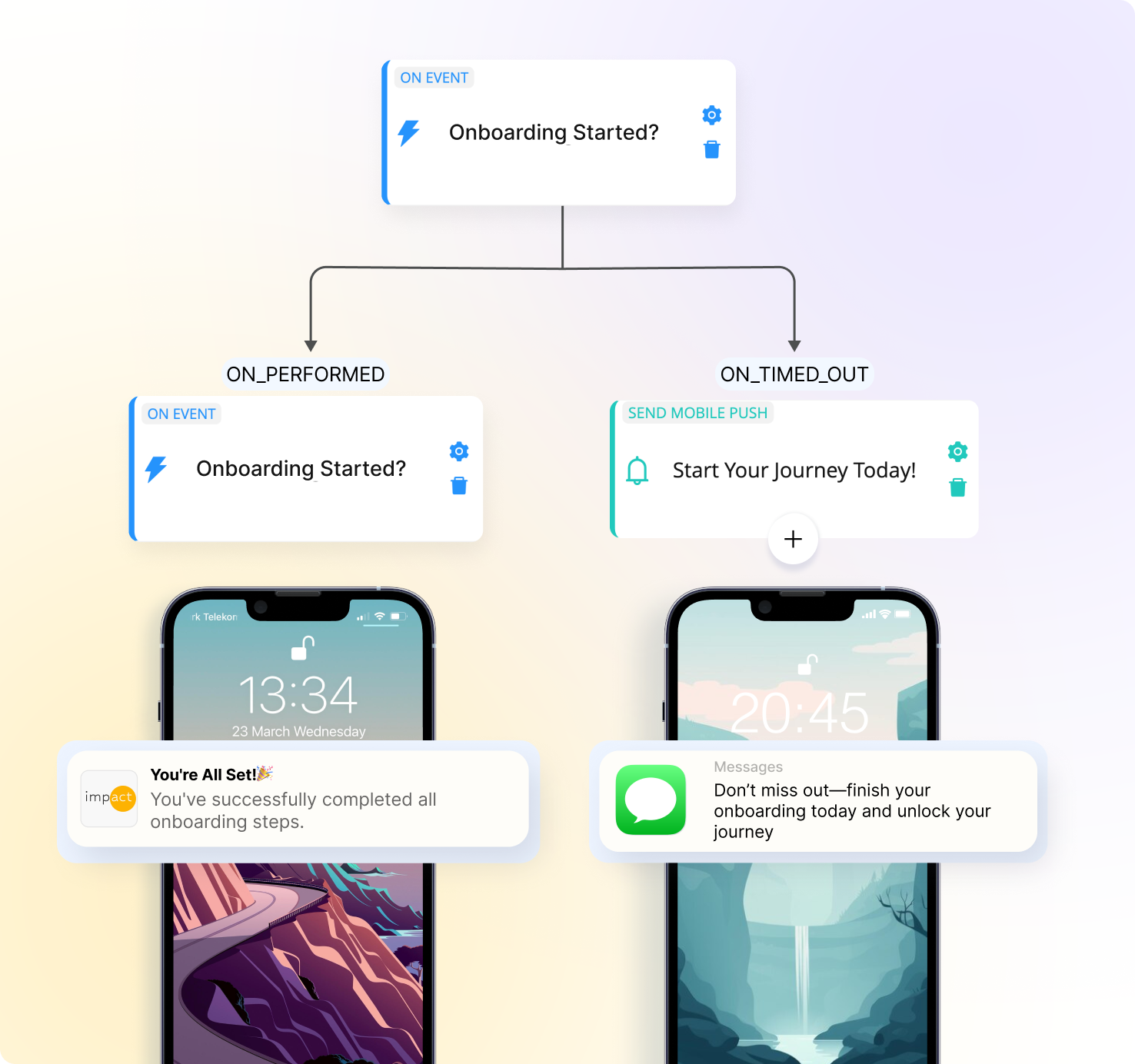
When you’re making timing decisions for each push message in a journey, AI takes the guesswork out of it. Best time delivery analyzes 60 days of each user’s app activity to identify their highest-engagement hour, per weekday, per person.
One journey can coordinate push, email, SMS, and in-app messages with conditional logic, without a developer touching the configuration.
When Turkcell Pasaj needed to recover abandoned carts, they automated push notifications against cart abandonment events. Monthly revenue grew 150% and conversion rate doubled from 4% to 8%. The project received two SMARTIES Awards from MMA Türkiye and MMA Global.
UPTION’s challenge was different: a churn segment that needed recovery across three languages with no development team involved. They used Journey Builder to build a 10-message sequence, and the churn segment shrank 16.6%. Among users who entered the journey, 22.6% converted.
AI and predictive capabilities
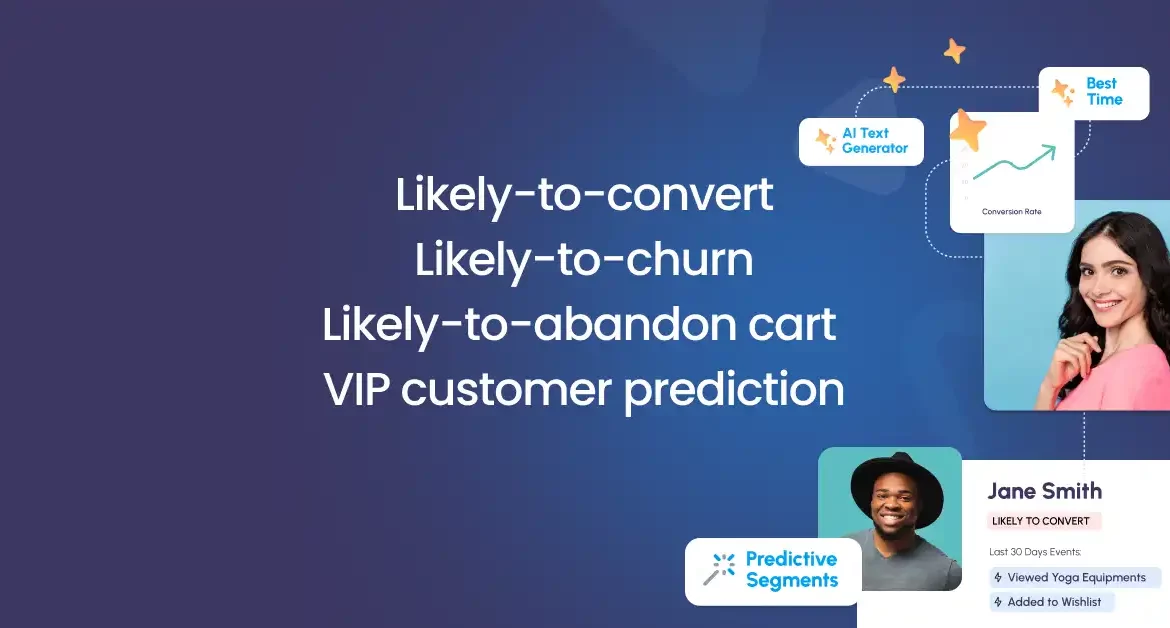
Netmera’s predictive segments run across various models including churn risk, purchase intent, and high-value spend. Each uses configurable time windows and precision thresholds.
You set a high-precision threshold of confidence when you’re allocating costly offers or working in a regulated industry where a misfired campaign carries real consequences. Or you open the threshold to lower when the goal is awareness and broader reach matters more than precision.
Netmera’s agentic AI reads live behavioral data and answers performance questions in natural language. It can also build full campaign configurations for team review before anything goes live.
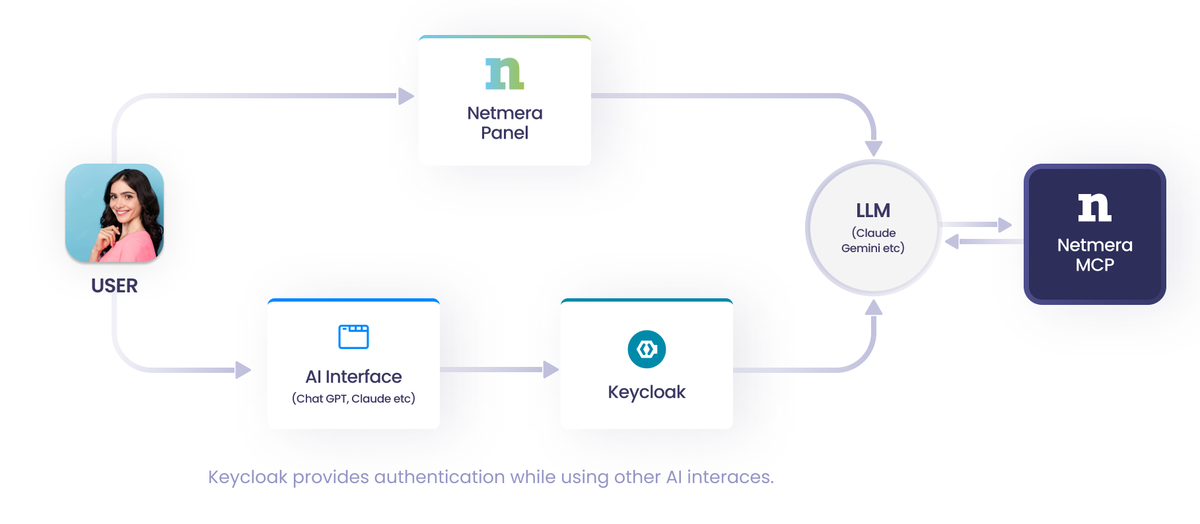
If you’re more comfortable working in Claude, ChatGPT, or another MCP-supported AI tool, the Netmera MCP server brings your account data into that environment. Here’s an example: a marketer notices a session decrease in a cohort. They open Claude, ask the Netmera connector to pull the segment data, review it in plain language, and refine the engagement campaign brief, all without switching dashboards.
For brands with a ChatGPT App, REST API integration captures conversational interactions as structured events that feed into customer profiles and trigger cross-channel journeys.
Mobile journey continuity and channel reach
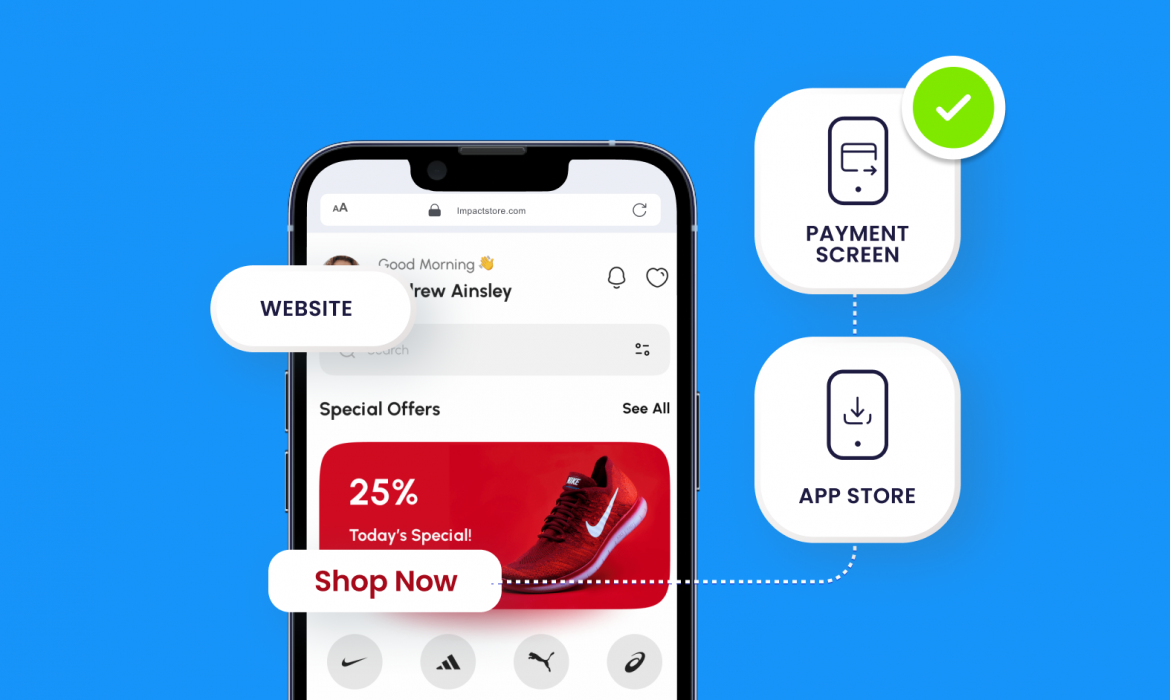
A journey breaks when a user who clicks a WhatsApp campaign doesn’t have the app installed and lands on the homepage after download.
Of the platforms in this list, Netmera is the only one with native deferred deep linking built into the engagement layer (as of this writing). The user clicks the campaign link, gets directed to a customized app store page, and lands on the promoted content after installation. Attribution tracks the complete funnel from campaign click through install to first in-app action.
Geofencing adds location-triggered messaging by combining behavioral and location data. Push, web push, web popups, WhatsApp, email, in-app, and SMS all run from Netmera, as a mobile customer engagement platform where channel continuity is native rather than assembled from integrations.
Case study: Chippin, a mobile payment and loyalty app used across retail partners in Turkey, combined geofence with broadcast push to reach users at the moment of highest intent. Geofence messages averaged an 8% open rate and generated 30 to 60 times more revenue per message than broadcast push, driving roughly 60% of total campaign revenue from a fraction of the audience reached.
Revenue analytics
Funnel visualization in Netmera shows exact drop-off points across multi-step flows, whether that’s checkout, onboarding, or a loan application. Anomaly detection alerts when a step shifts unexpectedly. Non-converters can be exported directly for retargeting.
Along with that, you can also define conversion windows. This is a time limit between the first and last step, in minutes, hours, or days. Or set it by session instead, so the window is measured in how many sessions pass rather than how much time does.
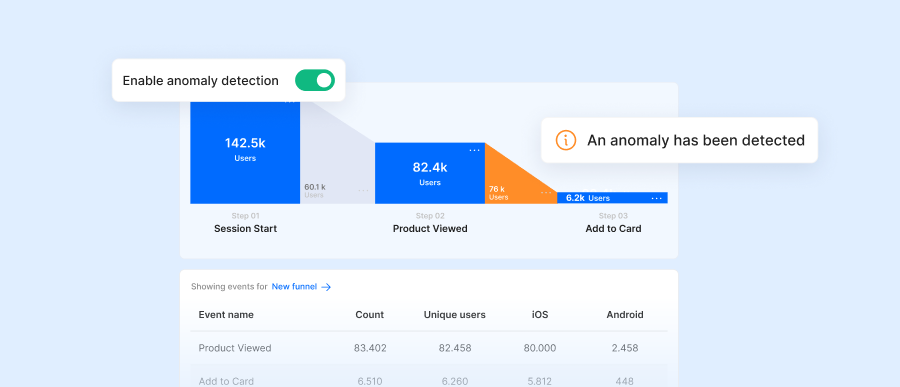
Hot Conversion and Hot Revenue metrics link campaign performance to business outcomes, and the native dashboard tracks ARPU, App Conversion Rate, and purchase frequency.
Each channel also carries its own detailed reporting, and the native dashboard gives you a single view of activity across all channels you’ve activated in Netmera, with daily and monthly fluctuations alongside AI-generated performance insights.
Case study: N Kolay used funnel tracking and behavioral segmentation to identify where users were dropping out of their premium membership qualification process. Following a three-step automated push journey, the rate of users completing all five required tasks jumped 119.6%. Conversion from the initial deposit to full premium membership more than doubled.
In Netmera, you can also create custom campaign tracking boards in minutes. A retention team watching weekly active users might need to check the same trend by platform next month, or add a breakdown by country the week after. Insight Boards keep that flexible.
Each insight combines one or more tracked events into a metric, whether that’s raw event count or unique users. Update the definition once, and every board using it reflects the change, so teams working from different boards are still reading the same number.
Security and compliance
Netmera holds ISO 27001 and ISO 27017 certifications. The platform also undergoes continuous independent security audits by institutions including PwC. Fully GDPR and KVKK compliant.
Beyond the audits above, customer security teams regularly run their own assessments against Netmera as part of vendor due diligence, and Netmera’s internal team reviews the security posture on a recurring schedule. Each customer’s environment runs on isolated virtual machines, so one customer’s data and infrastructure stay separate from every other customer’s.
For client engagement platform requirements in regulated industries, on-premises deployment is available.
See this post about how Netmera protects your customer data and ensures full compliance.
Pricing
Netmera prices on a monthly active user basis. The core package covers data collection and analytics with the built-in CDP. A customer experience and engagement module adds the channel layer, including journeys, segmentation, and campaign execution. Communication Hub and Live Activities are available as additional modules on top of that. Multi-year contracts come with discounted rates.
Best for
Enterprise and mid-market companies in Türkiye, MENA, the UK, Africa, and Azerbaijan, operating in banking, fintech, retail, ecommerce, telecoms, media, and OTT. Particularly suited for teams running complex omnichannel journeys without developer dependency and for organizations in regulated industries that require on-premises deployment or independent security audits.
Schedule a demo to see how Netmera handles data, engagement, and analytics in one platform.
Other platforms worth evaluating
The top customer engagement platforms evaluated here were selected based on third-party reviews, analyst reports, and what prospects and customers tell us during evaluation calls. If you’ve read the Netmera section and are confident it’s not the right fit, these are the ones worth a closer look.
Braze

Braze is the publicly traded enterprise standard for cross-channel engagement. Its core differentiator is stream processing feeding Canvas, the journey orchestration engine, which spans multiple channels like SMS, push and email.
The acquisition of OfferFit added reinforcement-learning decisioning, now available as BrazeAI Decisioning Studio. Pricing is not published; third-party estimates place enterprise contracts at $60,000–$200,000+ annually.
Best for: Enterprise brands, with engineering resources and budget for advanced cross-channel orchestration at scale.
Insider One

Insider, rebranded to Insider One in late 2025, is a Turkish-founded platform known for advanced personalization features. Like Netmera, it has a native CDP, combining various messaging channels and the Sirius AI suite.
The Architect journey builder makes it one of the more complete customer engagement tools in the market.
Pricing is not published; it operates on an enterprise sales model.
Best for: Mid-market to enterprise brands wanting omnichannel personalization with a native CDP.
MoEngage
MoEngage is the analytics-first platform in this category. The Merlin AI suite covers predictive best send time, channel preference, next best action, and churn prediction. MoEngage Inform handles transactional alerts.
An MCP server connects MoEngage to Claude and ChatGPT, matching a capability Netmera also offers. Pricing is not published.
Best for: Mid-size to large companies in retail, fintech, media, and telecoms, particularly APAC and MENA teams seeking analytics depth at a lower cost point than Braze.
OneSignal
The platform’s clearest differentiator is pricing transparency: a free tier with unlimited mobile push, and published pricing starting at $9 per month. Free Journeys automation spans push, in-app, email, and SMS. An AI Message Composer handles push copy generation. RCS support includes automatic SMS fallback for guaranteed delivery.
Best for: Mobile-first startups, SMBs, gaming, and e-commerce companies that need fast, reliable high-volume messaging without complex setup.
Customer.io
Customer.io’s model is built around events and workflows rather than contacts and campaigns. Three core products cover Journeys (automation), Data Pipelines (a built-in CDP and reverse-ETL layer), and Parcel (email editing). The April 2026 release added an AI Agent, LLM Actions, and native WhatsApp and LINE channels.
Best for: Product-led SaaS, fintech, and edtech companies with technical teams comfortable with data pipelines and event-based logic.
What to consider before choosing a customer engagement solution
For a full evaluation framework, see our detailed CEP buyer’s guide.
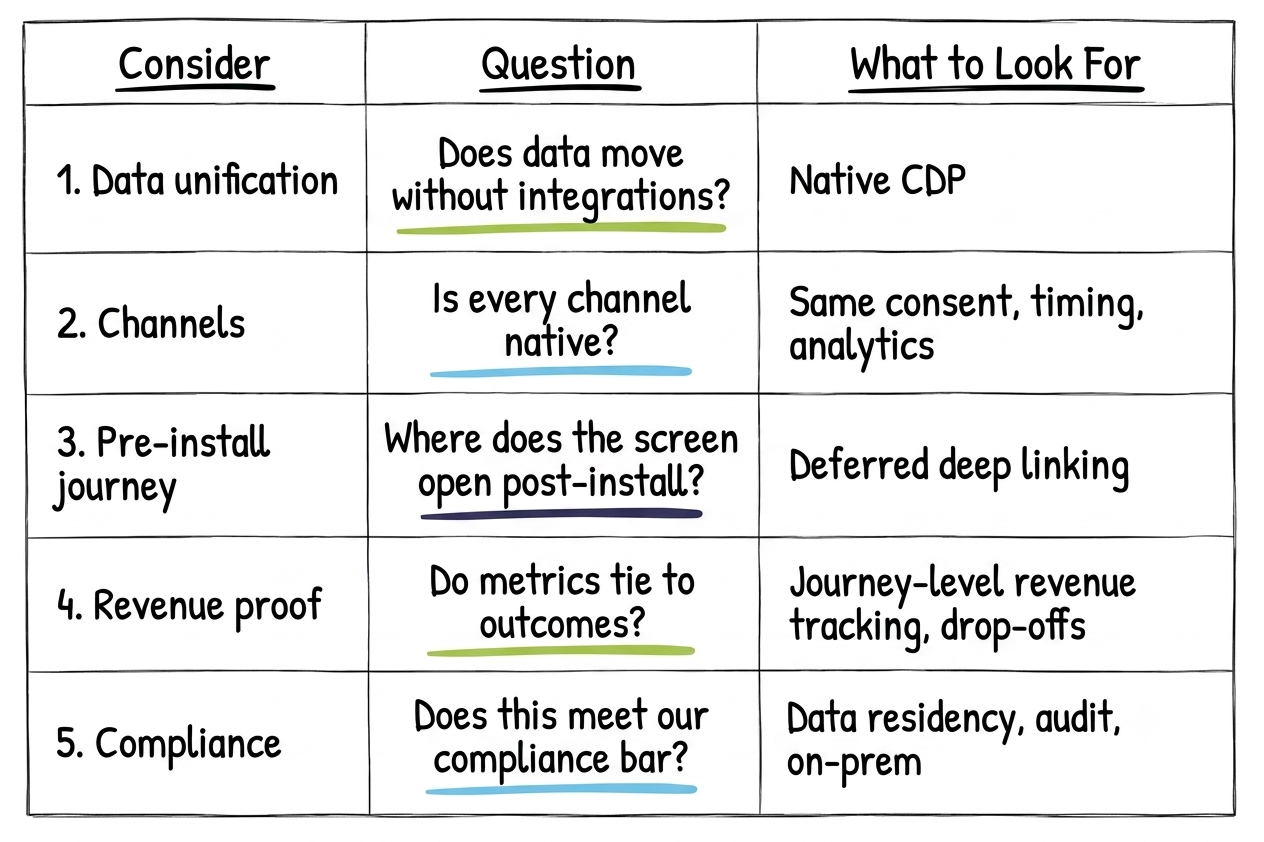
Native data unification.
47% of martech decision-makers name stack complexity and data integration as key blockers to value from their tools. A platform with a native, activation-centric CDP eliminates that integration layer, so a behavioral signal can become a live campaign the same day.
Campaign independence.
Can a marketer build a segment, configure a journey, and launch without filing a developer ticket? No-code journey builders and automatic event tracking are how that independence works in practice.
Channel nativity vs. channel integration.
Push built into the journey engine behaves differently from push connected via a third-party. Consent management, analytics, and timing controls should work identically across every channel.
The pre-install journey.
Ask each platform whether it supports deferred deep linking. A homepage landing after the app install breaks the journey at the moment it matters most.
Revenue proof over engagement proof.
Funnel visualization, journey-level revenue tracking, custom insight boards, and export for retargeting are the checkpoints. Opens and clicks are a starting point. Revenue impact is what you’re actually measuring for.
AI that runs on real-time data.
Ask what data source the model uses and how recently it was updated. A model running on yesterday’s batch export produces different outputs than one reading from a live behavioral stream.
Compliance for regulated industries.
Data residency, regulatory certification, and independent audit validation are often procurement requirements. On-premises deployment may also be mandatory depending on your regulatory framework.
Why teams choose Netmera
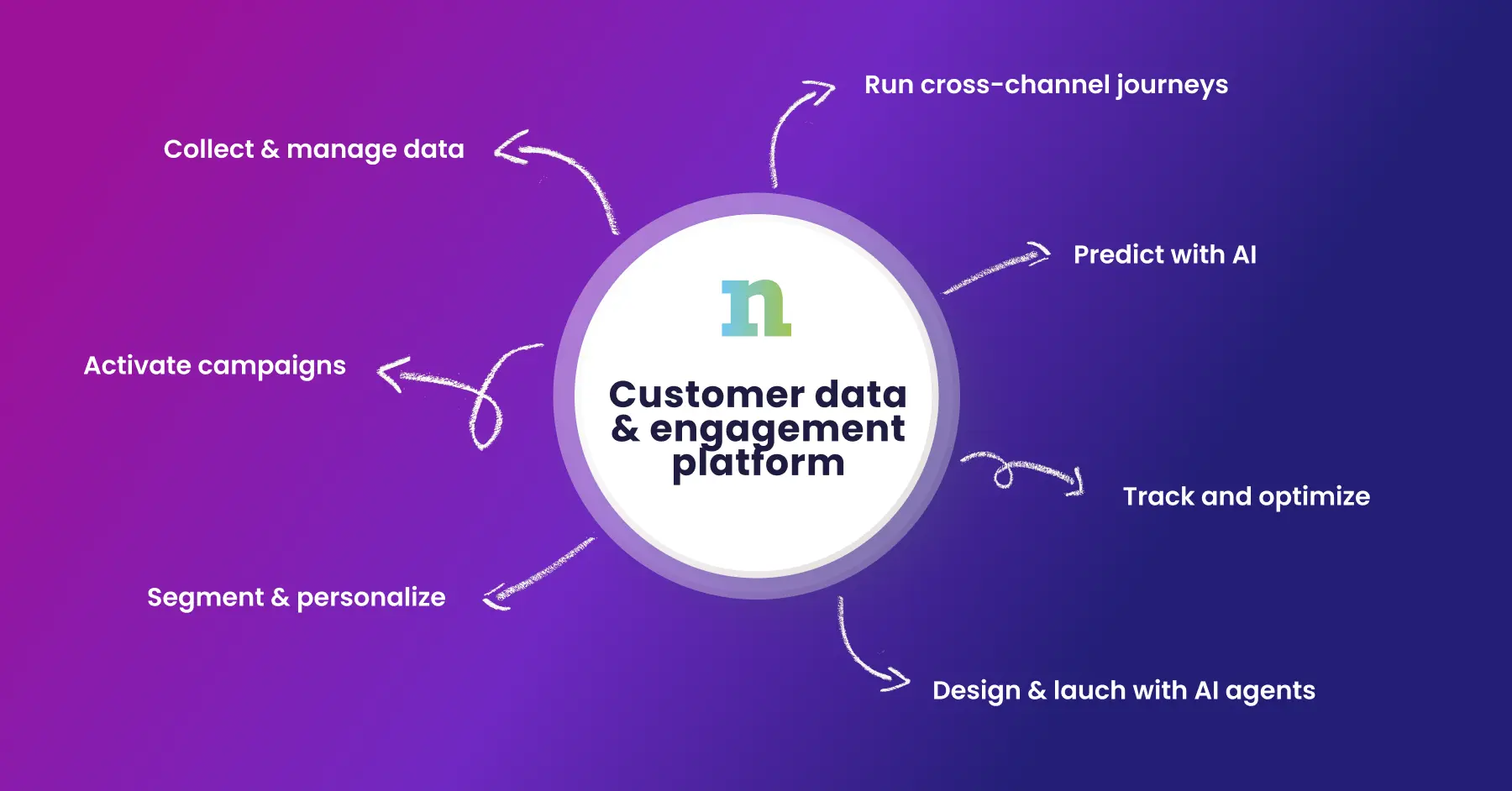
SAP’s Global Engagement Report found that 64% of consumers want organizations to engage with them as an individual, acknowledging their personal values, needs, and interests. Reaching that standard requires data, execution, and analytics working from the same foundation.
For teams where those three things need to run without developer dependency, Netmera’s CDP, omnichannel engagement layer, and revenue analytics sit in one system. That combination is available in cloud or on-premises deployment, with the compliance certifications regulated industries require. The track record spans banking, fintech, retail, telecoms, media, and OTT teams in Türkiye, MENA, the UK, and globally.
“By combining automation, segmentation, and personalization, we achieved a major lift in active users,” said Esra Selen Demir of Tam Finans, “all while cutting campaign setup time by 50%, with zero need for developer support.”
Elif Zeynep Pehlivaner, CDO at UPTION, described it this way: “Netmera gave us two critical capabilities in one place: AI to predict churn risk and Journeys to automate recovery. The 22.6% conversion rate proves the system worked. Better still, app activity increased 7.7% during the intensive campaign period, showing genuine re-engagement.”
Schedule a demo to see how Netmera works for your use case.
FAQ: Best customer engagement platform questions
A customer engagement platform is software that unifies customer data across channels and uses that data to deliver personalized, automated communication across email, SMS, push, in-app, WhatsApp, and web. The key distinction from single-channel tools: every message shares the same customer context and the same profile.
Customer engagement platform examples include Netmera, Braze, Insider One, MoEngage, OneSignal, and Customer.io. They differ by industry focus, channel depth, pricing model, and whether they include a native CDP.
A CDP (Customer Data Platform) unifies customer data but typically requires separate tools to act on it. A CEP (Customer Engagement Platform) adds campaign execution and analytics on top of that unified data. Platforms like Netmera combine both in one system, removing the handoff between data and action.
Start with three questions: Does the platform unify data natively or require a separate CDP? Can your marketing team launch campaigns without developer support? Does reporting connect to revenue metrics? Your answers determine whether you need a point solution, or an enterprise-grade platform that brings unified data and engagement layers together.
Burcu Ulucay – Content Marketing, Netmera