Email marketing best practices: From segmentation to cross-channel orchestration
Last update: July 2026
TL;DR: Email remains one of the highest-returning channels in digital marketing, but only when segmentation, personalization, automation, and cross-channel coordination work together into a real email marketing strategy. This post breaks down six best practices and explains how email automation triggers work and why they outperform scheduled campaigns. It also maps the right email types to industries like e-commerce, banking, media, and telecom, and compares point solutions with full customer engagement platforms to help you decide what your program actually needs.
Email has been declared dead at least a dozen times. “Inboxes are crowded.” “Attention is short.” And yet it remains one of the highest-returning channels in digital marketing (statistics below), with the most direct access and the longest shelf life in the customer journey.
Because it carries weight. Order confirmations, personalized recommendations, follow-ups that arrive at the right moment. Customers save emails. They return to them.
But that shelf life doesn’t happen by accident. It requires behavioral data that updates in real time, automation that responds to what customers do, and coordination across every channel they touch. An email marketing strategy built on that foundation needs both structure and execution: the six best practices below cover what it takes to build an email program that performs at that level in 2026.
What makes an email marketing strategy
An email marketing strategy is broader than the practices or tactics that execute it. Our inspiration is what Richard Rumelt describes as a good strategy in his book Good Strategy Bad Strategy: a strategy diagnoses the real challenge, sets a guiding policy for it, and only then defines the actions that follow.
In digital marketing, this strategy can be built in two ways. Email works as a standalone channel: automated, personalized, but the only place a brand talks to its users, or paired loosely with something like SMS without real coordination. Or email works as one piece of an omnichannel engagement strategy, where push, SMS, WhatsApp, and geofencing all run off the same customer profile. Both are legitimate approaches.
The following sections on strategy and best practices focus on the second aspect, since omnichannel engagement is what Netmera is built around, and so what we know best.
Developing an effective email marketing strategy
Match email types to funnel stages. Email is one of the most cost-effective customer retention strategies available, but only when messages align with where each subscriber is in the journey.
Decide which lifecycle stages to tackle first. Start where revenue impact is clearest such as cart abandonment, onboarding, or win-back, then expand once those flows are measured.
Define email’s role in your channel mix. Email’s role in your channel mix needs a clear boundary. Which messages belong in email, which go to push or SMS, and where do they work together? Without that clarity, channels repeat each other instead of building on each other.
Set your measurement framework upfront. An email with a 40% open rate that drives no revenue is a different problem than one with a 10% open rate that converts well. Know each of your email marketing needs to achieve, and which metric proves it.
The quality of every decision above depends on one thing: behavioral data that updates in real time across every touchpoint. Without it, segmentation is guesswork and personalization is static. The six practices below show how to build on that foundation.
Six best practices for email marketing campaigns
1. Segment audiences using behavioral data and predictive patterns
Email segmentation strategies generally fall into four types: behavioral (actions users take), demographic (age, location, role), lifecycle stage (new subscriber, active buyer, lapsed user), and predictive (likelihood to purchase, churn, or upgrade). The most effective email programs layer these together rather than relying on any single dimension.
In our work with e-commerce and retail companies, we’ve seen teams build segments that combine recent behavior with profile attributes. “A user views running gear repeatedly but hasn’t purchased it in 60 days AND typically buys during seasonal sales AND browses mobile more than desktop.” That combination reveals specific intent.
Netmera collects behavioral events automatically through its SDK and Tag Manager. These events are used to create segments and trigger personalized, timely emails. Teams build their audiences through a visual interface without SQL knowledge.
Our Predictive AI segments identify patterns before users complete actions. The system flags customers showing churn risk or high purchase intent by analyzing how recently they engaged, how often, and for how long. You reach at-risk users proactively instead of reacting after they’ve already left.
2. Personalize email content with live customer data and deep links
Effective personalization delivers 10-15% revenue lift, with top performers seeing increases above 25%. The difference between basic and high-performing personalization comes down to three email personalization techniques.
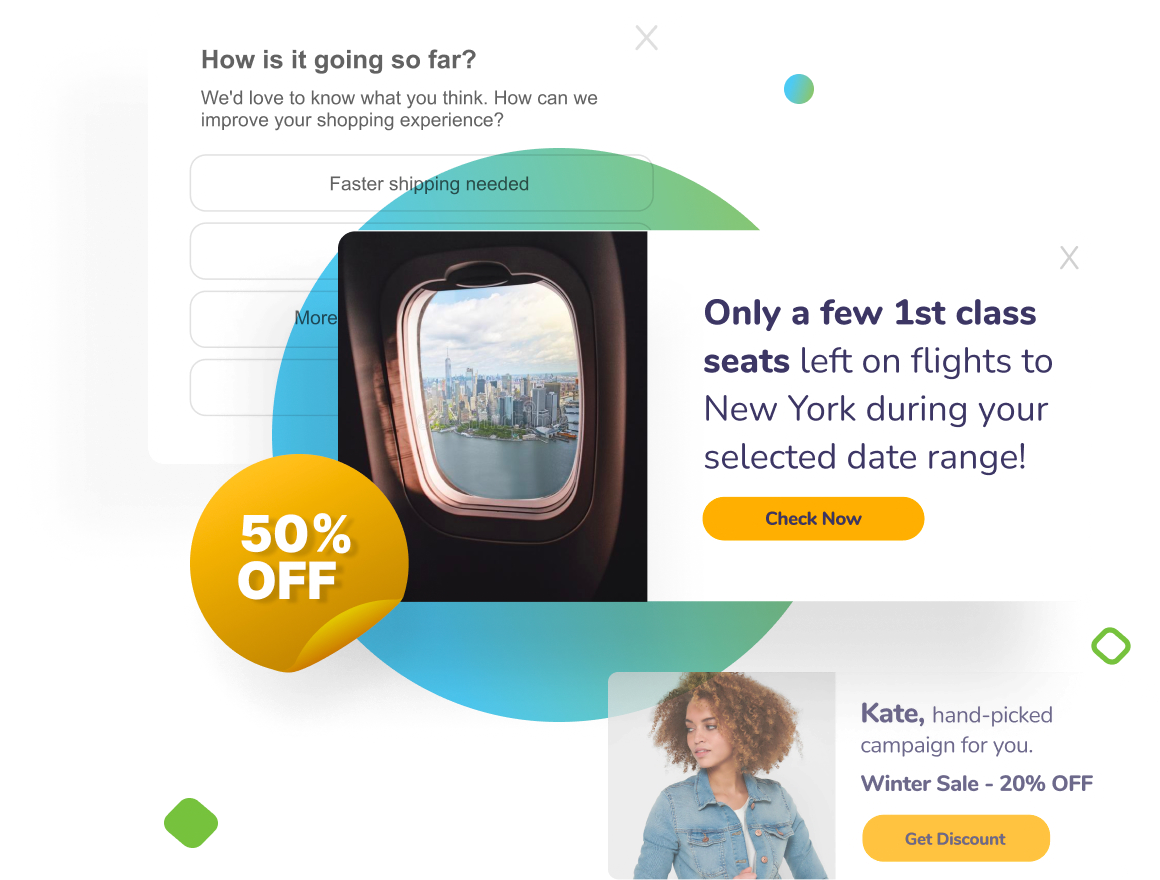
Dynamic fields pull live customer data automatically. An email displays products the user browsed yesterday with current pricing and stock availability. The customer sees what’s relevant now. Brands that include product recommendations in triggered emails see a 30% median increase in CTR and a 37% increase in CVR compared to brands that don’t.
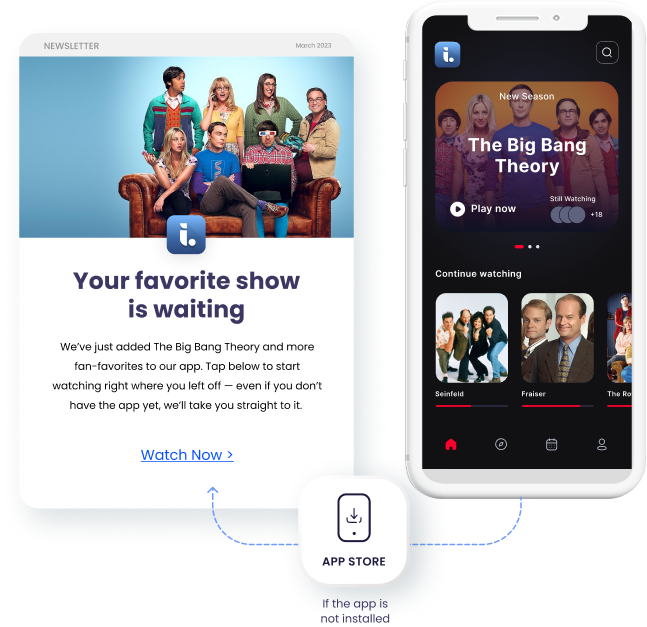
Deferred deep linking solves what happens when customers don’t have your app installed yet. A user clicks your ergonomic chair recommendation in the email. They download your app, and the app opens directly to that chair’s product page. Netmera tracks the complete journey from email click through app installation to purchase with a single link. Check this blog post to see how deferred deep linking works for our users.
AI-generated copy produces segment-specific messaging variations without manual drafting. You define the audience and tone, review the options, and launch without delays. Netmera’s AI Text Generator handles this directly in the platform, keeping the entire personalization workflow in one place.
3. Write scannable, mobile-optimized copy
Subject lines around 6 words achieve the highest open rates, especially on mobile. Title case, open-ended questions, and conversational tone capture attention. Words like “guarantee” or “free” trigger spam filters and skepticism.
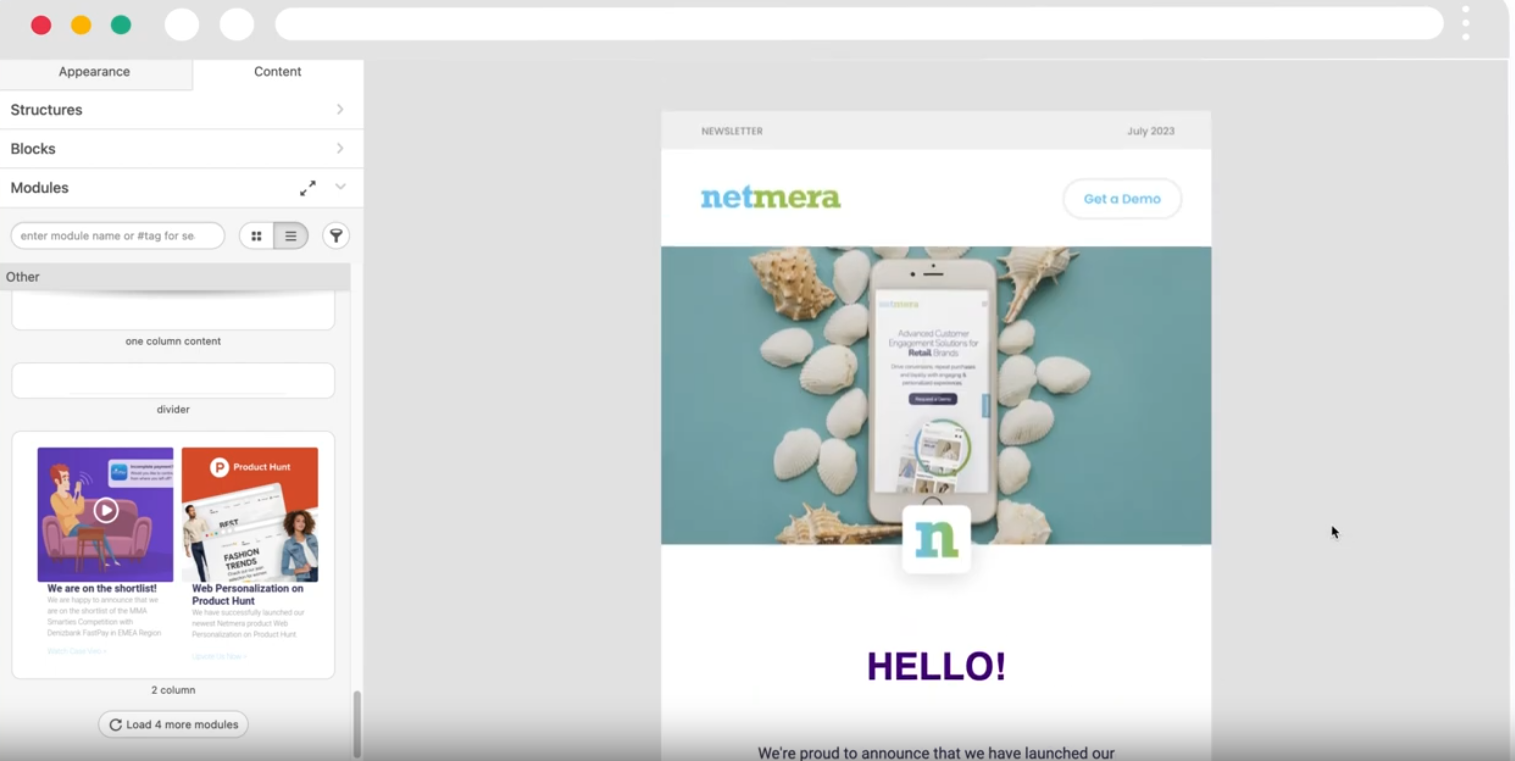
Netmera’s drag-and-drop, no-code email builder includes mobile & web preview functionality during creation. Templates adapt to device types while maintaining brand consistency. The AI Text Generator helps create subject line variations, allowing you to test different approaches to see which patterns drive opens for specific segments.
4. Follow email compliance rules to protect deliverability and trust
Under GDPR and local regulations including Turkey’s KVKK, sending marketing emails requires documented, affirmative consent. Separate transactional and promotional flows, as mixing them damages trust and risks regulatory action.
In Netmera, senders choose between two categories before sending. Notification is reserved for legally required or operational messages like order updates and security alerts, and goes out regardless of marketing opt-in status.
Promotion covers marketing content like discounts and product announcements, and only reaches users who have explicitly opted in. Honor unsubscribes immediately and ensure suppression lists sync across all channels.
Deliverability depends on more than consent. SPF and DKIM authentication confirm your emails are legitimate to receiving mail servers. Domain reputation builds over time and high bounce rates or spam complaints erode it fast. Regular list hygiene, removing hard bounces and long-term inactives, keeps your sender standing intact.
For a detailed look at how Netmera handles GDPR, KVKK, IYS consent management, and security certifications, see our blog post: How Netmera Handles Customer Data Protection and Security.
5. Integrate email into cross-channel workflows for higher conversion
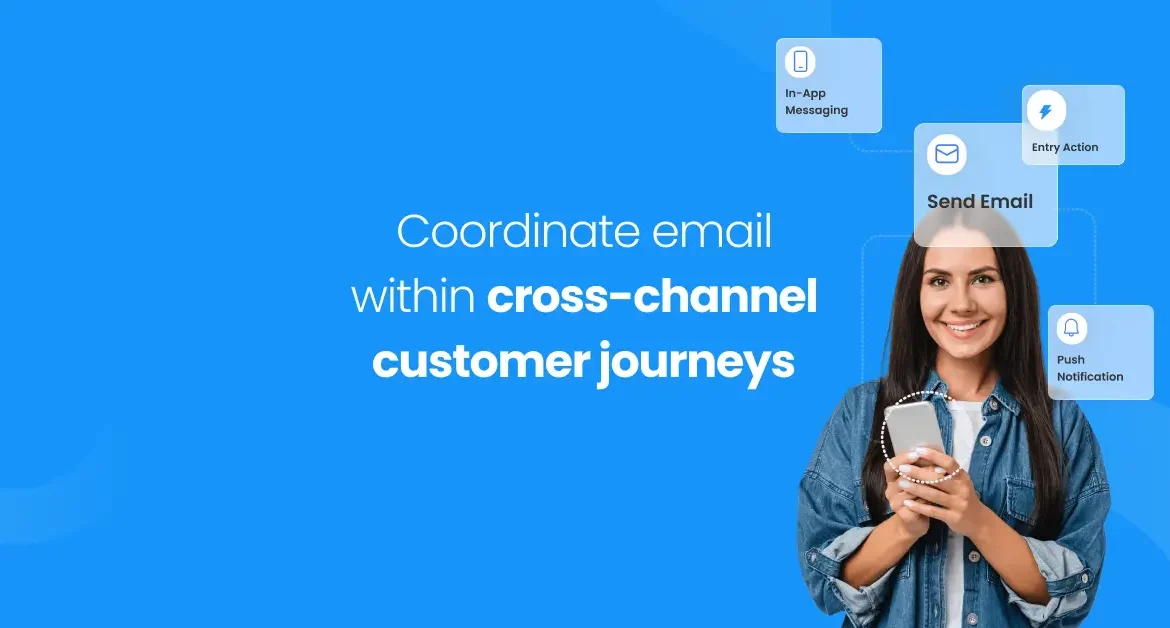
No single channel covers every moment. SMS is built for urgency, email for depth, push for immediate attention, WhatsApp for transactional clarity, in-app for in-the-moment guidance. Each has a job, and customer preferences shift depending on where they are in the journey. Email alone can’t carry all of that.
Cart abandonment, for example, starts the journey. Email goes out with product details and a discount code. Push follows if email stays unopened. SMS delivers a final reminder before the offer expires. When someone converts through any channel, the entire sequence stops and revenue attributes back to the triggering campaign.
Netmera’s Journey Builder is where this coordination happens in practice. Teams map the full sequence using drag-and-drop logic, set wait times between steps, and define exit conditions based on user actions, all from one interface, without developer involvement.
6. Track email campaigns from click through to purchase
Most email platforms stop at the click but what matters is what happens after. Did they add to cart? Complete the purchase? Drop off at checkout?
With Event Insight in Netmera, you track complete user journeys after email clicks. The platform captures the full sequence: email click, product page view, cart addition, purchase completion. You see total sales generated by each campaign in real-time dashboards as campaigns run.
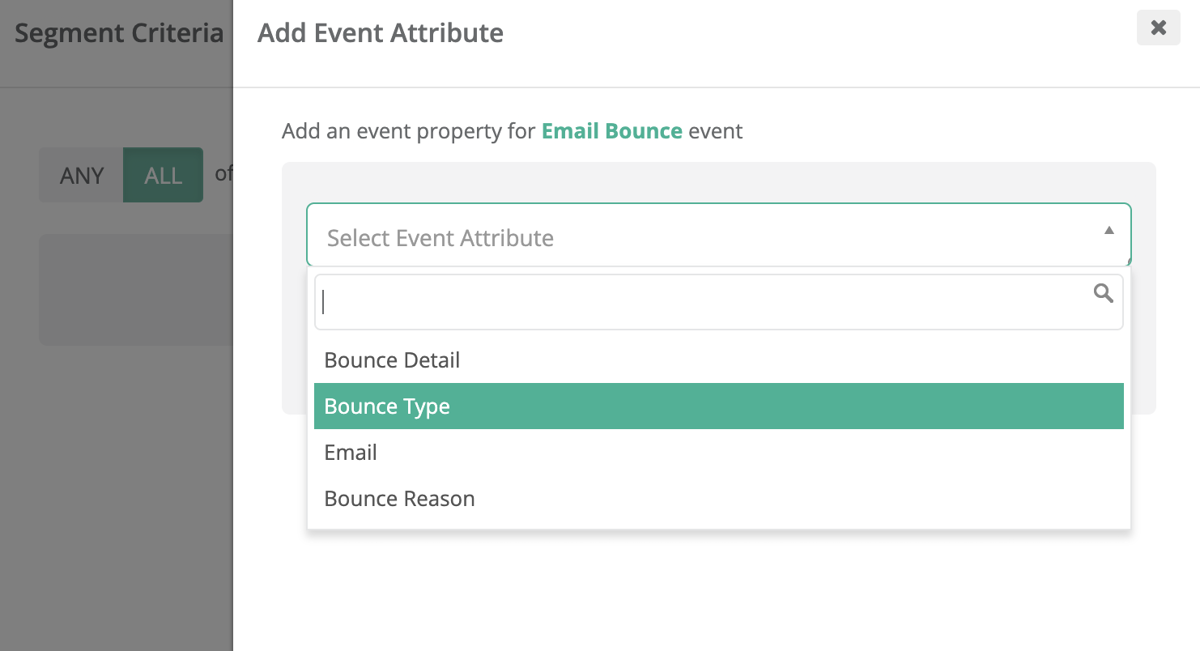
Great marketers watch bounce rates obsessively, and for good reason: They reveal list quality issues before they damage your sender reputation. Netmera’s bounce tracking shows error codes explaining why emails failed. Hard bounce from an invalid address? Remove that contact. Soft bounce from a full mailbox? Retry later.
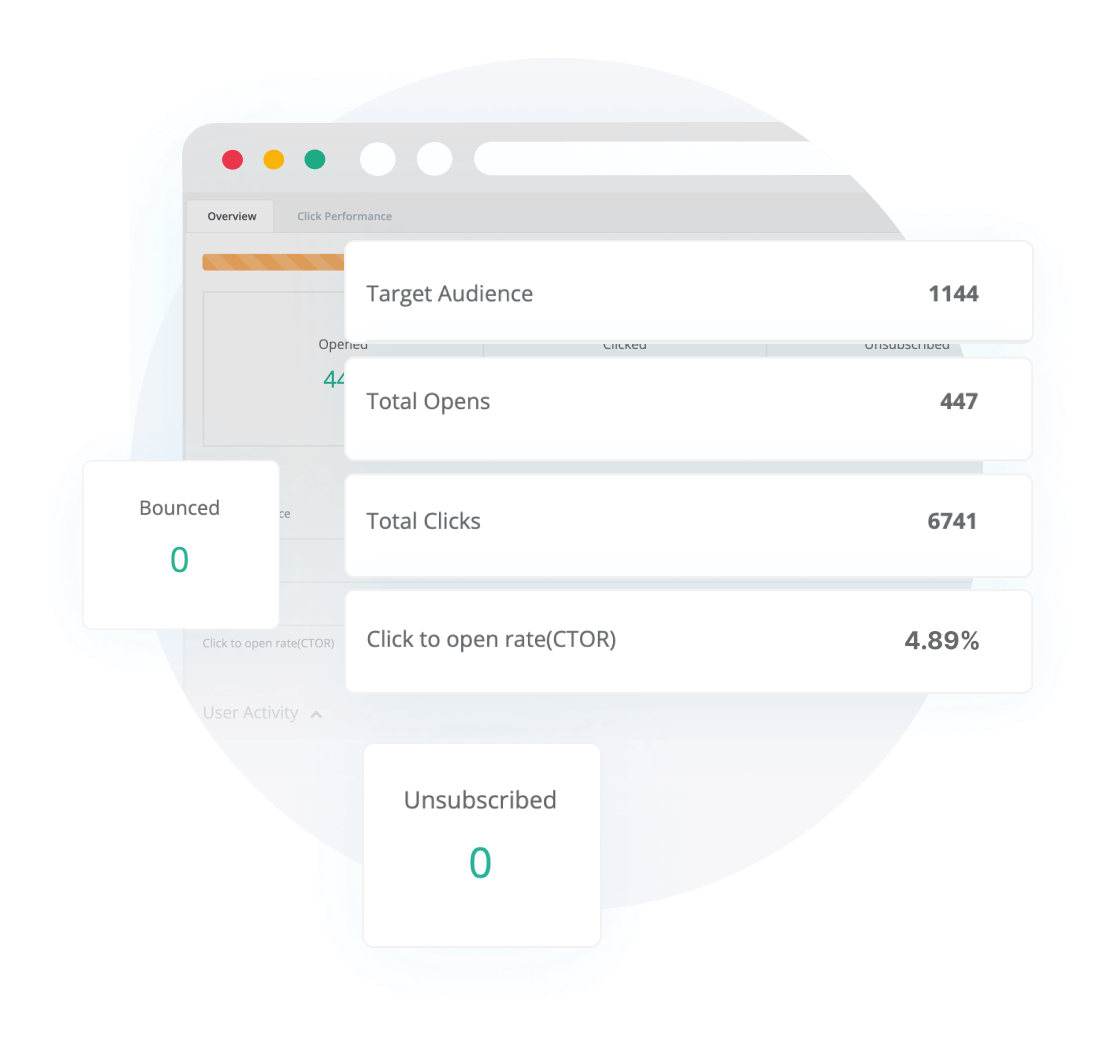
Engagement patterns reveal friction points. Unsubscribes spiking after certain sends, clicks concentrating on specific CTAs while others get ignored, opens dropping for particular subject line patterns. Use these insights to optimize future campaigns.
These six practices work best when supported by a strong automation layer. Here’s how email automation ties them together.
What is email marketing automation and how it works
Email marketing automation sends emails triggered by user behavior rather than a manual send schedule. A customer abandons a cart, completes a purchase, or goes silent for seven days, and the right email goes out without anyone pressing send. The trigger, content, and sequence are defined once. The behavior activates them.
Three types of email automation triggers
Event-based email automation fires when a user completes a specific action: a purchase, a form submission, a first app login. The event is the signal, and the email responds to it immediately.
Behavioral triggers fire based on patterns across multiple interactions: a user who browses a category repeatedly without purchasing, or one who opens emails consistently but never clicks. These reveal intent over time, not just single moments.
Time-based triggers fire after a defined interval: seven days after signup with no activity, 30 days after a last purchase, or 24 hours after delivery. The clock starts from a reference point you define.
A user downloads your app (event-based), browses a product category repeatedly (behavioral), and goes quiet for five days (time-based). Each signal can escalate the sequence or shift the message entirely.
Email workflow automation and the revenue gap
Compared to regular scheduled campaigns, automated emails delivered 52% higher open rates, 332% higher click rates, and 2,361% better conversion rates in 2025. Abandoned cart, welcome, and browse abandonment emails alone accounted for 87% of all automated orders. (Source)
Scheduled campaigns go out based on a calendar and miss the moments that drive decisions. Automated emails respond to what customers do, which makes every message relevant to where they are in the journey.
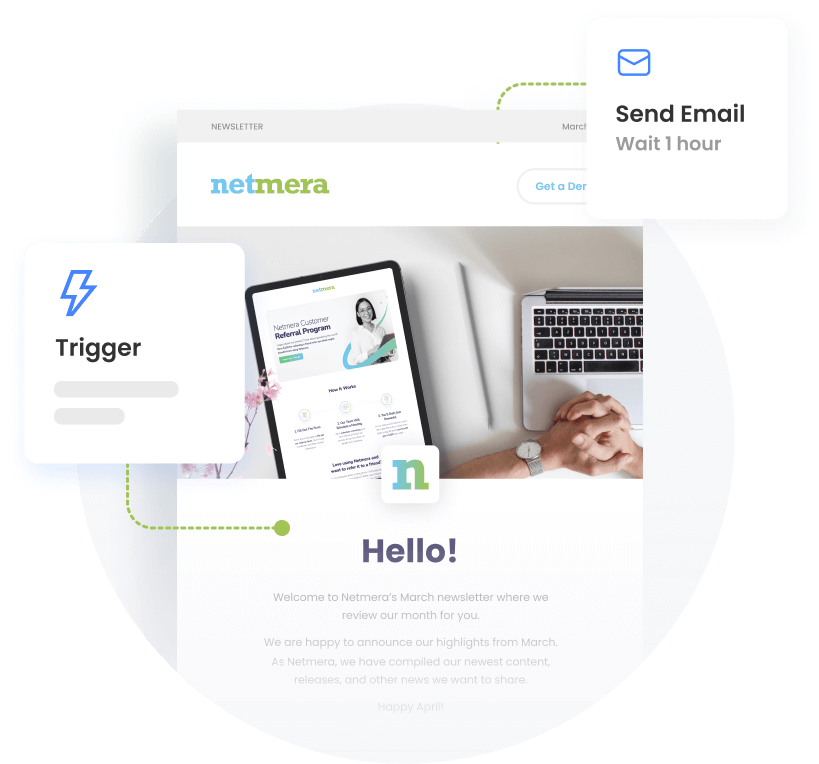
Automation inside the Journey Builder
In Netmera, email workflow automation runs at two levels. Single-channel automations handle email-specific sequences directly, without building a full journey. For cross-channel coordination, the Journey Builder connects email with every other channel in one flow.
In the latter, you define the trigger, whether time-based, event-based, or behavioral, and sequences branch based on what users do or don’t do at each step. A single automated campaign can evaluate user consent, select the appropriate channel, and deliver a message based on real-time engagement signals.
A fashion rental company we partnered with showed what ecommerce email marketing automation looks like in practice:
Instead of running separate push and email campaigns, one automated flow checked consent, picked the right channel, and delivered reminders based on where each user was in the onboarding sequence. Where push was off, emails with relevant clothing catalogues went out instead. Out of more than ten thousand entries, 14% completed registration, with no tool switching and no manual segmentation.
Industry-specific email types and when to send them
Different email types drive ROI across industries. B2C companies see strongest returns from promotional emails. Retail follows the same pattern. Tech companies and B2B organizations perform best with emails focused on feature adoption and education (Source).
Let’s see how to increase email engagement by connecting these patterns to real-time intent data.
E-commerce and retail: Cart abandonment emails trigger one to two hours after users leave items unpurchased. Post-purchase follow-ups trigger 24 hours after delivery, and what they contain matters as much as timing. 67% of customers are more likely to unsubscribe if they keep receiving reminders about a product after they’ve already purchased it.
The alternative is content that assumes the purchase happened: usage tips, care instructions, complementary products. 64% of consumers want organizations to engage with them as individuals, not just process a transaction, and 72% feel disappointed when a company completes the sale and offers no follow-up beyond it.
Banking and fintech: Feature adoption messages go out seven days after account creation when users haven’t explored key features like mobile deposit. Transaction alerts fire immediately when a payment process or unusual activity appears, which provides security value and builds trust.
Media and entertainment: Re-engagement campaigns triggered when users view content but don’t complete episodes. Personalized recommendations sent after users finish a series they binged to catch them at moments when they actively seek new content.
Telecom companies: Usage alerts triggered when customers reach 80% of data plans, or upgrade offers after patterns show consistent overage three months running.
These email types deliver results when automated through journey workflows that respond to signals users already provided through their actions. The same approach works for push notifications, in-app messaging, and website engagement.
Email’s role in complete customer journeys: Benefits and returns
Direct inbox access: Your message reaches customers directly, without an algorithm deciding whether it’s worth showing.
Lifecycle nurturing: Guide customers from awareness to purchase through automated sequences that build trust over time. Email is one of the few channels that supports both acquisition and customer retention equally well.
Owned audience: Unlike social followers or ad audiences, your subscriber list belongs to you. Platform changes and rising ad costs don’t affect it.
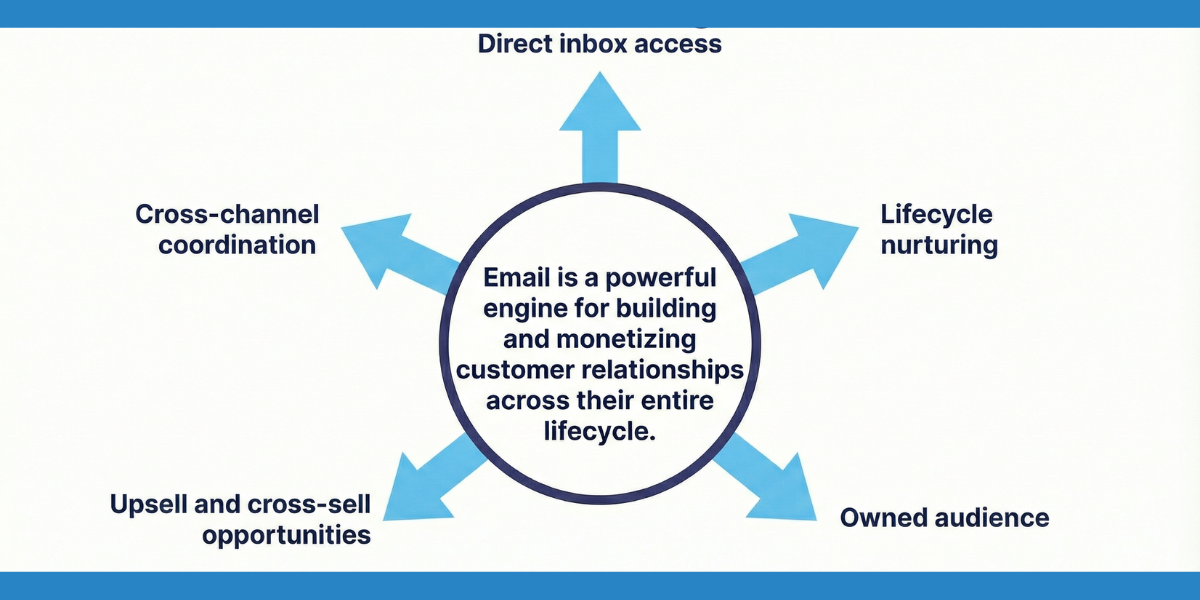
Upsell and cross-sell engine: Recommend complementary products or upgrades at optimal moments in the customer journey.
Cross-channel coordination: Reinforce what customers see in-app and on your website for consistent experiences.
Email accounted for 7.4% of total digital marketing spend in Gartner’s 2025 CMO Spend Survey, the only owned or earned channel to grow its share year over year while overall marketing budgets stayed flat at 7.7% of company revenue.
Email marketing delivers $36 to $42 in returns per dollar spent for business-to-consumer companies. The channel reaches 4.5 billion email users globally in 2025, projected to exceed 4.8 billion by 2027 (source).
The ROI potential exists. The question is whether your strategy, tactics, and platform are set up to capture it.
When to move from point solutions to email automation platforms
Email-only solutions work for newsletters sent on schedules and basic promotional campaigns. Organizations with no cross-channel coordination needs can execute effectively through point solutions like Twilio SendGrid, Mailchimp, MailerLite, and AWeber, with each handling sends well within their lane.
But these tools have a ceiling, and most growing teams hit it faster than they expect. Here’s what we mean: a user clicks a product recommendation in your email, downloads your app, and completes a purchase. Your email platform records the click. Everything after that, the install, the session, the conversion, is invisible to it.
Attribution stops.
Follow-up sequences never fire.
That user receives the next promotional send as if the purchase never happened. The insight gap compounds with every campaign.
Mid-scale and enterprise teams end up managing separate systems for mobile analytics, customer data, push notifications, SMS, and campaign orchestration. Each integration adds complexity, cost, and delay between insight and action.
You’re likely past the point-solution ceiling if:
– Your email campaigns can’t respond to what users do in your app or on your website
– You’re running separate tools for push, SMS, and email with no shared data layer
– Attribution stops at the click and you can’t connect campaigns to actual revenue
– Suppression and personalization logic has to be manually synced across platforms
| Capability | Most Point Solutions | Netmera |
|---|---|---|
| Email sends | ✓ | ✓ |
| Drag-and-drop email builder | ✓ | ✓ |
| Email templates | ✓ | ✓ |
| Basic scheduling and automation | ✓ | ✓ |
| AI text generator | Partial | ✓ |
| Behavioral segmentation | ✗ | ✓ |
| Real-time data updates | ✗ | ✓ |
| Predictive segments | ✗ | ✓ |
| Cross-channel coordination (push, SMS, in-app) | ✗ | ✓ |
| Journey orchestration | ✗ | ✓ |
| Post-click attribution | ✗ | ✓ |
| Revenue tracking per campaign | ✗ | ✓ |
Netmera is a customer engagement platform that handles email automation alongside every other channel your customers use. Customer data consolidates across every touchpoint, segments are built from behavioral and predictive signals, and one no-code interface handles the entire workflow across web, app, and mobile.
Pluxee shows what this looks like in practice. Running email, push, in-app messaging, and web engagement through Netmera, their coordinated cross-channel approach delivered a 3.7% conversion rate into qualified leads over three months. One platform, every channel, one view of results.
You’ve seen the strategy. You’ve seen the practices. Now see the platform built for both.
FAQ: Email marketing best practices
An effective email marketing strategy starts with a diagnosis: whether email should run as a standalone channel or as one piece of an omnichannel engagement strategy built on a unified customer profile. That choice sets the guiding policy for everything downstream, funnel-stage targeting, lifecycle sequencing, channel boundaries, and measurement.
An email marketing strategy is the plan behind every send: which lifecycle stage a message targets, what behavioral data triggers it, and how it fits with what a customer sees on push, SMS, or in-app. Without that structure, campaigns run on a calendar instead of on what customers actually do, and segmentation becomes guesswork.
Behavioral segmentation targets users based on actual actions like cart abandonment, repeat browsing, or purchase history rather than demographics alone. Real-time data updates customer profiles instantly, enabling emails that respond to current intent and drive higher conversions.
Track the complete journey from email click through purchase. Capture events like product page views, cart additions, and checkout completion. Revenue attribution connects specific campaigns to sales, while engagement metrics reveal optimization opportunities.
Behavioral trigger support, real-time data integration, and cross-channel coordination. Point solutions handle sends but operate in isolation, without connecting to mobile, web, and in-app behavior, so you’re limited to time-based campaigns rather than intent-driven automation.
A customer engagement platform with built-in email automation, like Netmera, gives you the full picture: data, segmentation, journey building, and revenue attribution in one place.
Six metrics do the core analytical work: open rate (subject line performance), CTR (link engagement), click-to-open rate or CTOR (content relevance among openers), conversion rate (target action completions), revenue per email (campaign value in a single number), and bounce rate (list quality). CTOR and revenue per email are where most optimization decisions should be grounded as they cut through surface-level engagement and show what’s actually driving results.
A re-engagement sequence typically has three steps: an initial email acknowledging the gap, a follow-up with a relevant incentive or content recommendation, and a final send before removing inactive users from your list. Trigger the first email after a defined period of inactivity (30, 60, or 90 days depending on your typical purchase cycle) rather than on a fixed calendar date. The goal is either to recover the user or confirm they are genuinely inactive. Both outcomes protect your sender reputation and list quality.
Burcu Ulucay – Content Marketing, Netmera