Personalized Customer Engagement in Financial Services: What Banks and Fintechs Need
The banks doing personalization well retain 11%* more users. Real-time alerts, smart budgeting tools, messages that respond to individual behavior rather than batch schedules. That is what customer engagement in financial services looks like when it works.
And the numbers keep backing it up: cross-channel loyalty programs retained 89%* of members in 2025, a figure that is only going in one direction.
Marketing and product teams want to deliver engagement that feels relevant and timely. What stops them is tool fragmentation: separate systems for analytics, messaging, and reporting, with IT as the bottleneck between insight and campaign.
We will walk through what personalization requires in financial services, and which platform capabilities make it work at scale. Along the way you will find use cases across banking, fintech, and insurance, examples from institutions that have done it, and the metrics that show what is actually possible.
Understanding Customer Engagement in Financial Services
What Personalized Engagement Means
Personalized engagement uses behavioral data to tailor interactions across channels. For financial institutions, this means tracking individual actions and transaction patterns to deliver relevant messages.
Behavioral personalization focuses on what users do at a specific moment: loan applications started but not completed, features accessed repeatedly, products browsed but not purchased.
Financial services teams need real-time tracking across web and mobile for all customers to deliver personalized campaigns. With limited developer resources, secure automatic data collection becomes essential and eliminates the delays from manual tagging.
Why Personalization Matters for Banks and Fintechs
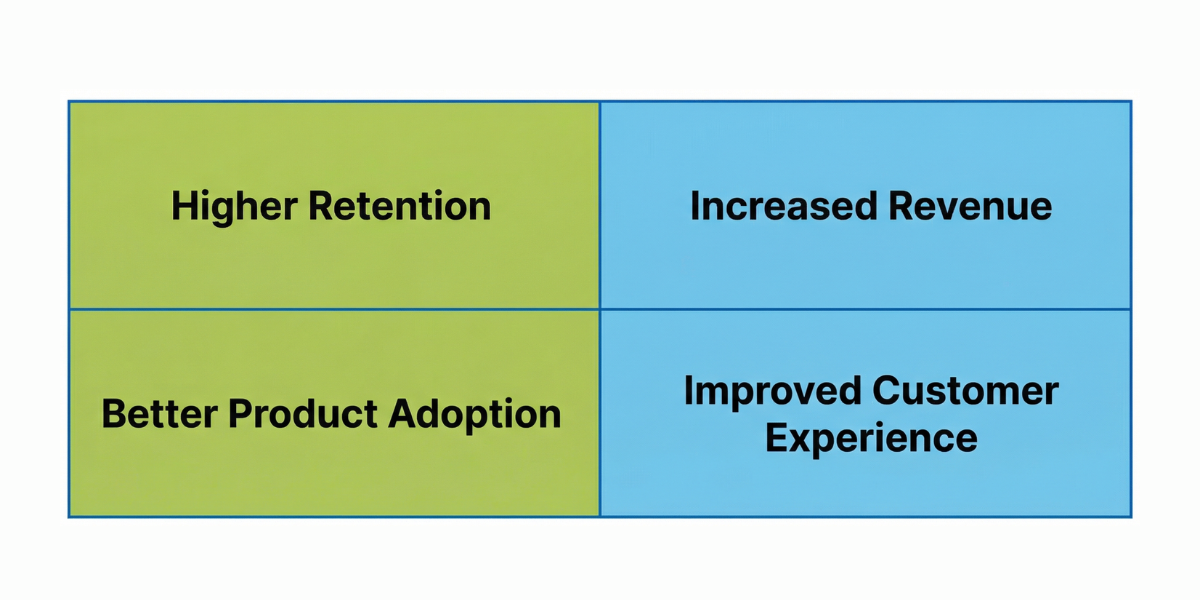
Higher Retention: Customers who receive relevant, timely messages across their preferred channels stay longer and engage more frequently with digital services.
Increased Revenue: Personalized product recommendations based on behavior can convert better than generic promotions targeting entire customer bases.
Better Product Adoption: Behavioral triggers guide customers to features they’ll like to use based on their activity patterns.
Improved Customer Experience: Coordinated messaging across channels feels seamless instead of repetitive or disconnected.
That last point is worth pausing on. Coordinated does not mean sending messages from every channel simultaneously. It means identifying which channels each customer responds to, and building sequences that reflect that. This is what cross-channel journey orchestration enables.
We explained in this post how to build relevant, contextual customer journeys.
One leading Turkish fintech proves the point. Tam Finans automated reactivation campaigns for users inactive for seven days. The personalized push notifications increased monthly active users by 39.6% in three months.
Esra Selen Demir, Growth Leader at Tam Finans, puts it directly: “By combining automation, segmentation, and personalization, we achieved a major lift in active users, all while cutting campaign setup time by 50%, with zero need for developer support.”
Top Use Cases for Personalized Customer Engagement in Finance
Banking
Loan Application Recovery: Users abandon applications at document upload or income verification. Automated push notifications trigger immediately and guide customers back through incomplete steps.
Feature Adoption: In-app messages promote mobile deposit, investment tools, and bill pay based on individual activity patterns.
Fintech
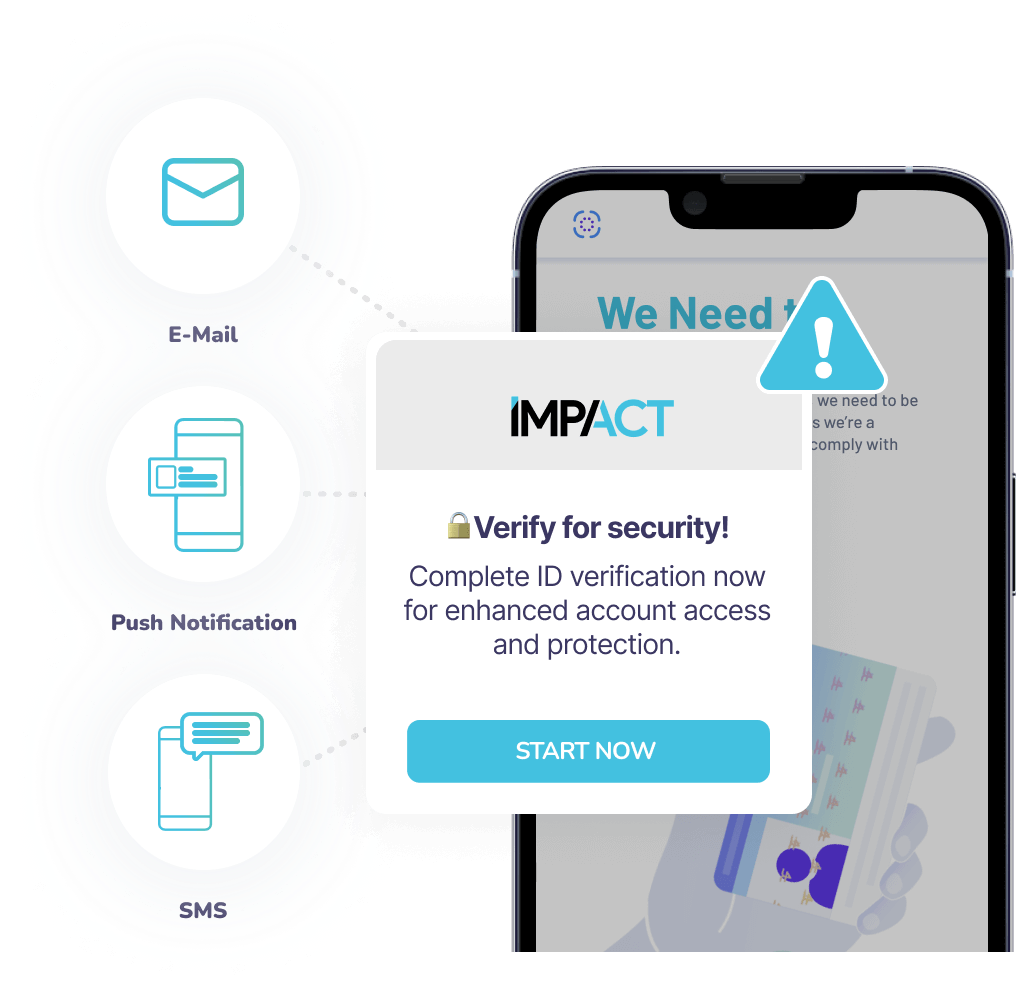
Onboarding Completion: Multi-step email sequences guide users through stalled KYC steps during account setup.
Churn Prevention: SMS or in-app widget offers with cashback incentives target customers who show declining engagement before they leave entirely.
Insurance
Claims Guidance: WhatsApp messages deliver step-by-step filing instructions and reduce abandonment during complex processes.
We mapped out 10 additional use cases for financial services teams. Explore them here.
The Gap Between Intent and Delivery
“Personalize your communication.” Easy to say, harder to do. We’ve worked with enough financial services teams to identify the core issues: manual tagging delays or prevents segmentation, and separate tools for data, analytics, and messaging create coordination chaos. Purpose-built platforms for customer engagement in financial services, like Netmera, solve this by combining data collection, behavioral segmentation, and multi-channel campaign tools in one system.
Five Capabilities Financial Services Teams Need to Deliver Personalization at Scale
Customer Data Collection & Analysis
Think of this: A customer browses personal loan rates on your website Tuesday afternoon. They call your contact center Wednesday morning asking about loan options. The agent has no record of that browsing session and starts from scratch, forcing the customer to repeat information they already provided digitally.
This explains why 62% of U.S. banks are using customer data platforms (CDPs) to unify retention efforts.
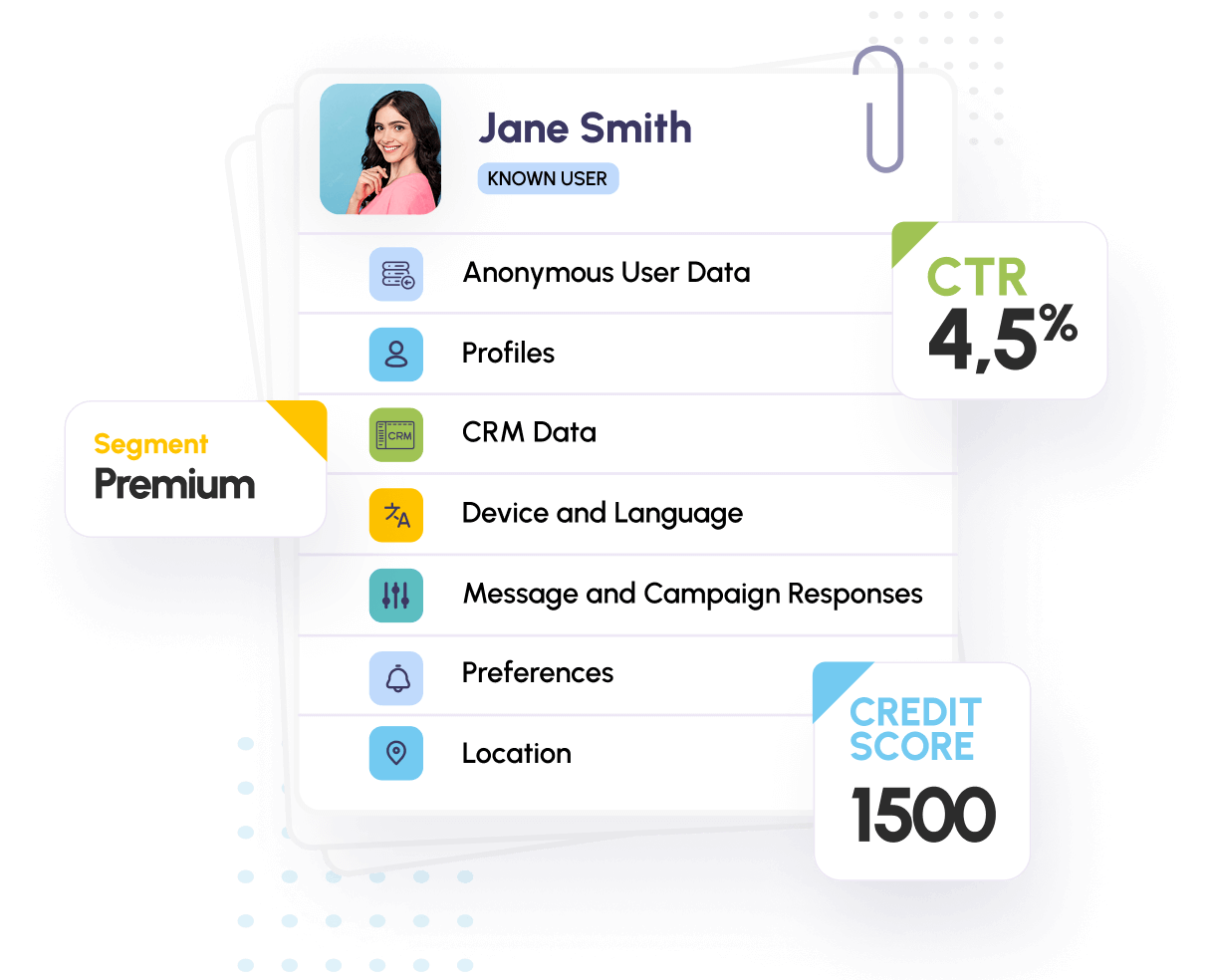
Netmera ingests data from core banking platforms, payment processors, CRM systems, and loyalty programs to enrich profiles with transaction history, product ownership, and engagement patterns. A user who browses investment products online, checks balances in-app, and visits a branch becomes one person with a complete journey visible to team members who interact with them.
Behavioral Triggers
Behavioral analytics turns raw event data into triggers that respond to actions as they happen. When customers abandon loan applications at document upload, the system detects this immediately and triggers help messages explaining the process. When account balances drop below typical thresholds, automated notifications about overdraft protection arrive before fees hit.
When users start the premium membership qualification process but drop off before completing the required steps, a triggered sequence guides them through each stage in turn.
N Kolay built exactly this flow: a three-step journey where each push notification responded to the user’s progress, from the first completed task through to full membership. The rate of users completing all five qualification steps jumped 119.6%. See N Kolay success story for details.
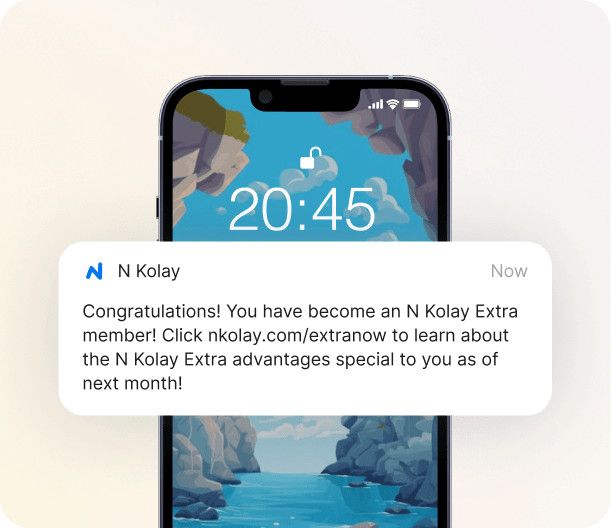
With tagless data capture, our customers track events automatically without manual developer instrumentation. By monitoring new actions across mobile and web, marketing, product and CX teams build campaign triggers within hours. This eliminates the IT ticket queue and enables faster response to emerging patterns while they are still relevant.
Cross-Channel Orchestration
Customers don’t experience your brand through a single channel. They check mobile apps during commutes, browse websites on laptops, respond to SMS alerts throughout the day, and open emails for details. Coordinating messages across these touchpoints manually creates gaps and duplicated outreach.
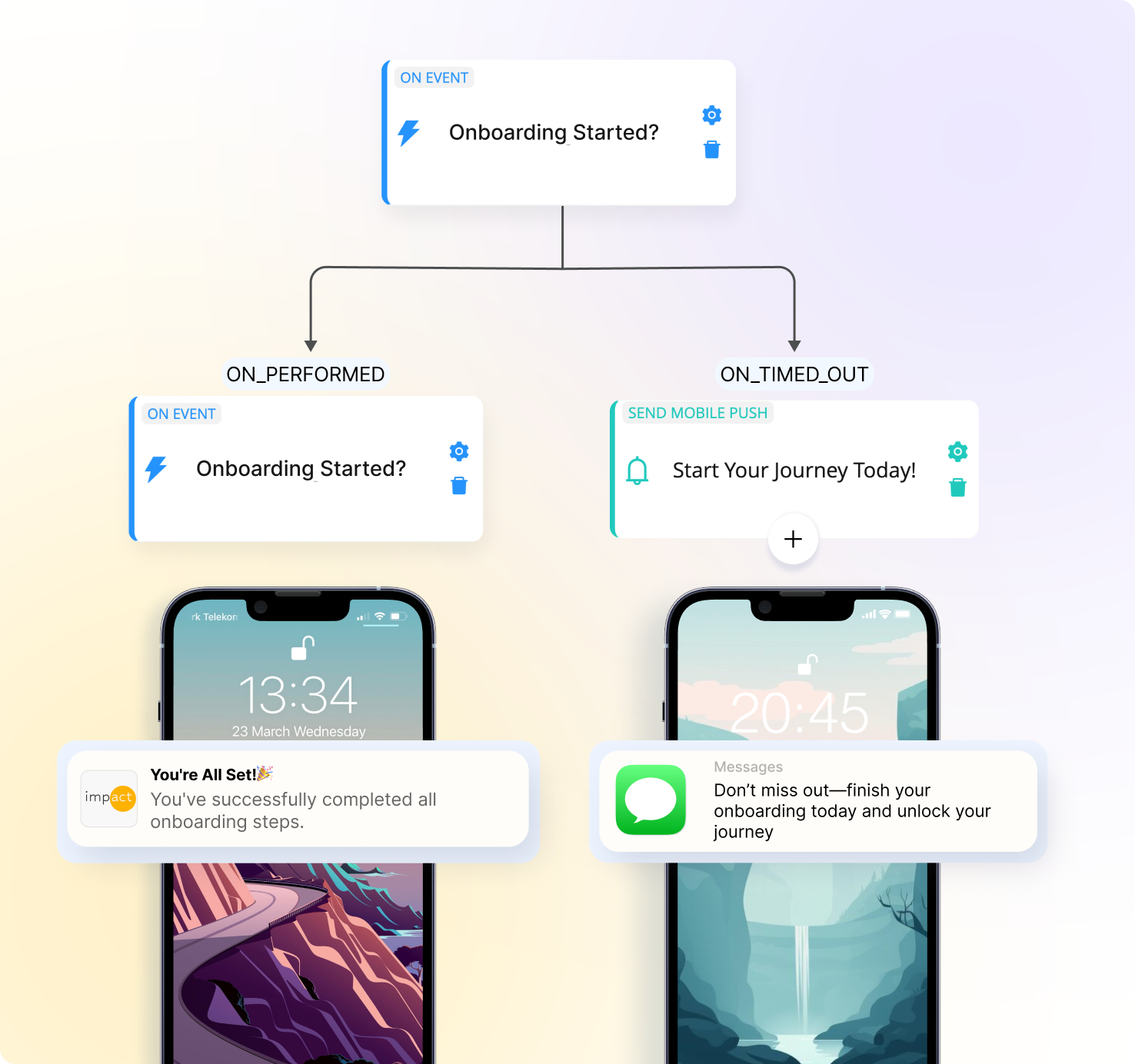
Netmera’s no-code Journey Builder combines push, in-app messages, email, and SMS in coordinated sequences. Teams decide message capping limits, when customers enter or exit journeys, and how many times they can re-enter. Consent management tracks permissions per channel automatically so users who opt out of marketing emails but allow transactional SMS receive messages accordingly.
AI-powered Predictions
Instead of grouping customers by past actions alone, AI pattern analysis forecasts what happens next. Two use cases prove most effective: predicting churn risk (actually AI-driven predictive analytics reduce churn by 18% in mid-sized U.S. banks) and identifying customers likely to convert.
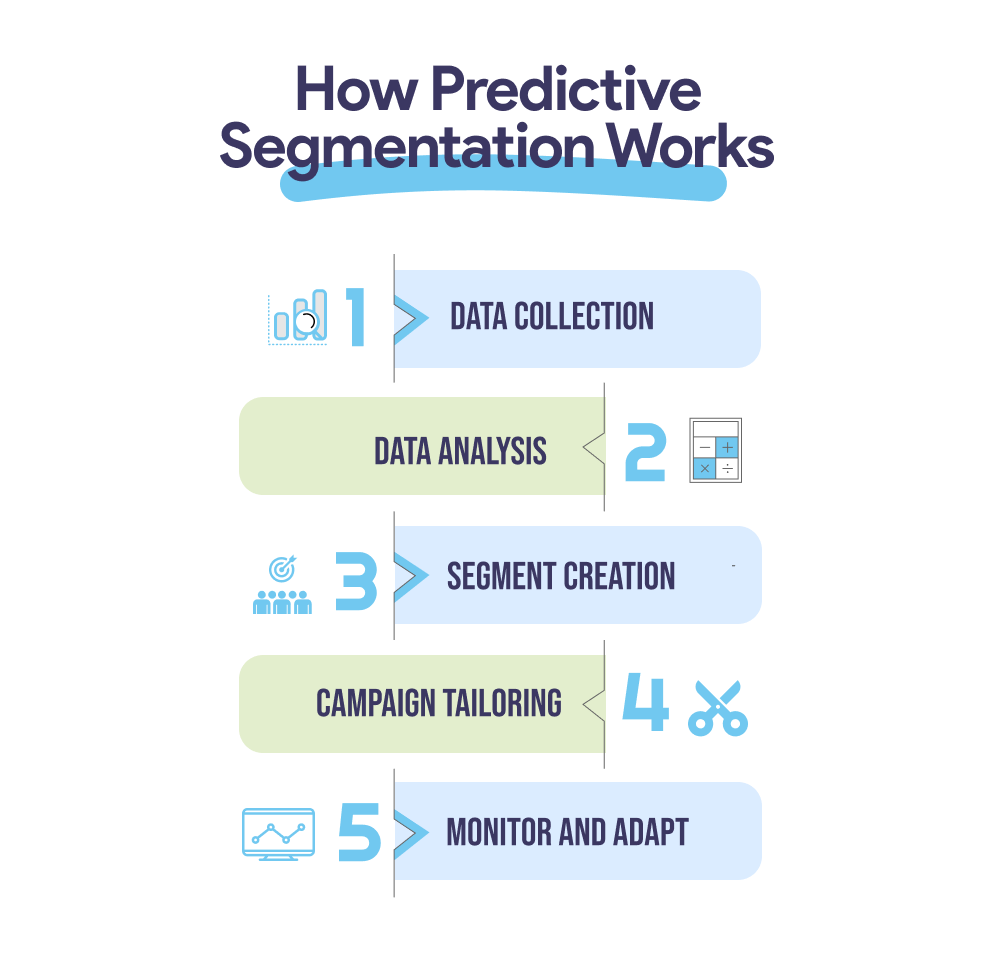
Netmera helps teams predict customer behavior by analyzing recency, frequency, and event duration within timeframes they define. The platform identifies at-risk customers or high-intent prospects based on patterns, then updates segments automatically overnight. Teams access these AI-generated segments alongside standard ones without SQL knowledge.
When UPTION’s churn signals spiked across three markets at once, Turkish, English, and Arabic users were all at risk simultaneously. Using Netmera’s AI churn prediction trained on six months of behavioral data, the team identified users likely to leave within 30 days and launched a 10-message journey with branching logic that stopped messaging anyone who had already returned. The churn segment shrank by 16.6%. Among users who entered the journey, 22.6% converted back to active.
Compliance Built-In
Trust in data security is the top priority for 72% of customers, directly affecting retention. When adopting customer engagement platforms, security cannot become a new risk.
Most of our customers come from financial services because we built security into Netmera from the start. The platform holds ISO27001 and ISO27017 certifications, undergoes regular independent penetration testing, and completed PWC audit validation.
We offer VM-level isolated environments and private cloud options for institutions under banking supervision, plus data protection controls that handle everything from access management to subject request processing.
These controls mean teams can run personalized campaigns while meeting regulatory requirements.
For your security-related questions, check our guide on how Netmera protects your customer data.
How Leading Financial Institutions Launch Personalized Campaigns
The examples below show achievements our customers in the finance sector gained by using different Netmera capabilities. You can see our success stories in detail to see how teams moved from insight to live campaigns securely, without technical dependencies or compliance risks.
DenizBank: Funnel Analysis
Challenge: Loan applications dropped despite rising searches.
Approach: Funnel Analysis showed Android loading screen bug blocking contract viewing.
Outcome: Restored 10% conversion, reduced bounce rate 41%, increased loan utilization to 35%.
DenizBank: A/B Testing
Challenge: New Super Limit feature had low visibility.
Approach: A/B tested in-app message placement; login screen won.
Outcome: 10x CTR increase, applications jumped from 34K to 357K monthly, card sales rose 4x.
Tam Finans: Reactivation
Challenge: Downloads high but return visits low.
Approach: Automated push to 7-day inactive users without IT involvement.
Outcome: 39.6% MAU increase (22K→31K in three months), 21% feature usage from notification clicks.
fastPay: Friction Resolution
Challenge: Transaction abandonment mid-flow.
Approach: Real-time guidance push when users stalled, informed by data storytelling analysis.
Outcome: 80% efficiency gain, 55% CTR rise, conversions doubled.
What Financial Services Teams Should Prioritize for Customer Engagement in 2026
Insights for 2026 come from a conversation with Netmera Founder Ahmet Başaran and General Manager Hasan Emre Özgür, as covered in Fintech Time.
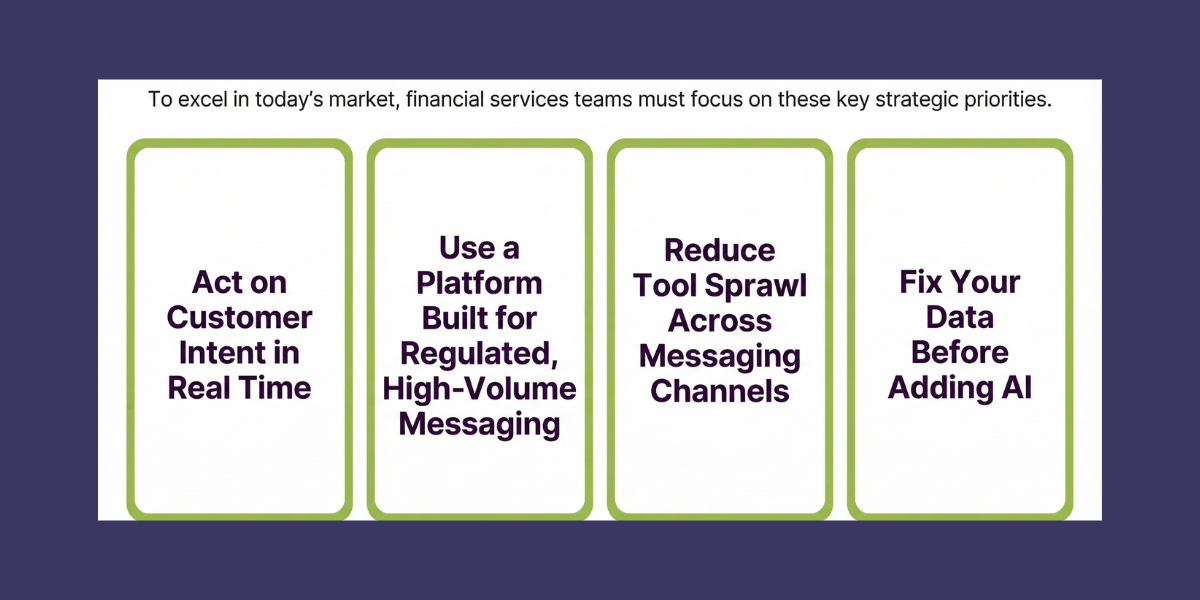
Act on Customer Intent in Real Time
Fintech success depends on reaching customers at the right moment with the right content, says Ahmet Başaran, Netmera Founder and CEO.
Behavioral triggers respond when customers need information at a specific time. Transaction confirmations arrive within seconds, account alerts appear before fees hit, and product recommendations surface when browsing patterns signal intent.
Teams that master timing see higher engagement because messages feel helpful and relevant.
Use a Platform Built for Regulated, High-Volume Messaging
Financial institutions need engagement platforms built for high-volume, mission-critical messaging from the start.
When transaction alerts and account notifications flow through the same infrastructure handling marketing campaigns, reliability and security become non-negotiable requirements. Multi-channel delivery across push, SMS, email, and WhatsApp demands both speed and certainty.
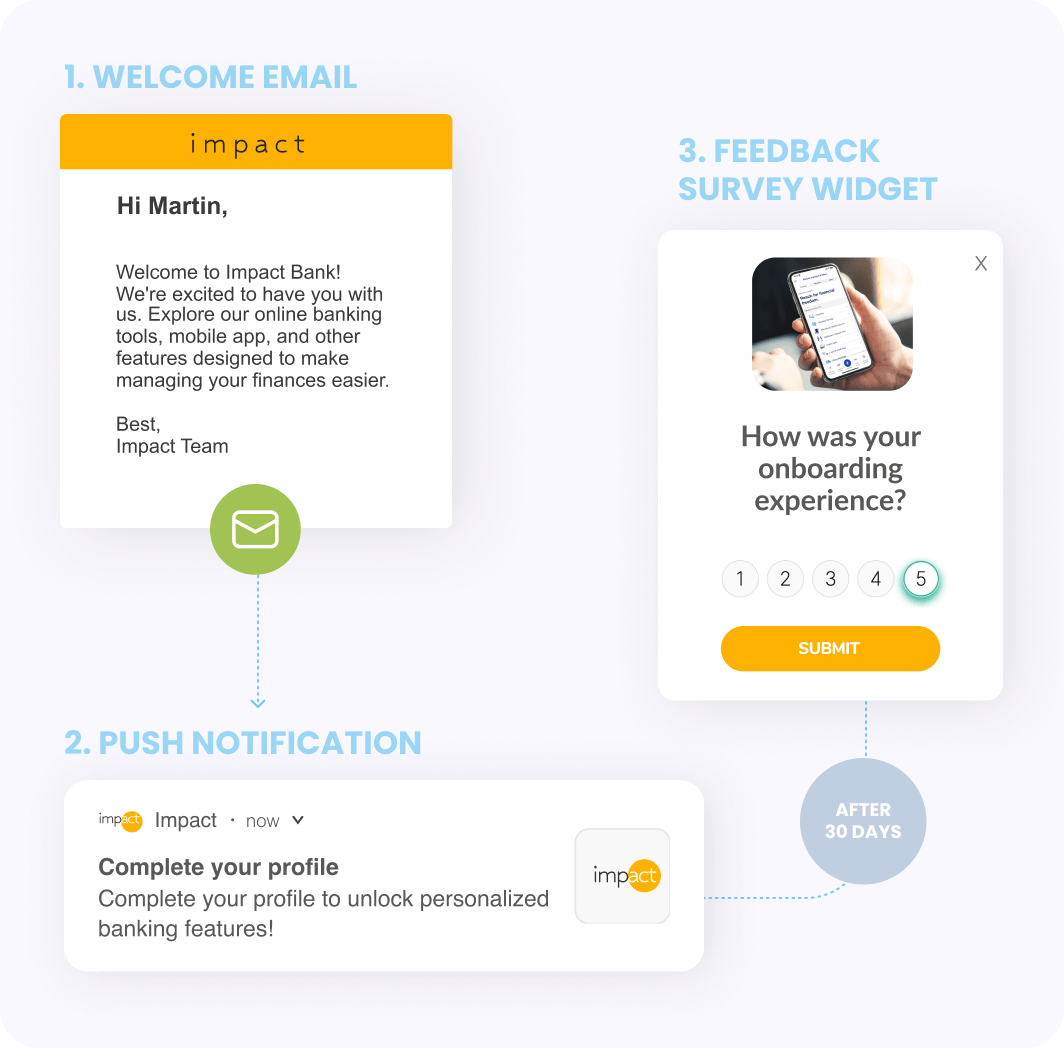
Reduce Tool Sprawl Across Messaging Channels
Financial services rely on multiple channels including SMS for urgent alerts, email for detailed communications, WhatsApp for quick interactions, push for real-time notifications. Managing separate vendor panels for each creates coordination chaos.
Hasan Emre Özgür, Netmera General Manager, notes that brands typically juggle different systems for each channel. Unified orchestration lets teams coordinate timing, manage consent, and track performance from one interface.
Fix Your Data Before Adding AI
Many institutions rush to add AI features without establishing proper data collection first, producing unreliable predictions. As Blake Coules, Senior Director, CRE Industry Practice Lead, explains, fragmented or disorganized data slows decisions and limits AI’s potential.
Teams should focus on comprehensive event tracking and profile enrichment across all touchpoints before layering AI capabilities for personalization.
Choosing a Customer Engagement Platform for Financial Services
When evaluating customer engagement platforms for financial services, focus on these five areas.
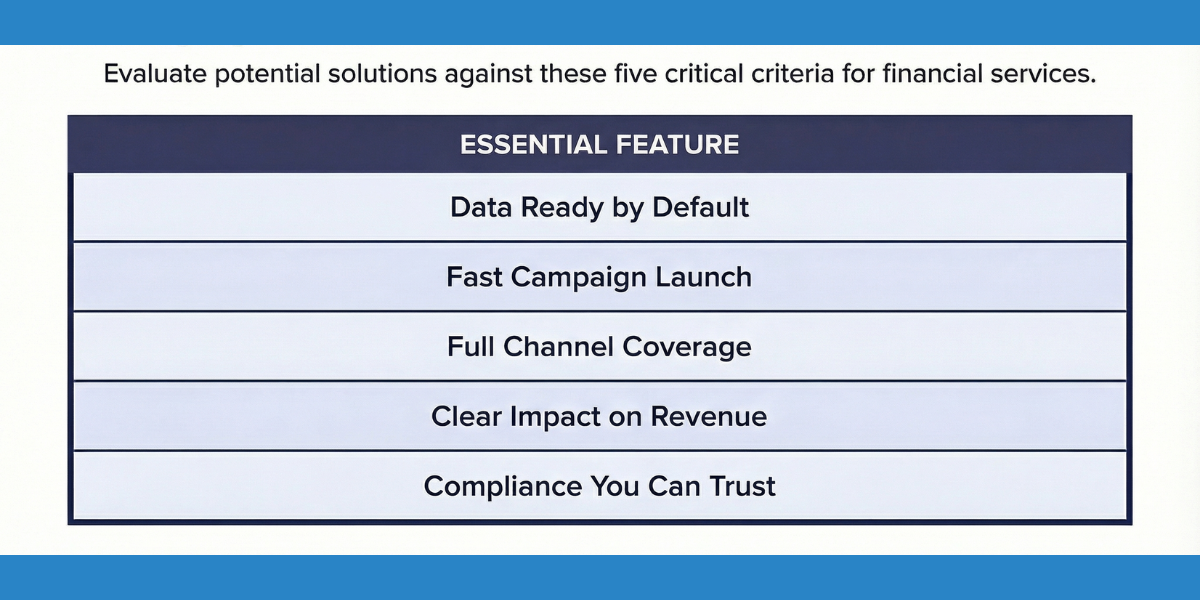
Data Collection and Unification
Look for automatic behavioral tracking that doesn’t require manual tagging from developers. The platform should integrate with core banking systems, CRM, and payment processors to build unified customer profiles.
Campaign Activation Speed
Teams should be able to create segments and launch campaigns same-day. No-code journey builders let non-technical users design complex flows with no technical bottlenecks.
Channel Coverage
The platform should provide native support for push, email, SMS, WhatsApp, and in-app messages from one interface. Consent management needs to work automatically across all channels.
Analytics and Revenue Connection
Funnel analysis should show drop-offs at each journey stage. Revenue tracking per campaign must connect marketing activities directly to financial outcomes.
Compliance and Security
Data residency options must satisfy regulatory requirements. Independent audits should validate alignment with GDPR, KVKK, and sector-specific regulations.
Seamless cross-platform banking (mobile, tablet, desktop) results in a 12% retention increase, a rate financial institutions can’t afford to ignore while inconsistent omnichannel experiences leads to a 7.5% churn rate (Source).
Effective customer engagement in financial services requires more than point solutions. We bring together everything you need in one platform: CDP ingesting data from all sources (online and offline), journey orchestration across channels, personalization capabilities, compliance controls, and robust analytics. This saves you from managing multiple vendors while no-code tools give your marketing and CX teams independence from technical obstacles.
Contact us to see how financial institutions launch secure, compliant campaigns that respond to customer behavior in real time.
FAQs: Customer Engagement in Financial Services
Personalized customer engagement in financial services means using behavioral and transactional data to tailor messages across channels. Banks and fintechs respond to individual actions in real time, instead of sending identical campaigns to every customer.
It improves retention, conversion, and product adoption. Relevant, timely messages reduce friction in journeys like onboarding or loan applications, while helping financial institutions increase revenue without overwhelming users with generic communication.
Financial institutions need real-time behavioral data across web and mobile, plus transaction history and product usage. Unified customer profiles allow teams to trigger relevant messages based on intent, not static segments or past assumptions.
They use platforms that combine automatic data collection, behavioral segmentation, and cross-channel journey orchestration. No-code tools let marketing and CX teams launch campaigns quickly without waiting on developers or managing multiple systems.
Yes, when platforms include built-in security and compliance controls. Features like consent management, data isolation, audits, and regulatory alignment allow teams to run personalized campaigns while meeting GDPR, KVKK, and banking requirements.
Burcu Ulucay – Content Marketing, Netmera