Customer journey orchestration software: From fragmented data to revenue
Last update: July 2026
TL;DR: Customer journey orchestration coordinates cross-channel campaigns based on real-time user behavior. Most journeys fail because data sits in silos, flows can’t adapt to what users do, and there’s no clear line from campaign actions to revenue. The right journey orchestration software solves all three: unified customer data, behavior-based triggers, dynamic branching, and step-level analytics in one platform. Inside: where journey orchestration tools commonly fall short, which capabilities separate converting journeys from ones that just run, and how to build revenue-generating flows without developer support.
You’ve invested in journey orchestration platforms, yet the gap between insight and action remains frustratingly wide. Customer data sits in separate systems while journeys run on fixed schedules instead of signals. Metrics track engagement but cannot tie actions to revenue.
Marketing and product teams know they need customer journey orchestration. The concept is familiar, and most companies have some form of journey orchestration software in place. What remains difficult is building journeys that react to real behavior, adapt across omnichannel customer journeys, and prove revenue impact through clear metrics.
This post explains where most orchestration tools fail, which capabilities matter for automated revenue journeys, and how teams build converting flows in Netmera without writing code.
What is customer journey orchestration software
Customer journey orchestration coordinates cross-channel interactions with individual customers based on their real-time behavior. Journey orchestration software is the infrastructure that makes this coordination possible across email, push, SMS, in-app messages, and beyond.
Traditional campaigns push messages on a timetable. Orchestration builds conditional logic around behavior: if this, then that, then check again. The result is a real-time customer journey that adapts as the user moves, or stops moving.
CJO vs. adjacent concepts
Customer journey orchestration is often confused with three related terms.
CJO vs. customer journey mapping
Customer journey mapping documents what a journey should look like: a static diagram of stages, touchpoints, and pain points. Orchestration is the execution layer that makes it happen in real time.
CJO vs. customer journey management
Customer journey management measures and improves a journey that’s already running. It looks backward at performance data. CJO is the real-time decisioning layer that determines what each user experiences next, as it happens.
CJO vs. marketing automation
Marketing automation runs predefined sequences on a schedule: send an email at T+24h, follow up at T+48h. CJO adapts based on actual behavior. A user who converts skips the follow-up. One who goes quiet gets a different path entirely.
When a single platform handles all three layers, data collection, real-time decisioning, and performance measurement, just as Netmera does, the gap between insight and action shrinks to near zero.
3 reasons customer journeys don’t convert
Your data lives in silos
The reality of scattered data: Your CRM shows purchase history, app analytics track feature usage, and website data captures browsing behavior. But none of them talk to each other, so you never see the complete customer picture or what drives their decisions.
This fragmentation is why platforms integrating CDP and automation for customer journeys have become essential across e-commerce customer journeys, financial services, media, and any industry where unified data determines conversion rates.
At a financial services company we worked with, users were abandoning transactions due to friction in the payment flow, but the team had no visibility until they manually reviewed session logs hours later. Once they unified data sources, they identified friction points immediately and automated in-app messages. Click-through rates rose 55% and conversions doubled.
Your journeys can’t adapt in real time
Static email sequences run on time delays. The calendar controls everything, regardless of what users do. Customer journey automation adapts to what users just did: opening an email, clicking a notification, browsing a specific product.
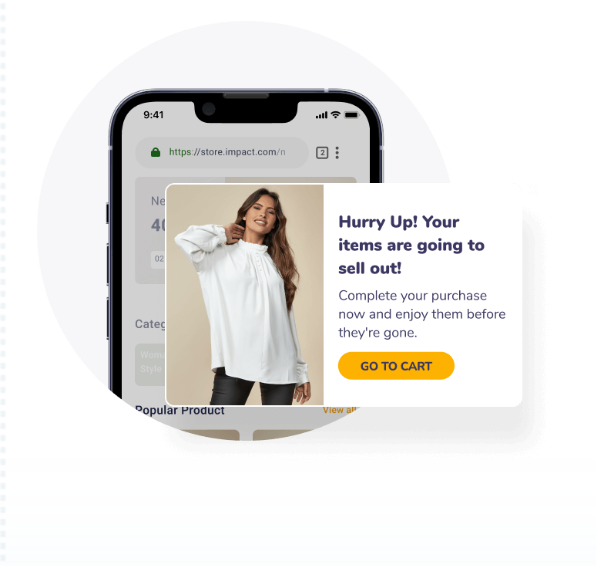
Take cart abandonment as an example. Average cart abandonment rate is 70.22% according to Baymard Institute. One of our customers faced exactly this. After switching to behavior-based triggers with automated push notifications sent to those who left an item in the cart, revenue increased 150%. Conversion rates doubled from 4% to 8%.
See how Turkcell Pasaj doubled conversions with real-time cart recovery.
You can’t prove journey ROI
Sends, opens, and click-through rates alone don’t tell you how much revenue the campaign generated or where users dropped out of the conversion funnel.
A leading bank saw loan application volume rise while actual completed applications fell. After implementing Netmera’s funnel analysis, the answer surfaced immediately: Android users with outdated devices couldn’t view or sign contracts due to a loading screen error.
With targeted push automation, they restored the 10% conversion rate. Bounce rates dropped 41%. Loan utilization increased to 35%. This is what journey orchestration software for banks makes possible: visibility into where users drop, and the tools to act on it.
The capabilities behind Netmera’s customer journey orchestration
Combined CDP: Unify your data and act in real-time
Unified customer data consolidates information from mobile apps, websites, CRM systems, and other sources into a single profile that updates as events happen. This solves both data silos and static flows at once. Some teams keep that unification in a data warehouse instead, with a separate layer handling activation. We break down composable vs. packaged CDP architecture here.
Netmera’s Tag Manager and tagless data capture automatically track behavioral data from websites and apps. No developers required to manually instrument tracking code.
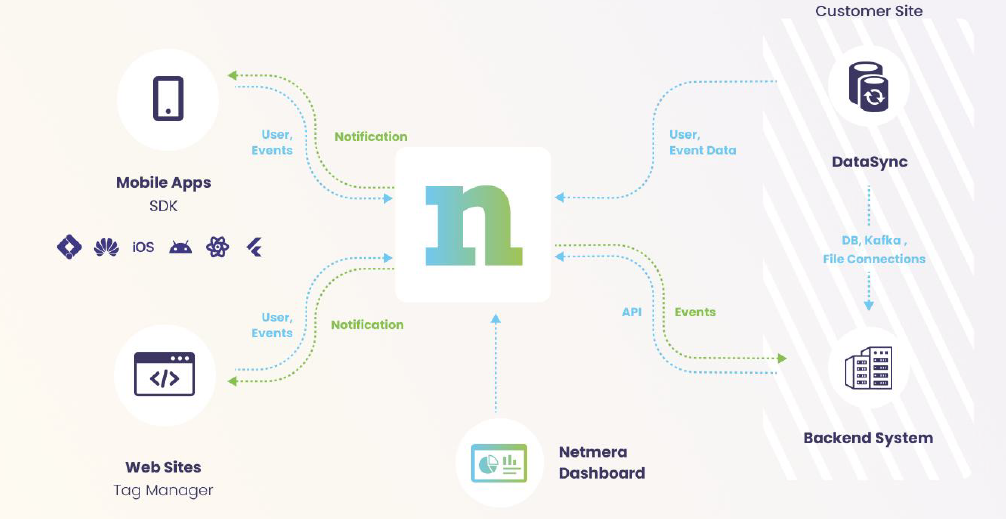
Real-time event triggers detect the moment something occurs, such as cart abandonment, app opens, and credit applications. Our platform sees these events instantly and can act on them without delay. Because all channels can be fed into one unified profile, you can orchestrate email, push, SMS, in-app messages, and geofencing from a single journey.
A fashion rental company we partnered with used Netmera Journey to turn first opens into registrations. Instead of running separate push and email campaigns, one automated flow checked consent, picked the right channel, and delivered timely reminders. Out of more than ten thousand entries, 14 percent completed registration.
Branching logic: Respond to user behavior
Netmera’s dynamic branching adapts journeys based on user actions. Each triggers a different next step.
One of our customers, a leading music streaming app, built a welcome journey triggered at first open. Users without an ID received targeted prompts to complete signup, then moved into a premium upsell path. The flow reached nearly 500K users. Six percent completed the full journey, creating a measurable revenue lift.
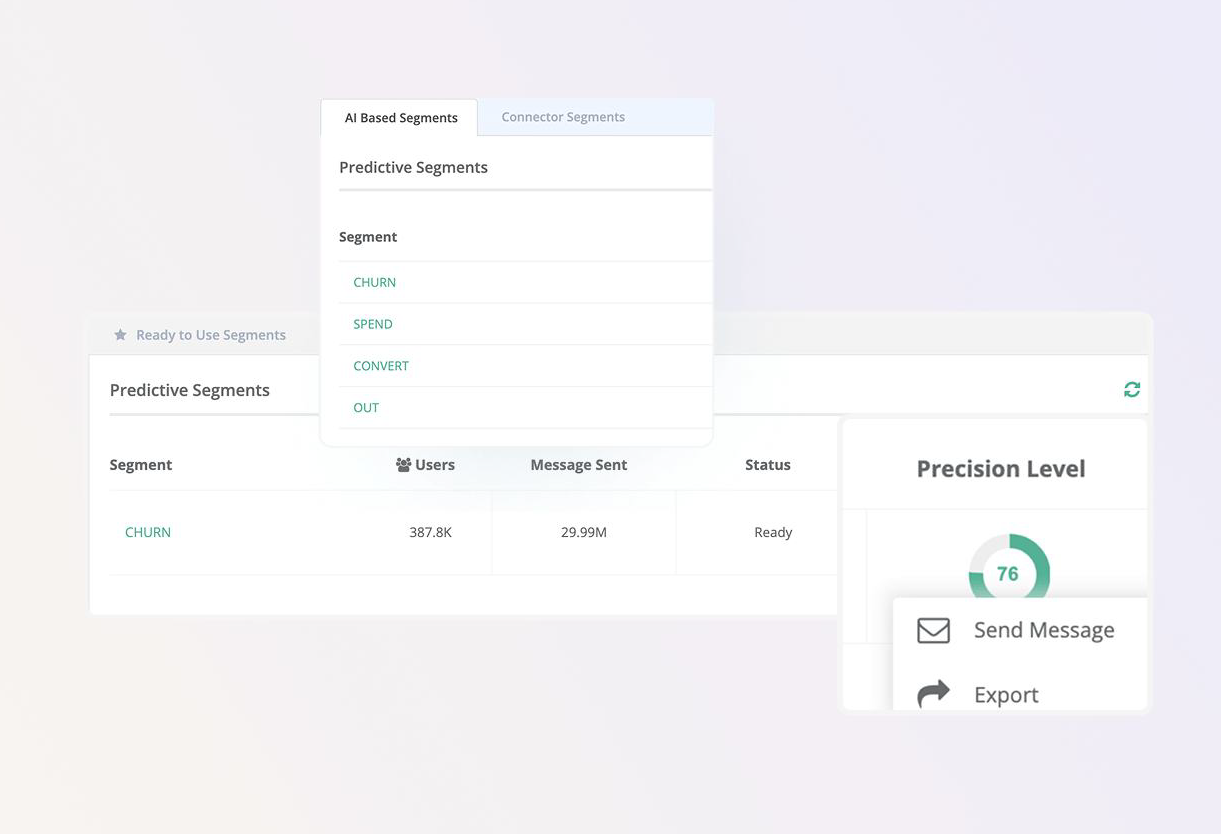
UPTION, a fintech app for international money transfers, used Netmera’s AI-powered predictive segments to identify users likely to churn. A 10-message journey with branching logic reached thousands of users across three languages showing early churn signals. The system stopped the sequence the moment a user returned. The churn segment shrank 16.6%. Among users who entered the journey, 22.6% converted and averaged 14 app opens.
Pushes that arrive precisely when each user is ready to see them? Possible. Best Time Delivery analyzes 60 days of activity to find when each person typically engages with your app. It calculates their optimal hour for every day of the week. New users receive messages during your app’s peak hours until enough data builds up. Open rates go up because messages land during proven high-activity windows.
These elements (dynamic branching, predictive segments, optimal timing) work together because they’re part of one system. When your platform treats each capability as a separate tool, you rebuild that road manually every time. When they’re unified, the story stays continuous.
Journey variants: Test at the step level
Setting up an A/B test shouldn’t require a developer. But for many marketing teams, it does. So they test less, optimize less, and rely on gut feeling more than the data warrants.
Variants sit inside Journey Builder as its own step component. You split your audience at a specific point in the journey, serve different versions of a message, offer, or CTA, and let performance determine what runs next.
The use cases? A lot. Two examples we see our customers often use:
For a post-purchase cross-sell, one group sees a discount offer, another sees free shipping. You find out which incentive pulls the second purchase.
For a savings feature users have not activated, one message leads with projected savings over six months, another shows how similar users are already using it. You find out which framing drives activation.
What makes this useful is scope: you are testing at the decision point, and the rest of the journey continues as planned.
Journey analytics: Connect every journey to revenue
41% of marketers report they cannot effectively measure marketing across channels, according to Supermetrics’ 2025 Marketing Data Report based on data from 200 marketers globally and analysis of 6,000 businesses.
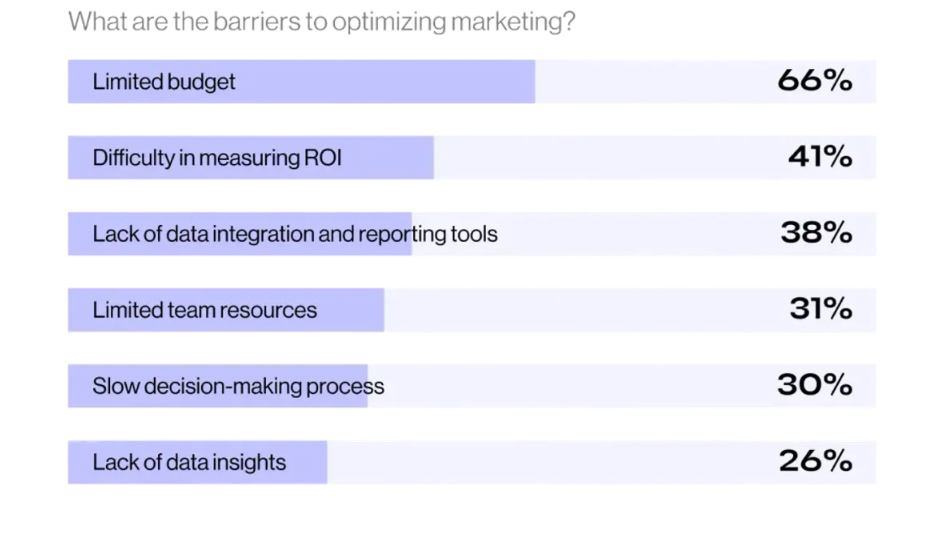
Source: Supermetrics
With Netmera, journey-level revenue tracking shows which steps drive conversions and where revenue leaks. Step-by-step conversion rates reveal how many users enter, proceed, or drop off at each stage, with Funnels visualization displaying the user path at a glance.
Export capabilities download user-level data for non-converters, feeding retargeting campaigns so you reach them through different channels.
Unified data enables behavioral branching. Behavioral branching generates the signals that analytics track. Revenue analytics prove which paths convert. Each capability depends on the others. The question becomes: how do you actually build these journeys?
How to build revenue-generating customer journeys in Netmera
This blueprint covers how to build and launch journeys in Netmera across five steps. Whether you’re mapping an ecommerce customer journey or designing onboarding flows for SaaS, the process stays consistent.
Setup: Define your goal and conversion event
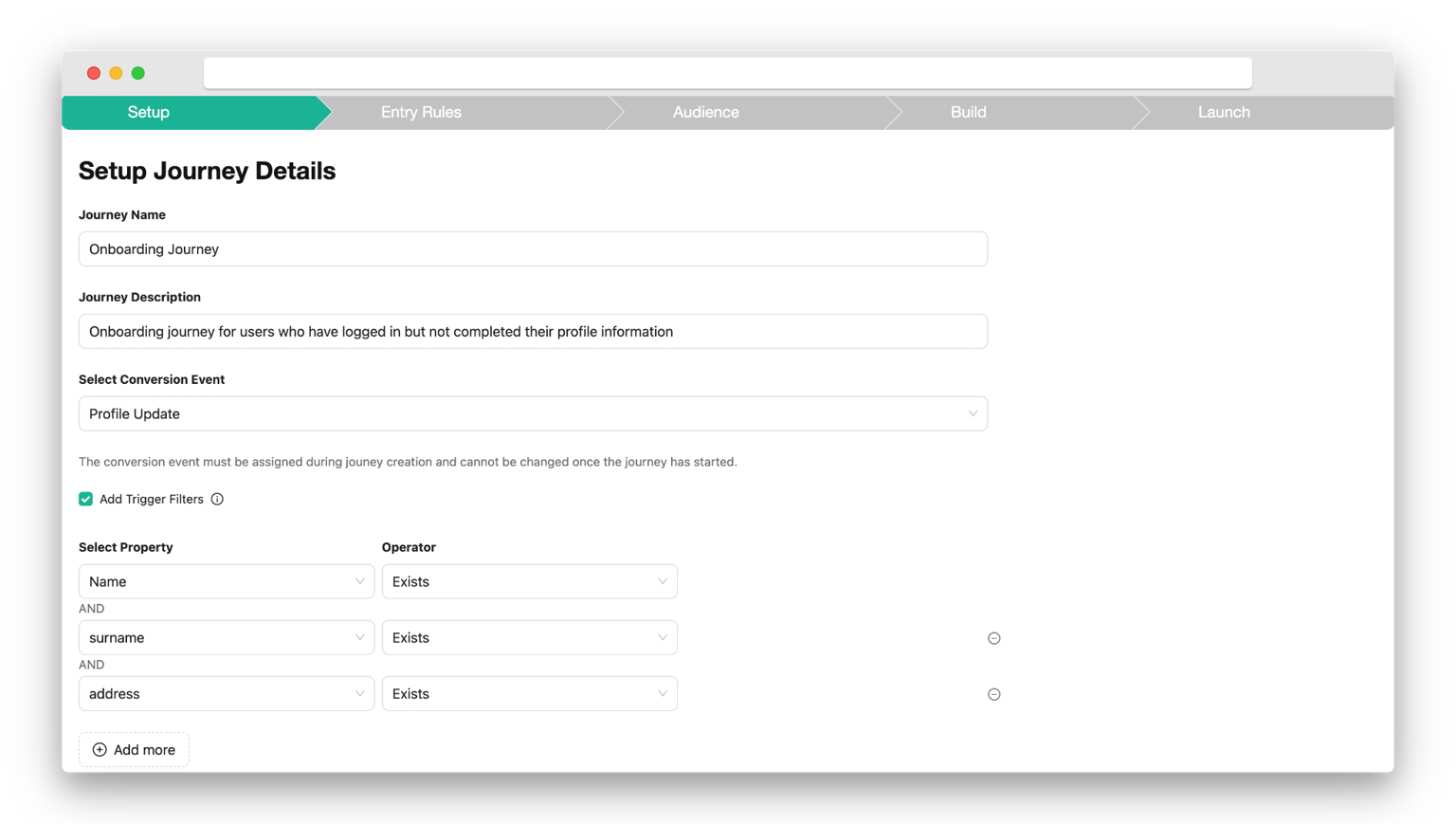
Name your journey, describe its purpose, then choose a conversion event: purchase completed, form submitted, credit application approved. Netmera tracks conversions in real time, so you see which journeys drive results and which need adjustment. Add trigger filters to focus on high-value opportunities. For a cart abandonment journey, for example, trigger only when cart value exceeds $50.
Entry rules: Set time-based or behavior-based triggers
Time-based triggers work for scheduled campaigns like birthday messages or monthly check-ins. Action-based triggers respond to behavior: cart abandonment, app installs, purchases.
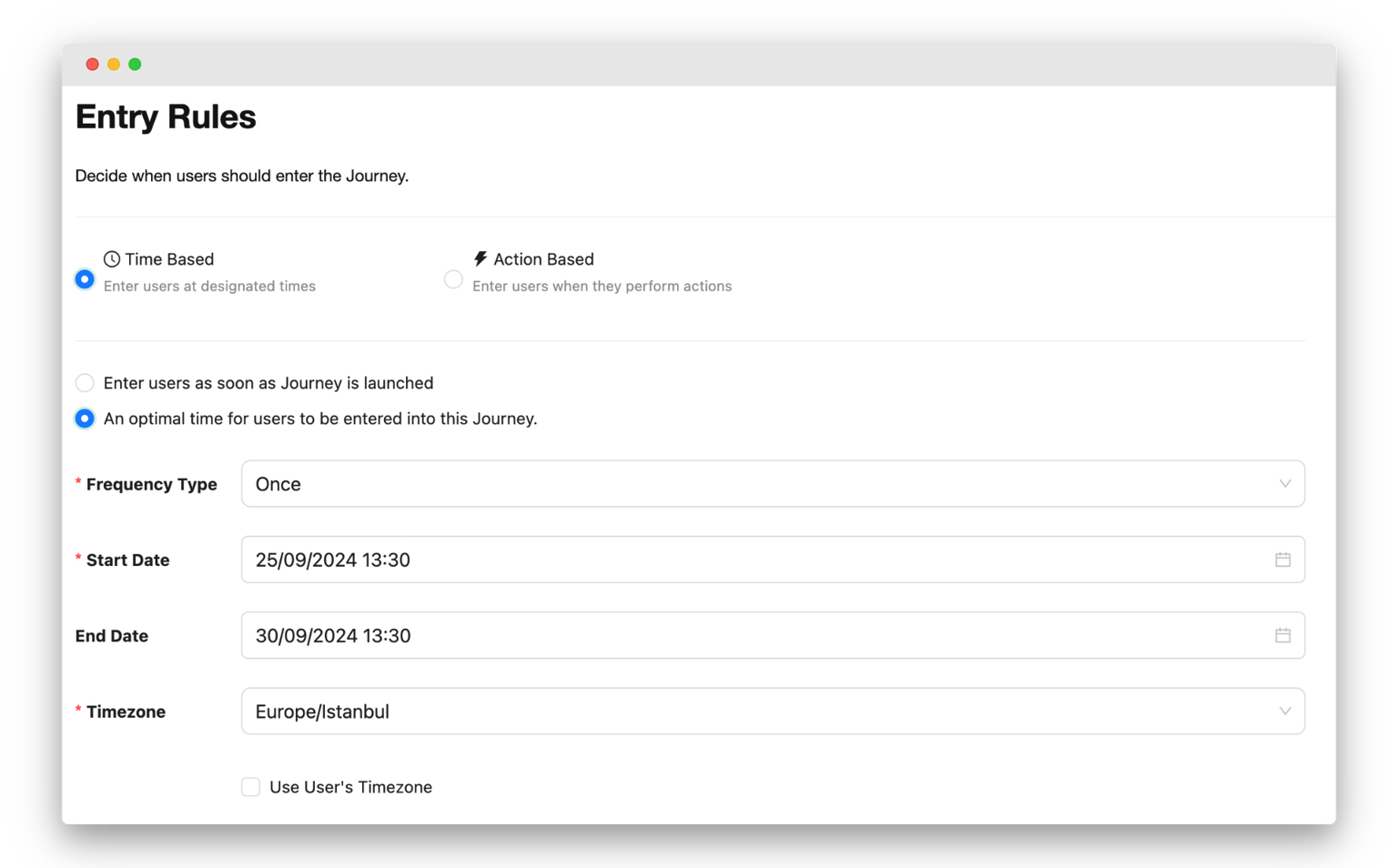
Action-based typically converts better because intent is clearer. A user who just abandoned a $200 cart is more likely to act than someone who hasn’t opened the app in ten days. Set eligibility rules to control re-entry: a cart recovery journey might allow re-entry after 7 days, while an onboarding journey runs once per user.
Entry Rules also controls when triggered messages are allowed to send. Engagement Window sets an allowed schedule by day and hour, for example 09:00–18:00 on weekdays, and applies to every supported send step in the journey by default. A message triggered outside that window is either discarded or held until the next valid window opens based on your preference. Individual Push, Email, or SMS steps can be set to ignore the window when the message needs to go out immediately.
Audience: Target specific segments or all users
Choose which segments enter. New users, returning customers, at-risk accounts? Add multiple segments with AND/OR logic. If no segment is selected, the journey applies to everyone, which works for broad campaigns but limits personalization.
Build journey: Design multi-step flows with branching
Use Netmera’s no-code builder to design the flow visually. Add delays, branching conditions, and interaction checks. Journey variables personalize at scale without engineering: {ProductName} pulls from the triggering event automatically. Add channels where they make sense: push for immediacy, email for detail, SMS for time-sensitive updates. messages.
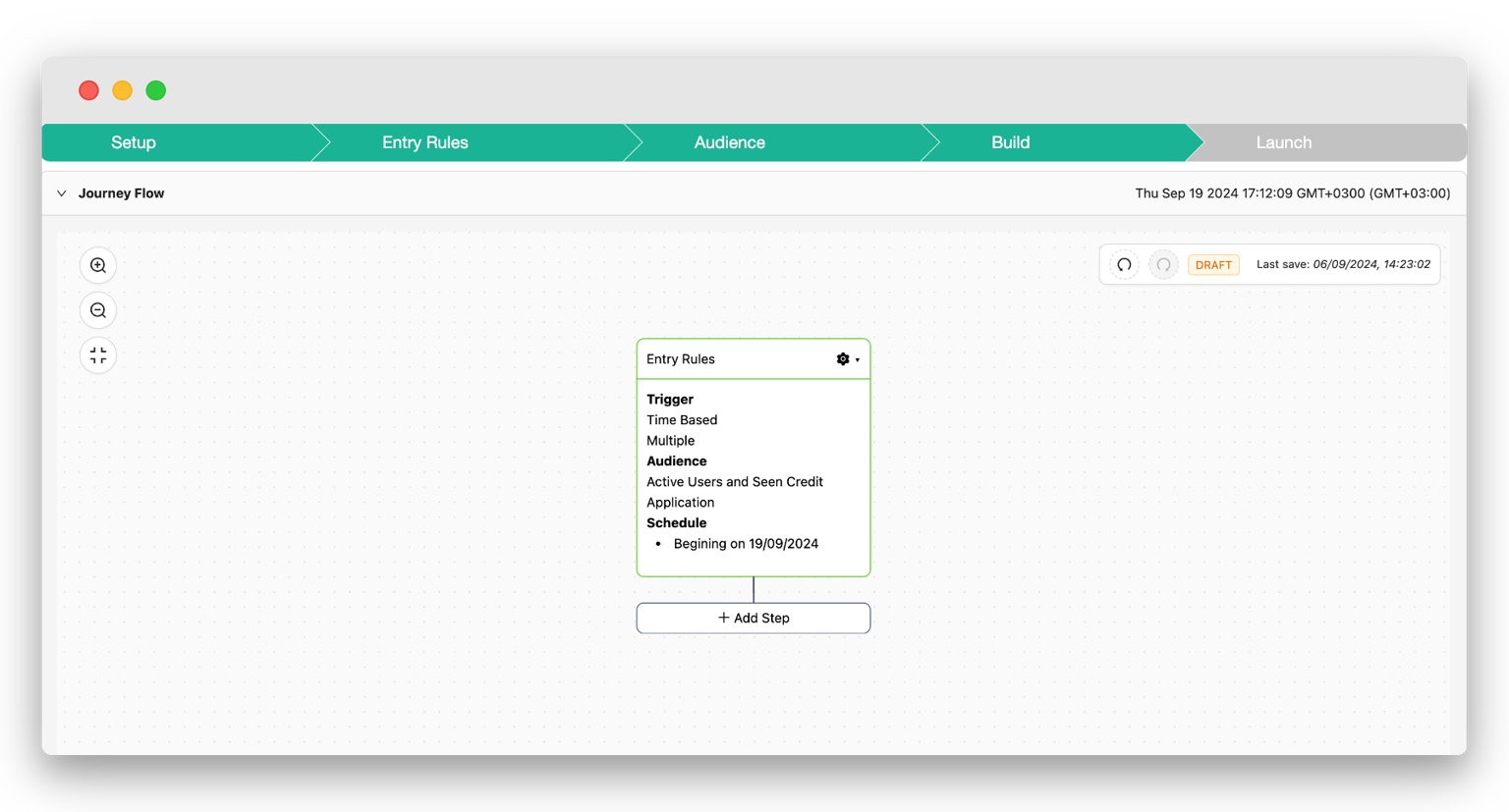
Launch: Monitor performance and optimize in real time
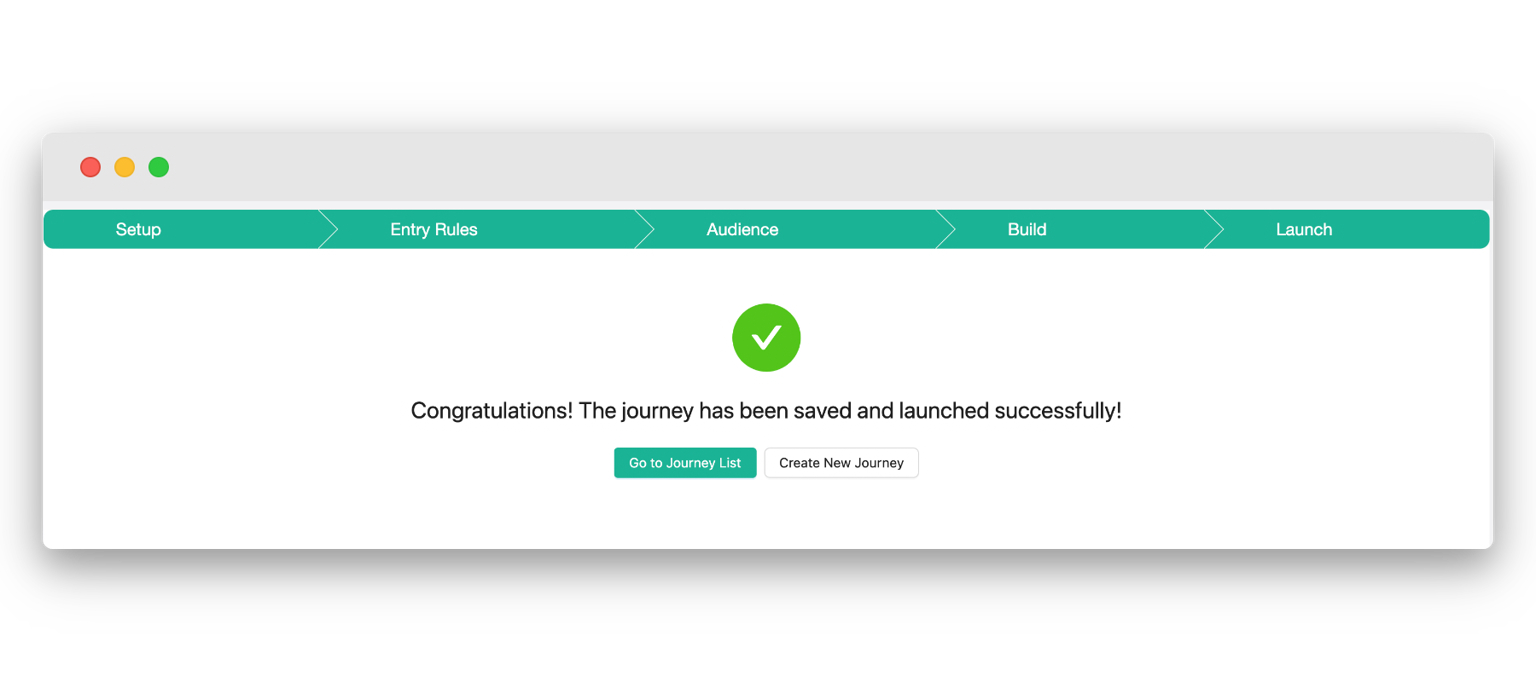
Before launch, verify your conversion event, test messages on real devices, and confirm segments. Once live, journey analytics show entry counts, drop-offs, and conversions at each step as they happen. Export non-converters for retargeting through different channels.
Check our user guide for a more nuanced description of journey building.
Top customer journey orchestration software
Here is a short overview of platforms most commonly evaluated in this category, based on G2 data, Gartner reports, and the competitive context we see across retail, banking, media, and telecom.
Netmera
UPTION shrank its churn segment by 16.6%. A fashion rental company converted 14% of first opens into registrations. Turkcell Pasaj doubled cart conversions. All three ran on Netmera. The platform has a builtin activation-centric CDP along with omnichannel journey builder, and behavioral and predictive analytics. Data collection, decisioning, and measurement sit in the same place, so teams build and launch complex flows from a single interface.
Teams adapt their workflows quickly and go deep across the platform. They use Journey Builder together with predictive AI segments and MCP-powered campaigns, working closely with Netmera’s success team throughout. The results span industries and use cases: Mackolik delivers billions of push notifications to millions of users and hit 20% retention for match reminders. Pluxee converted 3.7% of anonymous web visitors into qualified leads, contributing 3% of their monthly lead target.
Particularly strong for brands in the UK, MENA and Türkiye that need cloud or on-premises deployment for compliance reasons. Recognized by MMA with two awards in Customer Journey Marketing and Personalization, and rated G2 High Performer EMEA, Momentum Leader, and High Performer Mid-Market in 2026.
Explore Netmera Customer Journeys
Braze
Braze’s journey builder, Canvas Flow, covers push, in-app, email, SMS, WhatsApp, and web from one drag-and-drop interface. Journeys are built around behavior-based triggers and branching logic, with Intelligent Timing delivering messages at each user’s individual engagement peak. Pricing is custom and annual.
More information: braze.com
MoEngage
MoEngage’s journey builder, Flows, covers various channels including push, in-app, email, SMS, and WhatsApp. Its AI component, Merlin AI, tests multiple journey paths simultaneously and routes users toward the better-performing one. Used widely by consumer brands across APAC and MENA.
More information: moengage.com
Insider One
Insider One’s journey builder, Architect, spans multiple channels with AI personalization built into the flow logic. Entry triggers cover behavioral events, lifecycle stage, and predictive scores. The platform runs on a closed-loop architecture where journey outcomes feed back into the intelligence layer. Active in MENA and growing fast.
More information: insiderone.com
CleverTap
CleverTap’s journey tool, Journeys, builds flows on a visual canvas triggered by behavior, location, or lifecycle stage. Its IntelliNODE feature tests multiple paths simultaneously and routes users toward the higher-converting one. Analytics include live user tracking at each journey node and conversion funnel views.
More information: clevertap.com
Journey orchestration is one piece of a fully equipped customer engagement platform. We also published a post comparing the leading customer engagement platforms (CEPs), Netmera included, on data, channels, and analytics.
Choosing an automated customer journey orchestration software: What to look for
For teams looking for the best omnichannel platforms for customer journey orchestration, capabilities below separate tools that deliver from those that disappoint.
Infrastructure requirements
✓ Unified customer data with real-time updates across all channels.
✓ Zero IT dependency with no-code builder and tagless data capture.
✓ Omnichannel support. Email, push, SMS, in-app messages, geofence, and WhatsApp should all live in one platform.
These elements enable omnichannel journeys and customer experience continuity that customers now expect across every touchpoint.
Orchestration capabilities
✓ Event-based triggers that respond to actual behavior.
✓ Dynamic branching. Journeys should adapt to what users do next.
✓ Journey variables for true personalization.
✓ AI-powered predictive segments and optimal timing.
✓ Send-time controls that block messages outside allowed hours or days, with an option to hold and deliver later instead of dropping them.
Together, these capabilities transform a basic customer journey strategy into adaptive flows that respond to behavior rather than follow rigid schedules.
Analytics requirements
✓ Financial KPIs like revenue per journey and conversion rates.
✓ Funnel visualization showing exact drop-offs at each step.
✓ Real-time dashboards. Adjust campaigns while they run based on what’s happening.
✓ Export capabilities for retargeting users who exit.
Teams using these analytics see the difference immediately. As one Chief Payment Services Officer shared: “Netmera helps us engage with our users through multiple channels effortlessly. The platform is intuitive, making it easy to create and manage campaigns in real-time. We especially love the segmentation features—being able to personalize messages based on user behavior has improved our conversion rates significantly.”
You’ve seen how these capabilities work for modern customer engagement. Data management, cross-channel communication, and analytics. That’s Netmera’s foundation in one platform, and it’s how our users launch targeted, personalized journeys without developer resources.
You can build journeys that convert too.
Customer journey orchestration software FAQs
A combined CDP removes blind spots. When all behavioral, transactional, and profile data live in one place, you see the full context. Teams can act instantly when someone abandons a cart, triggers a payment error, or returns after a long absence.
Not with Netmera. A visual builder, tagless data capture, and built-in segmentation let marketers build and launch complex flows without engineering support.
Netmera combines a CDP, real-time triggers, journey logic, and analytics in one platform. One flow can orchestrate email, push, SMS, and in-app messages based on consent and behavior.
Unified data, no-code automation, omnichannel support, event-driven triggers, predictive segmentation, and revenue-focused analytics.
With Netmera’s customer engagement tools, teams complete SDK integration and launch their first campaigns within 4-8 weeks depending on complexity. The no-code builder, tagless data capture, and pre-built templates eliminate the typical 6-12 month implementation timelines. Marketing and product teams manage push, email, SMS campaigns from one dashboard without filing IT tickets for each change.
You may be interested in
Customer journey stages: The 5 phases from awareness to advocacy (with 3 real journey flows for onboarding, upgrading and re-activation)
Choosing the right deferred deep linking partner after Firebase’s sunset (for journeys that start before app installation)
N Kolay doubles five-task completion rate with behavioral automation (a complete journey across five touchpoints)
Burcu Ulucay – Content Marketing, Netmera