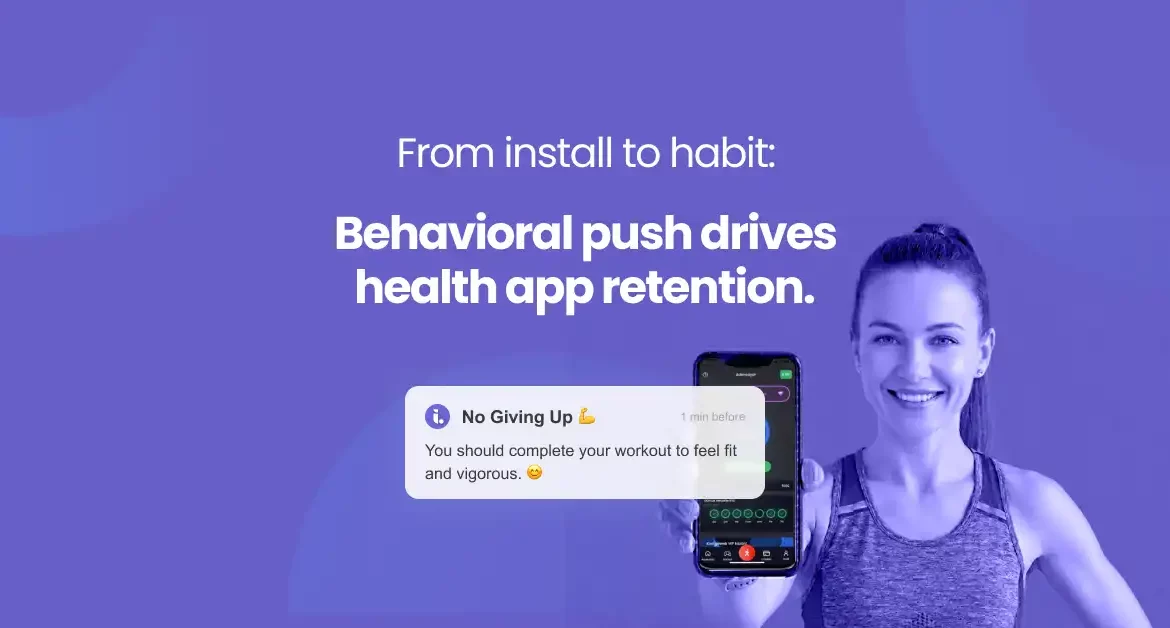
How Health & Wellness Push Notifications Enhance Customer Engagement
Last update: May, 2026
The global digital health market is on track to reach $6 billion*, and subscriptions drive most of that revenue. Yet 77% of health and fitness app users don’t return after day one. By day 30, retention falls to somewhere between 3% and 10%**.
Health and wellness push notifications are where that distance gets closed, but only when they’re connected to real behavioral data. A push fired at the wrong moment, to the wrong user, accelerates opt-out. One push triggered by what someone did in your app brings them back.
Lifecycle stage, behavioral signal, and the infrastructure connecting them all have to work together. Miss one and the channel erodes. This post covers where each one matters.
*Source: Business of Apps.
**Source: Digital Yield Group.
Why health and fitness apps struggle to retain users
Users don’t drop off randomly. Users pause at predictable moments that require instant, contextual communication: after the first session ends, when a workout goes unfinished, when a purchase stalls mid-funnel.
Broadcast campaigns miss these moments because they’re built around schedules. They don’t consider signals. A weekly newsletter goes out regardless of what a user did yesterday. A promotional push fires at noon because that’s when the last one went out. Neither responds to the specific point where a user paused.
Research shows that 28% more health app users expect personalized content than actually receive it. For most apps, that gap closes slowly if at all, and users don’t wait. Users who set a fitness goal on day one and hear nothing relevant to that goal by day three have little reason to return.
Mobile health app engagement breaks down when messaging operates independently from behavior. Omnichannel works when the strategy stops meaning more messages and starts responding to behavior.
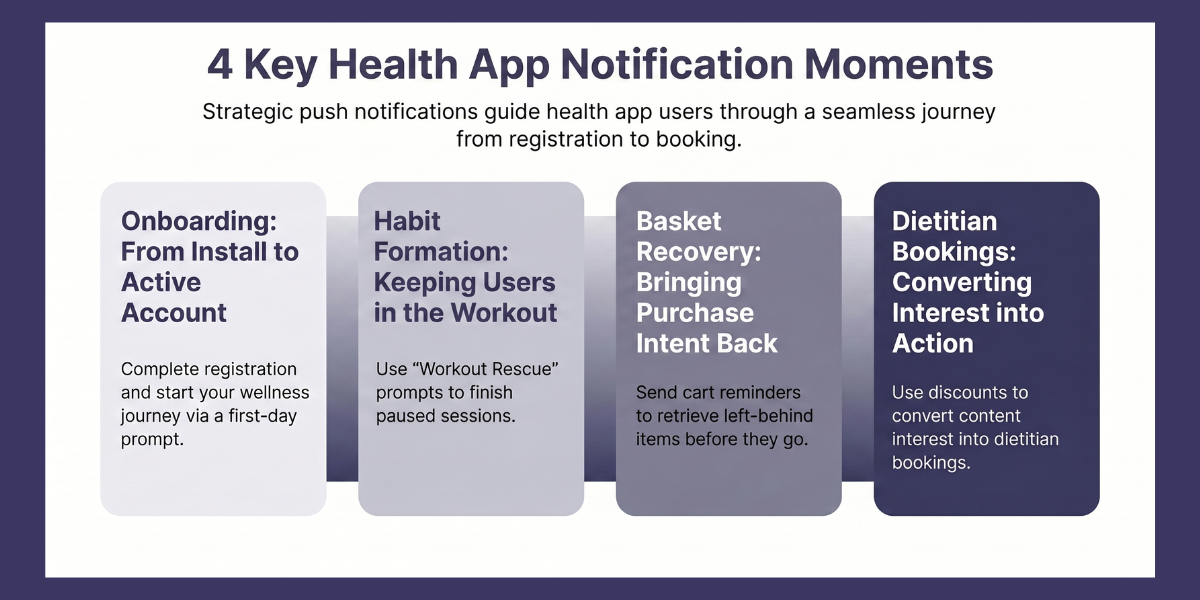
Four moments where push notifications move health app users forward
The lifecycle stage determines what a user needs to hear next. A first-time user who hasn’t completed registration needs something different from someone mid-workout or mid-purchase. Below, we reference results from a digital wellness platform that ran four separate automations with Netmera. The platform, owned by a leading healthcare group in Turkey, targeted a specific behavioral moment in each push notification automation.
Onboarding: from install to active account
The first 24 hours after install are where most health apps lose users permanently. Someone downloads the app, browses the home screen, and closes it before completing registration. Without a prompt tied to that specific moment, they rarely come back.
Our customer, the wellness platform, set up an automated welcome push triggered immediately after each new install. They saw an 8.21% CTR on the onboarding push, with 34% of recipients completing registration. Push notifications for fitness apps perform strongly when timing is behavioral and messaging is relevant.
Habit formation: keeping users in the workout
A paused workout is a churn signal. Users who stop mid-session and don’t return within a short window tend not to come back to that session at all. A workout reminder push notification sent too late is functionally useless.
The wellness platform configured a trigger that fired specifically when a user paused a session without resuming. The automation achieved an 8.01% CTR, with 33% of users returning to their workout.
Basket recovery: bringing purchase intent back
Users who removed items from their basket had already shown clear intent: they considered buying from you. In our case, the wellness platform sent an automated recovery push at the moment of removal, reminding them of what they’d left behind. 44% added items back to their basket. 26% completed a purchase. The automation achieved a 9.55% CTR, compared to below 1% on standard campaigns.
Dietitian bookings: converting content interest into action
Users who engaged with diet-related content but hadn’t booked a session represented a second distinct drop-off point. The wellness platform built a behavior-based segment from that signal and sent a targeted discount offer. The automation achieved a 4.68% CTR, with 5% of recipients completing a booking.
These are health app push notification examples where the message worked because the behavioral signal determined who received it and when.
Beyond push: how in-app messages and gamification deepen mobile health app engagement
Push gets users back into the app. What happens inside determines whether they stay.
In-app messages catch users while they’re already active, which makes them a different tool from push entirely. A user who returns after a workout resume push is in motion. An in-app prompt at that moment, whether it surfaces a new program, a progress milestone, or a next step, meets them where their attention already is.
Our customers who use gamified engagement elements within the app see tangible results. Walkers, a consumer app that combined Netmera’s Spin to Win with data-driven in-app messages delivered during peak activity hours, saw retention increase 10.9% after 28 days and active users grow by 11.87%.
HelpSteps is another example that shows how channels feed and deepen the relationship with the user when coordinated. They used Netmera’s event-driven segmentation alongside mobile widgets, geofencing, and email to reach users at the exact moments they were ready to act. Conversions grew from 1,967 to 11,386 in two months. The channel mix mattered, but so did the precision of the triggers underneath it.
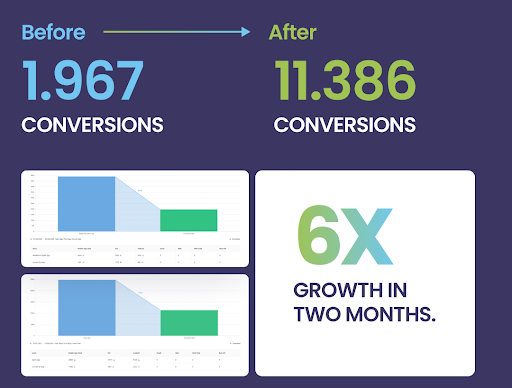
For health and wellness apps specifically, this sequence maps naturally onto user behavior. A push brings someone back. An in-app message moves them deeper into a feature. A gamified reward gives them a reason to return tomorrow. Netmera runs all three from one platform, with behavioral data feeding each layer, so the sequence stays coherent and the timing stays relevant across every touchpoint.
Four practices behind push notifications for fitness apps that perform in health apps
Timing and message length
Research from Business of Apps shows the ideal push length for health and fitness apps is around 90 characters. Words like “treatment,” “pain,” and “old” reduce engagement in this category. Creative plays a role, but length and word choice determine whether a message gets read at all.
Behavioral triggers over broadcast
CTR gains come from data, not just creative. Automations triggered by time and behavior consistently outperform standard campaigns.
A basket recovery push works because it fires at the moment a specific user removes a specific item. A dietitian discount works because it reaches users who are already engaged with diet content. Broadcast campaigns can’t replicate that precision because they don’t have access to those signals at the individual level.
Opt-in strategy and trust
Users allow push notifications when they understand what they’re agreeing to. Health apps that explain the value of notifications during onboarding, progress tracking, goal reminders, workout prompts, see higher push notification opt-in rates and lower churn from the channel. Asking for permission before establishing that value is where most apps lose the opt-in permanently.
Push as part of an omnichannel sequence
Push alone has limits. When a user ignores a push, the next touchpoint should be in-app, email, or SMS. Repeating the same push compounds opt-out risk. This coordination only works when messaging and behavioral data live in the same platform. Personalized push notifications healthcare teams rely on require a shared data layer across every channel, so each touchpoint builds on the last rather than starting from scratch.
Why the platform underneath the push matters in behavioral segmentation health apps
Behavioral push works when the signal that triggers the message comes from the same system that holds the user’s history, segment, and channel preferences. When those live in separate tools, the window closes before the data arrives.
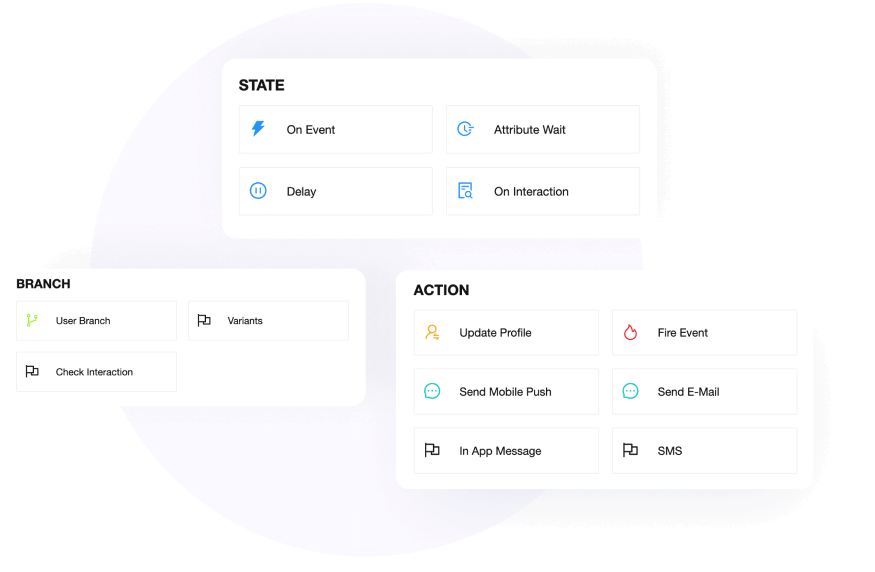
Netmera connects data collection, behavioral segmentation, omnichannel execution, and analytics in one system. It’s the infrastructure health apps need to act on user behavior in real time.
Behavioral events from the app feed directly into segments. Those segments trigger journeys across push, in-app, email, and SMS. Results flow back into the same dashboard. When the wellness platform ran four automations across the full user lifecycle, this is what made it operationally possible without ongoing developer involvement.
That same infrastructure powers individual-level timing. Best Time Delivery analyzes each user’s 60-day activity pattern to find when they’re most likely to engage, per person. A workout reminder that arrives when someone is already on their commute performs differently from one that arrives when they typically open the app. For health apps, that distinction is where user engagement is actually won or lost.
Netmera’s MCP server takes this a step further by connecting the platform to AI tools like Claude or ChatGPT. You can ask your AI tool which push campaigns drove the most re-engagement last month and get an answer sourced directly from your live Netmera data. On the write side, you can draft push messages and create segments through your AI interface, with guardrails before anything goes live.
Getting the most from health and wellness push notifications in your app
Download numbers tell you what your acquisition is doing. What happens between install and habit is where wellness app retention is actually determined, and that’s where behavioral push does its work. When messaging responds to what users do rather than when a campaign is scheduled, the results compound across every lifecycle stage.
Schedule a demo to see how Netmera’s lifecycle automation works across the full user journey.
FAQs — Health & wellness push notifications
Push notifications close the gap between user intent and action by reaching users at specific behavioral moments (after a paused workout, during onboarding, or when a purchase is abandoned). When triggered by real in-app behavior rather than scheduled broadcasts, they bring users back at the point where they’re most likely to act.
Industry benchmarks vary, but behavior-triggered automations consistently outperform broadcast campaigns. For context, the lifecycle automations covered in this post achieved CTRs between 4.68% and 9.55%, compared to below 1% for standard push campaigns in the same platform.
The best push notifications fire in response to what a user just did, or stopped doing. Examples include: immediately after install (to prompt registration), when a workout session is paused without being resumed, or when a user removes an item from their basket. Time-of-day optimization based on individual activity patterns also matters significantly.
Research suggests around 90 characters is optimal for health and fitness apps. Word choice also affects engagement. Terms like “treatment,” “pain,” and “old” tend to reduce open rates in this category.
Push notifications re-engage users who are outside the app. In-app messages reach users who are already active inside it. They work as a sequence: push brings the user back, and an in-app message guides them deeper into a feature or next step while their attention is already there.
Explain the value of notifications during onboarding before asking for permission. Tell them what users will receive (workout reminders, progress updates, goal tracking prompts) and why it benefits them. Apps that establish this value first see higher opt-in rates and lower churn from the channel later.
Behavioral segmentation groups users based on actions they’ve taken (or not taken) inside the app, including a paused workout, an unfinished registration, or content viewed without booking. These signals trigger targeted messages that match the exact point where a user paused, rather than sending the same campaign to everyone.