Location-based marketing: How it works, and what it adds to digital customer experience
Last update: August, 2026
TL;DR: Location-based marketing works when it runs on accurate, fresh customer data, the purchase history and browsing behavior a team already has on that person. When the location signal is checked against that existing data, teams can segment and target with real specificity. This results in high open rates and conversion rates (Chippin’s geofence messages hit an 8% open rate, 40 to 60 times what broadcast push delivered, and about 60% of campaign revenue traced back to geofence alone).
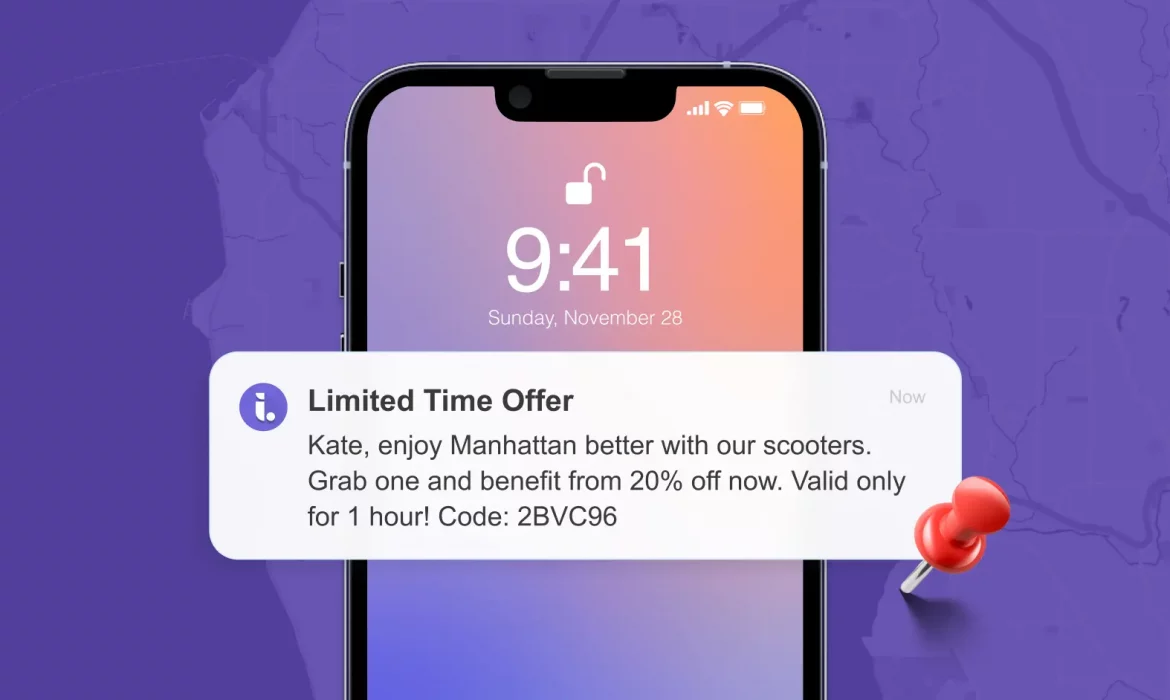
A user walks past a store they visited three months ago. Their phone buzzes. They get a specific offer at the exact retailer they last shopped at, timed to the minute they crossed the threshold. That single trigger is location-based marketing, and it is the last step in a pipeline (which we will go into later).
Location-based marketing uses real-time or historical geographic data to serve relevant content, offers, or messages based on where a customer is or has been. Data is the core of it. As this post gets into, when teams run location-based marketing on a platform that unifies data and engagement instead of a point solution, they get more than a physical targeting campaign. They provide customers with relevant and contextual interactions.
What is location-based marketing
Customers move through the physical world. They enter stores, board flights, check into hotels, walk past cafes. Location-based marketing takes that movement and turns it into a trigger for a digital experience, continuing a conversation the brand already started with that user earlier.
Global spending on location-based marketing is projected to reach $296.8 billion by 2030, a 15.1% compound annual growth rate. Geofencing is the fastest-growing segment, expanding at 17.2% annually (Source).
How location-based marketing works
Think of the process as a pipeline of four steps: signal, consent, triggering, and messaging.
Signal acquisition. A mobile app or browser requests location access. Once granted, device sensors capture GPS coordinates, connected Wi-Fi networks, or proximity to Bluetooth beacons. This is also where geolocation marketing starts, the practice of using any of these signal types to place a customer in physical space.
Consent and data ingestion. Before anything else happens, the platform needs to confirm the user has opted in, and that consent needs to persist as a checkable status beyond the onboarding.
Once confirmed, the raw location payload (latitude, longitude, timestamp) moves to the marketing platform, where privacy parameters are validated and inaccurate signals get filtered out.
Skipping this step is where a lot of location marketing programs run into trouble with regulators and with customer trust at the same time.
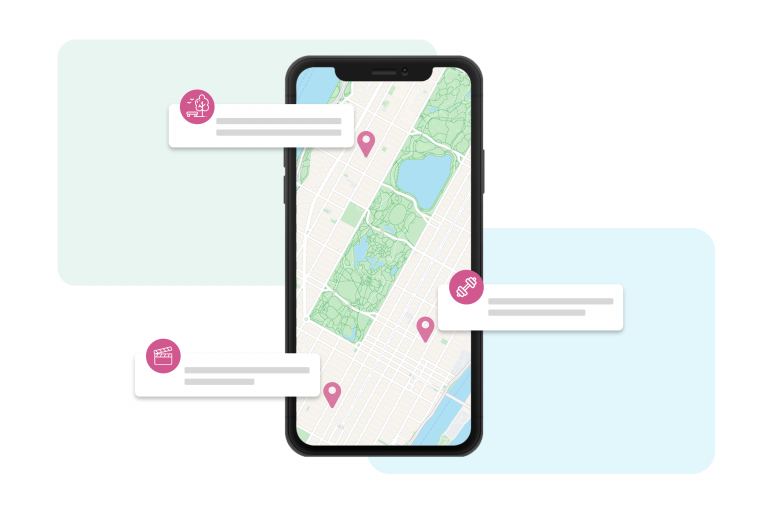
Spatial matching. The platform checks whether the user’s coordinates overlap with a predefined boundary, a geofence around a store, a target region, or a beacon’s proximity zone.
Action and personalization. When a rule matches, the platform serves a tailored message, ad, or web experience suited to that specific location context.
Running this well requires a customer engagement platform with a built-in CDP that cleans location signals, enforces consent, and maps physical location back to a unified customer profile. Netmera connects location data to a customer’s full behavioral history in the same platform, so a geofence trigger can factor in what that customer bought last month or which push they ignored last week.
Types of location-based marketing
Location-based marketing covers several distinct tactics, and knowing which one applies where prevents a lot of wasted setup.
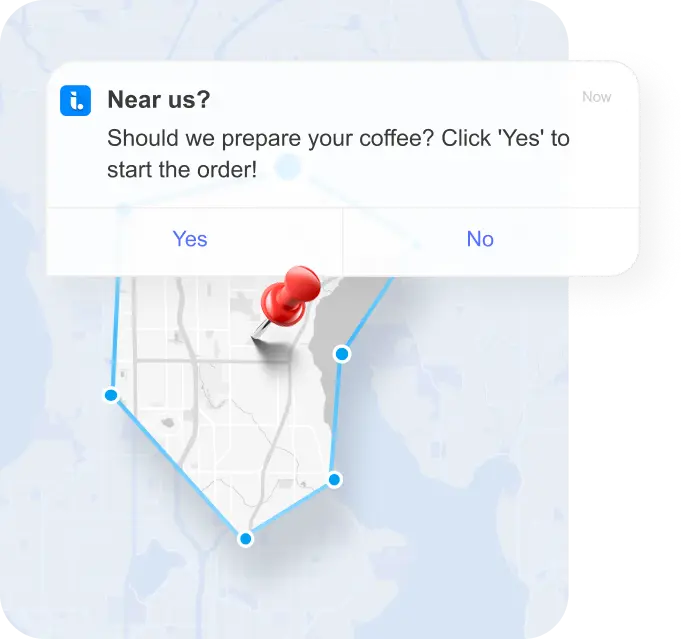
Geofencing draws a hyper-local virtual perimeter, often a couple hundred meters around a store, and fires a message the moment a device crosses it. It’s the tightest and most immediate of the tactics.
Geotargeting works at a broader scale: city, ZIP code, or region, and combines location with a user profile, age, interests, purchase history. The profile drives the targeting, with location as one input among several. This is also where location based targeting fits, layering audience data on top of geography to reach the right customer.
Beacon and proximity marketing uses Bluetooth beacons for indoor precision, useful in large retail spaces or venues where GPS alone isn’t accurate enough to know which aisle or section a customer is standing in.
Behavioral location patterns look backward instead of in real time, analyzing a customer’s movement history (a 30-day pattern of store visits, for instance) to identify habits worth acting on, like a commuter who passes a branch every weekday morning.
You may have heard about geo conquesting. It targets customers near a competitor’s location rather than your own, a more aggressive tactic than the others but a real one advertisers use.
Geofencing vs. geotargeting vs. location-based marketing
| Concept | Scope | Boundary | Trigger | Example |
|---|---|---|---|---|
| Location-Based Marketing | The entire strategy | Broad to hyper-local | Real-time or historical location | Analyzing 30-day movement history |
| Geofencing | One technical tactic | Tight perimeter (e.g., 200m) | Crossing a perimeter | Push fires within 50 feet of a cafe |
| Geotargeting | One audience strategy | City, ZIP, or region | Page visit or impression in a zone | Winter coat ads shown to users in Chicago |
Location-based marketing is the strategy. Geofencing and geotargeting are two of the tactics that execute it.
Benefits of location-based marketing
A 20% average increase in in-store visits follows geofence-triggered push campaigns, and location-triggered offers see a 2.1x lift in redemption rates compared to non-targeted ones (source).
Higher conversion and CTR. A message that arrives when a customer is standing near the relevant location carries more relevance than a static campaign, and that relevance shows up directly in click-through rates.
Reduced ad spend waste. Limiting reach to geographically viable regions keeps budget off impressions that were never going to convert, out-of-market clicks that looked fine on a dashboard but never turned into a visit.
Cross-channel personalization, mobile and web. On mobile, active GPS or Bluetooth beacons trigger real-time foot traffic through push, SMS, or wallet passes. On the web, IP or device location adjusts the experience without a real-time signal, showing local inventory, nearest pickup options, or regional pricing.
Closed-loop attribution. Cost per visit becomes a trackable metric. Teams can confirm whether a digital trigger actually led to a physical visit.
Location-based marketing examples
Retail loyalty
Chippin, Turkey’s mobile payment and loyalty app, ran geofence triggers across three major retail partners using Netmera.
Geofence-triggered messages averaged an 8% open rate, 40 to 50 times higher than the broadcast push campaigns running in parallel.
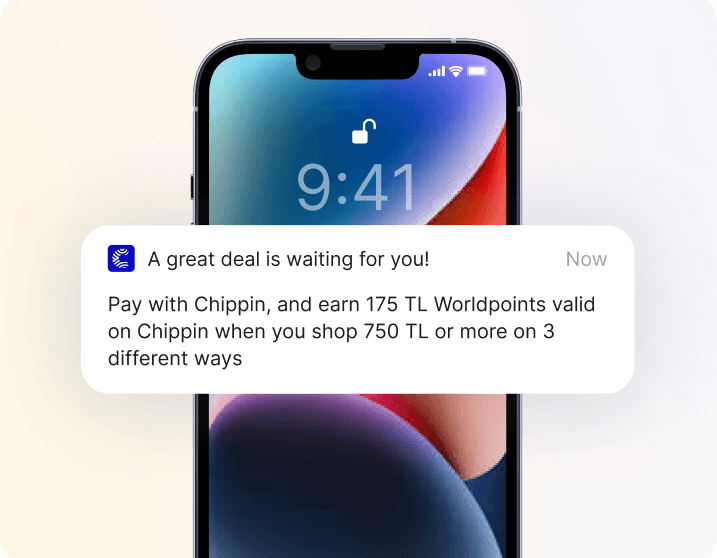
Geofence triggers also brought 30 to 60 times more revenue per message than broadcast push, and roughly 60% of total campaign revenue traced back to geofence alone.
Health & Wellnes
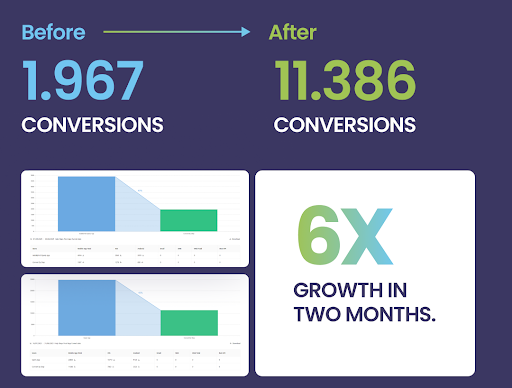
HelpSteps combined geofence reminders with mobile widgets and email, triggering messages when users were near a location relevant to completing a step in their journey. Conversions grew from 1,967 to 11,386 in two months, close to sixfold.
Food and beverage
A major coffee chain used Netmera’s location-based personalization to connect digital engagement with physical foot traffic. Foot traffic grew 15%, and loyalty program participation increased 25%.
Banking
Let’s see how location-based marketing would apply to a regional bank with branch locations.
A customer who recently browsed a mortgage calculator in the app walks past a branch. The message references the specific product they were already looking at, an approach that only works if location data and product-browsing behavior sit in the same system.
Two ways to run location-based marketing: isolated channel or unified platform
Netmera is built as a customer engagement platform with an activation-first CDP at the core, so location signals, purchase history, and channel engagement all live in one place.
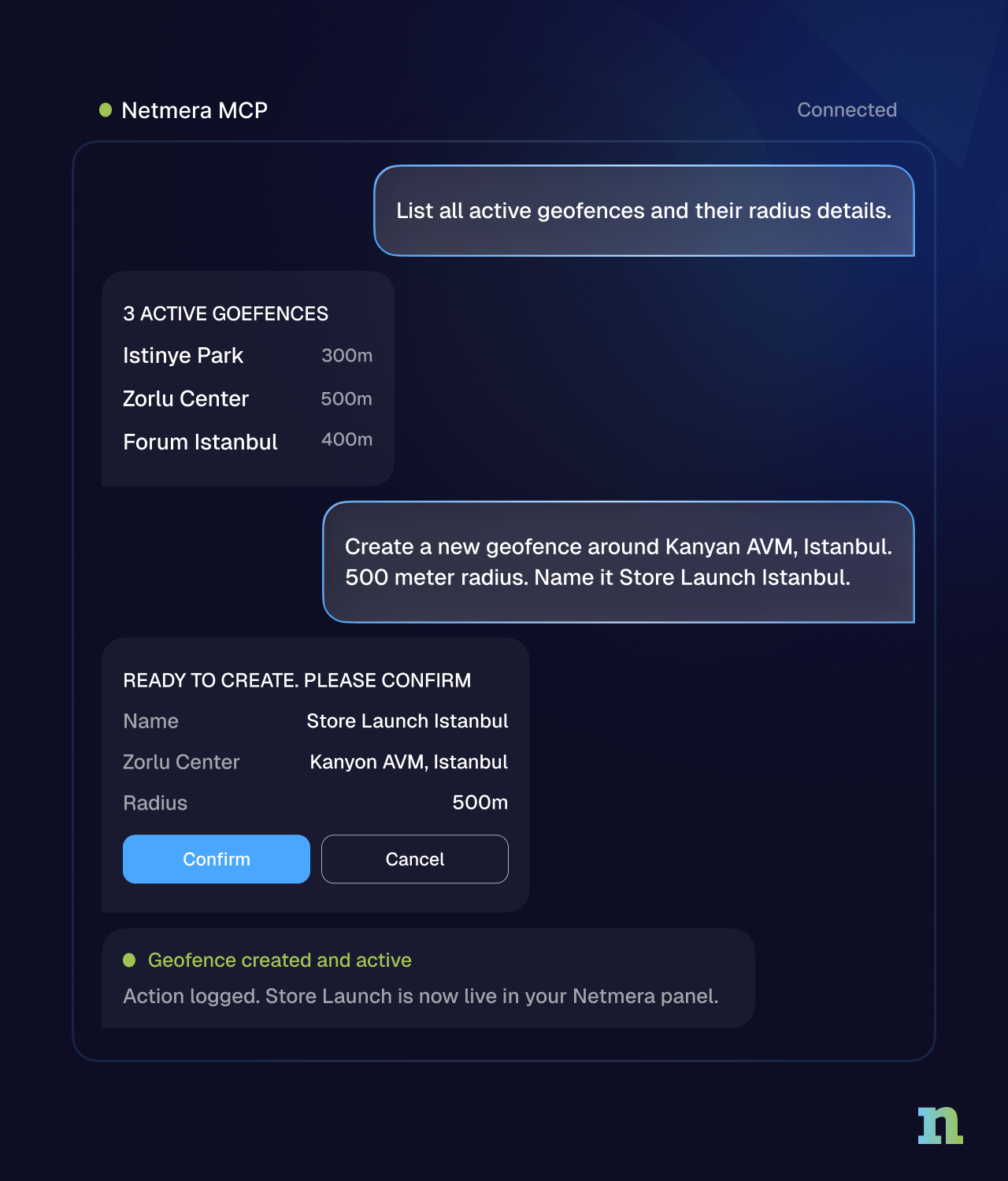
Teams in regulated industries, banking, insurance, telecom, have run campaigns on Netmera for years within full compliance requirements. Marketing teams use Netmera’s MCP server to analyze geofence campaign performance, draft new campaigns, and recall them when needed, directly from the AI tools they already use.
Insight Boards let teams compare a plain push campaign against the same push with a geofence trigger added, broken down by country, platform, or device, all built in minutes.
A point solution can be enough if geofence-triggered messaging is the only thing on the list. But teams running campaigns across mobile, web, and app need something more. They need a platform that knows the customer’s full data history and can act on it, sending a geofence trigger alongside every other channel in one coordinated journey. Capping, timing, and action-based logic keep that journey clean, so a customer walking into a store once doesn’t get three separate messages about the same visit.
When that’s the setup you need, Netmera’s customer engagement team can talk you through location-based marketing and the broader strategy it needs to sit inside.
FAQs on location-based marketing
Location-based marketing uses a customer’s real-time or historical geographic data to trigger relevant content, offers, or messages. A geofence crossing, a beacon signal, or a movement pattern become the trigger, and the message that follows is tied to where the customer is or has been.
It runs as a four-step pipeline: signal acquisition, consent and data ingestion, spatial matching, and action. A device captures a location signal, the platform confirms the user opted in, checks whether that location overlaps a predefined boundary, and then serves the message.
Geofencing, geotargeting, beacon and proximity marketing, behavioral location patterns, and geo conquesting. Geofencing fires on a tight virtual perimeter, geotargeting layers audience data on top of a broader area, beacons handle indoor precision, behavioral patterns look at movement history, and geo conquesting targets customers near a competitor’s location.
Higher conversion and click-through rates, reduced ad spend on out-of-market audiences, cross-channel personalization on mobile and web, and closed-loop attribution that ties a digital trigger back to a physical visit.
No. Retail is the most visible use case, but banking, health and wellness, and food and beverage brands run it too. A regional bank can trigger a branch-specific message when a customer who browsed a mortgage calculator walks past a branch, which only works when location data and product-browsing behavior sit in the same system.