
How to Combat a Cookieless Future: First-Party Data Strategy for Mobile-First Brands
Last update: March 2026
TL;DR: Third-party cookies are unreliable for a growing share of your audience. The fix is first-party data: behavioral signals collected from touchpoints you own, activated across segmentation, journeys, and omnichannel campaigns. This post covers what the cookieless shift means in practice and how to build a strategy around data you control.
Google reversed its full cookie deprecation plan. Third-party cookies are still available in Chrome, but with user opt-in controls. Safari and Firefox already block them. The direction is clear: tracking infrastructure you don’t own is becoming less reliable, and building personalization on top of it means accepting gaps you can’t close.
Nearly 90% of marketers are already shifting toward first- and zero-party data in response. Read on to understand how to combat a cookieless future: what it actually means for your campaigns, how first-party data collection works in practice, and why the brands building this infrastructure today will be harder to compete with tomorrow.
What “Cookieless” Means in 2026
Safari blocks third-party cookies entirely. Chrome keeps third-party cookies available for now, but is moving toward giving users explicit control over whether they allow cross-site tracking.
The practical consequence is inconsistency. The same campaign reaches some users and misses others depending on their browser and privacy settings. Attribution becomes unreliable. Personalization degrades for a portion of your audience and you often can’t tell which portion.
The issue with third-party data isn’t only compliance or regulation. It’s that the foundation produces results you can’t fully trust or replicate.
What Marketers Lose When Third-Party Cookies Break
Reach drops. Retargeting audiences shrink. Conversion attribution shows gaps. The root cause is the same: the data layer those tactics depend on is no longer consistently available.
Cross-Site Retargeting Becomes Unreliable
When Safari and Firefox block third-party cookies by default and Chrome users opt out, those users become invisible to your retargeting campaigns. You suddenly start reaching a different audience, with no way to know who’s missing.
Attribution Gaps Grow Wider
When a user clicks an ad on Safari and converts on your mobile app, the cookie-based attribution chain breaks. The conversion happens but the credit doesn’t flow back correctly. Budget decisions end up based on incomplete data.
Personalization Degrades Silently
Cookie-based behavioral profiles get thinner as tracking restrictions expand. Your personalization engine keeps running, but on stale or missing data.
The common thread: when the data comes from infrastructure you don’t control, the reliability of everything built on top of it is borrowed, not owned.
What First-Party Data Makes Possible for Mobile-First Brands
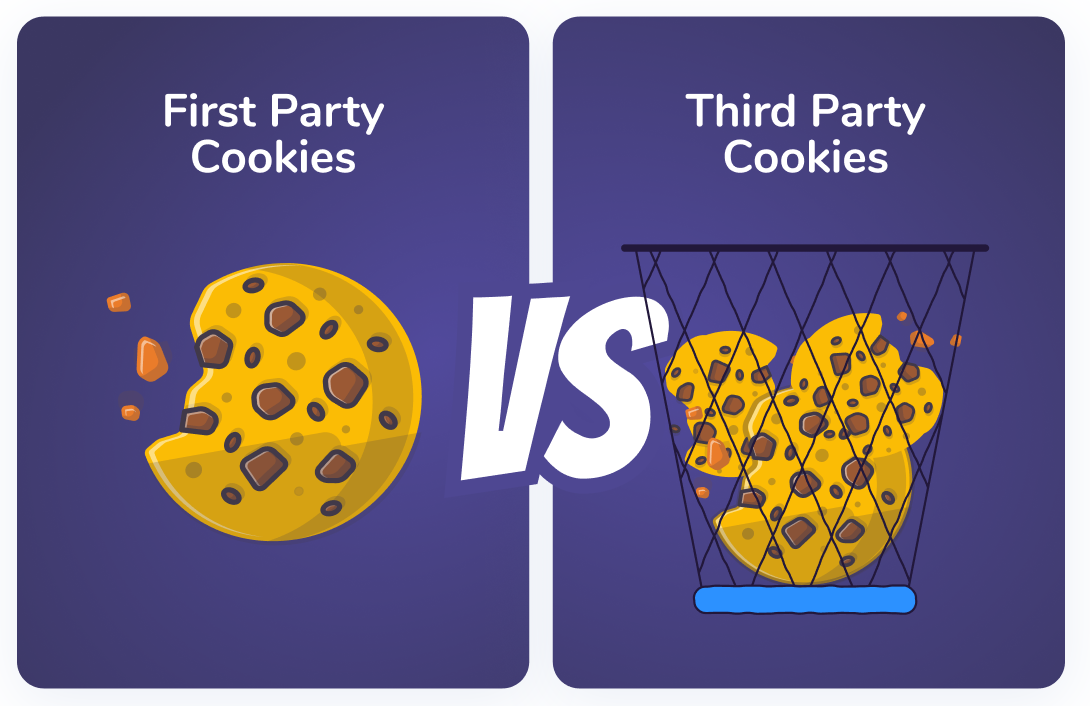
First-party data comes from touchpoints you own: your mobile app, your website, your CRM, your backend systems. When a user opens your app, browses a product, completes a purchase, or abandons a form, that behavioral signal flows directly into your platform.
Persistent Identity Across Devices
When data comes from your own SDK rather than external trackers, you can recognize the same user across your mobile app and website. A user who browses loan products on your site and opens your banking app an hour later is one person in your system, with one behavioral profile. Cookie-based tracking breaks at this exact point.
Behavioral Targeting Based on Real Actions
First-party behavioral data reflects what users actually do with your product: which features they use, where they drop off, what they purchase, how often they return. That’s a fundamentally different signal than inferred interest from cross-site browsing. Campaigns built on it are more accurate and more relevant.
Consent-Based and Compliant by Design
First-party data collection happens within a relationship the user has already opted into. That makes it easier to document under GDPR and KVKK, and more durable as privacy regulations continue to tighten across markets.
A Foundation for the Tactics That Drive Customer Engagement
Geofencing triggers, behavioral journey automation, engagement-based segmentation, progressive onboarding flows. They all run entirely on data from your own platforms, which means they work consistently across browsers and devices.
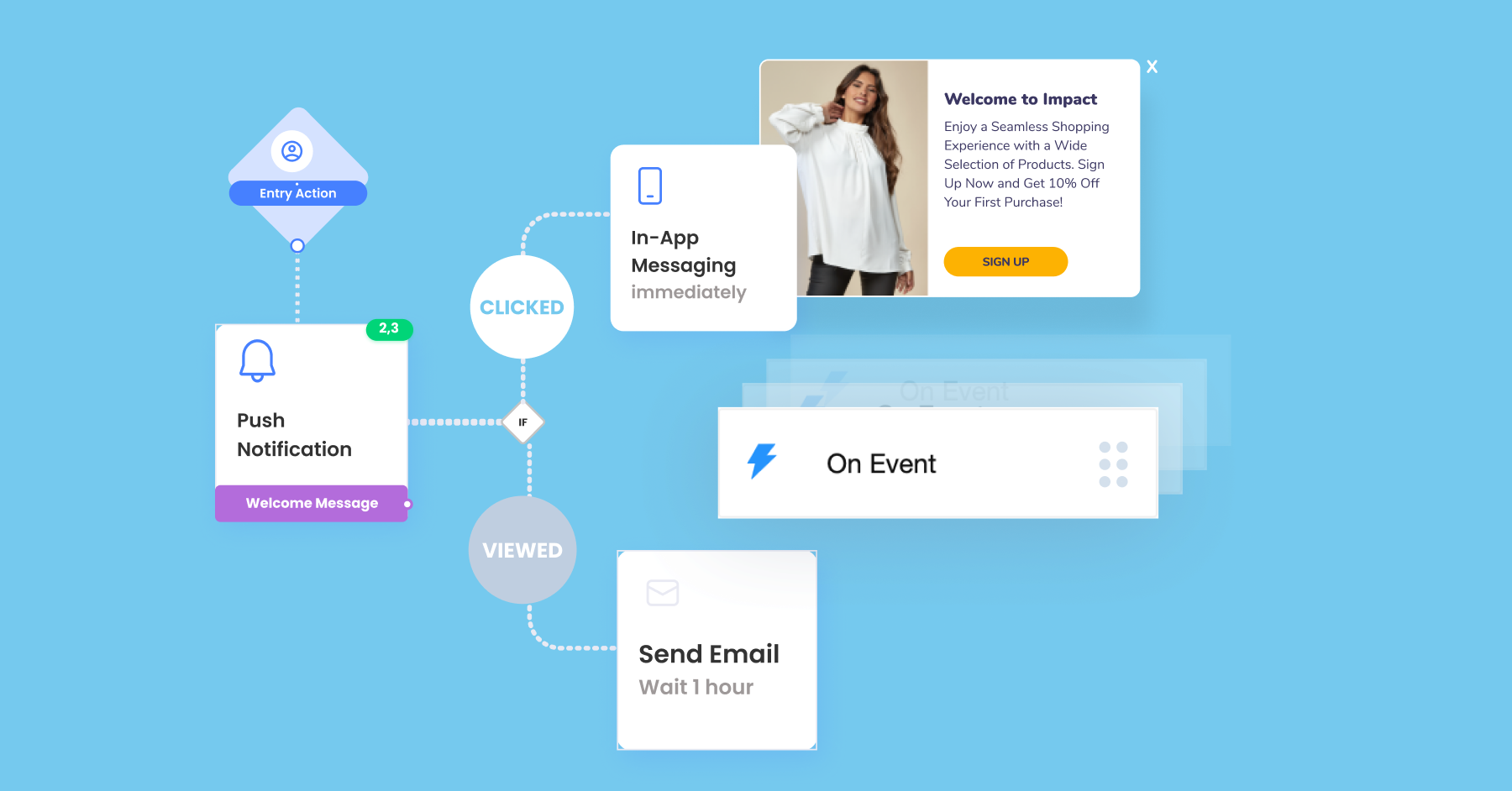
Brands that build marketing strategies around first-party behavioral data report an 83% improvement in customer acquisition costs, 78% higher customer satisfaction, and 73% better conversion rates, according to Forrester Consulting. (Source)
How to Build a First-Party Data Infrastructure for Mobile Marketing
Building a first-party data strategy comes down to three things: collecting behavioral data from touchpoints you own, connecting it into unified customer profiles, and making it available for segmentation and campaign activation without engineering bottlenecks.
Integrate an SDK into Your Mobile App and Website
Once installed, the SDK captures device metadata, session behavior, screen views, and custom events you define, without manual tagging for every new action you want to track. This is where behavioral data collection starts, and it’s what makes real-time personalization possible at scale.
Define Your Event Schema
An SDK alone doesn’t give you useful data. You need to decide which user actions matter: product views, cart additions, form completions, feature interactions. The cleaner and more intentional your event schema, the more useful your segments and triggers will be downstream. This is worth investing time in before you start building campaigns.
Connect Your Backend Systems
First-party data gets richer when behavioral signals from your app combine with profile data from your CRM, transaction history from your data warehouse, and consent status from your preference center. REST API and FTP connections move this data bidirectionally, so your customer engagement platform always has a complete view of each customer.
Activate Without Switching Tools
The data infrastructure only delivers value when it feeds directly into segmentation and campaign execution. If your behavioral data lives in one system and your messaging runs in another, you reintroduce the fragmentation problem you were trying to solve. A platform that handles both collection and activation keeps the loop tight.
How Netmera Helps You Activate First-Party Data
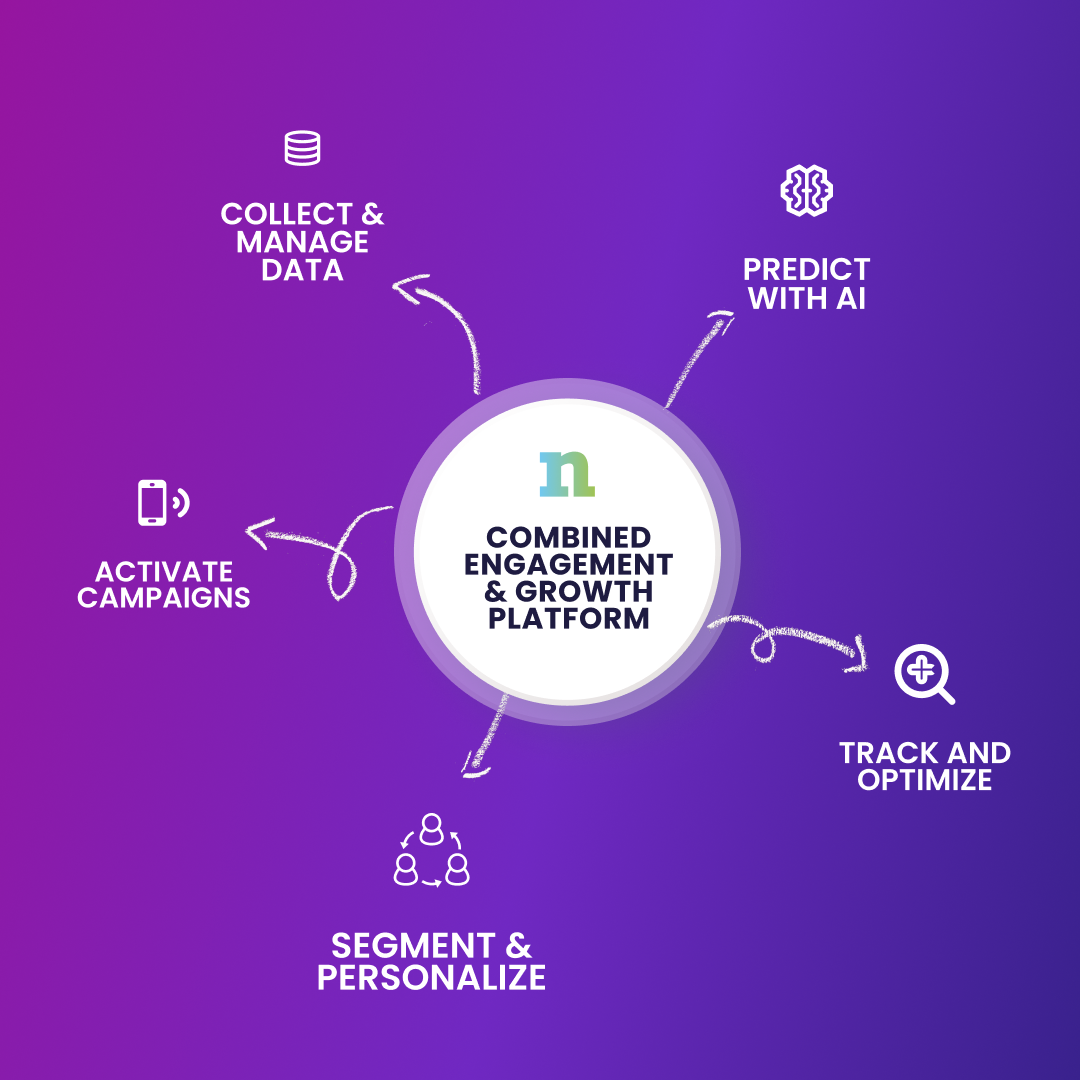
With Netmera, the entire flow from SDK integration and behavioral data collection through profile enrichment, segmentation, and campaign execution runs in one place.
The SDK captures behavioral events and device data across Android, iOS, and web. Tagless Data Capture collects screen views and interactions automatically, without waiting on developer instrumentation for every new event.
Profile attributes from your CRM and backend systems enrich each customer profile in real time. And segmentation, journey automation, and omnichannel messaging all run on that same data layer, with no exports, no reconciliation, and no lag between insight and action.
Cross-Device Identity Resolution
When data comes from your own SDK, Netmera recognizes the same user across your mobile app and website. One profile, one behavioral history, one consistent experience across touchpoints.
Real-Time Segmentation
Segments update as user behavior changes. A customer who completes a purchase exits the cart abandonment journey automatically. A user who hits a churn-risk threshold enters a re-engagement flow without manual intervention.
Omnichannel Activation from One Place
Push notifications, in-app messages, email, SMS, and WhatsApp all run from the same platform and the same data layer.
Compliant by Architecture
Because all data flows through touchpoints you own and control, GDPR and KVKK compliance documentation is straightforward. Netmera processes data as a data processor under your instructions, the same framework covered in our customer data protection guide.
Why First-Party Data Is the Foundation Your AI Strategy Needs
40% of enterprise applications will include task-specific AI agents by 2026, up from less than 5% today. Predictive segmentation, automated journey decisions, send-time optimization, churn detection — these capabilities are already in use across mobile-first teams, and their role is expanding.
But there’s a dependency that doesn’t get discussed enough: AI-driven marketing automation is only as reliable as the data it runs on. When behavioral data is fragmented across tools, incomplete due to cookie restrictions, or inconsistent because it comes from third-party sources, the AI layer inherits all of those problems.
Ahmet Basaran, the co-founder and CEO of Netmera, says: “A predictive model trained on patchy data produces unreliable segments. An AI agent making journey decisions based on stale behavioral signals sends the wrong message at the wrong moment. The automation runs, but the outputs don’t hold up.”
First-party data changes this. When behavioral signals come from your own SDK, profile attributes are enriched from your own backend systems, and everything flows into unified customer profiles, the data layer AI agents work with is clean, structured, and complete.
Gartner describes this shift as marketers moving from building campaigns to acting as air traffic controllers: defining the goals and boundaries while AI builds and optimizes personalized experiences in real time. That model only works when the underlying data is trustworthy.
Teams building that infrastructure now will have a meaningful advantage when AI-driven engagement becomes the standard.
If you’re still relying on third-party cookies, or you have first-party data but aren’t sure you’re getting the most out of it, now is the right time to change that. See how Netmera builds your first-party data infrastructure from day one.

Frequently Asked Questions About First-Party Data and Cookieless Marketing
Is first-party data enough to replace third-party cookies?
For mobile marketing, yes. First-party data covers behavioral targeting, personalization, journey automation, and attribution across your own touchpoints. What it doesn’t replace is cross-site retargeting across the open web, which relies on third-party tracking by design. For most mobile-first brands, that tradeoff is worth it: the tactics that drive retention and conversion ( push notifications, behavioral triggers, in-app personalization etc.) run entirely on first-party data.
Do I need a separate CDP to collect first-party data?
A standalone CDP collects and unifies data but requires a separate engagement platform to act on it. Combined platforms like Netmera handle both in one system: SDK-based data collection, unified customer profiles, segmentation, and omnichannel campaign execution. For most mobile-first teams, this removes integration overhead and closes the gap between data and action.
How does first-party data collection work for mobile apps specifically?
An SDK embedded in your app captures behavioral events, device metadata, and session data directly. You define which user actions to track, and the SDK reports them in real time. Tagless Data Capture goes further by collecting screen views and interactions automatically, without manual developer instrumentation for each new event. Profile data from your CRM or backend systems enriches each user record via API, giving you a complete view of each customer without relying on any external tracking.
How does first-party data support GDPR and KVKK compliance?
Because first-party data comes from direct relationships with your users, consent documentation is cleaner and more defensible. Users interact with your platform, consent to data collection within your environment, and their data stays within a controller-processor relationship you define. This is the architecture Netmera is built on, covered in detail in our customer data protection guide.