Super app engagement: one app, many users, one very real problem
Last update: June 2026
A super app succeeds by serving everyone. Super app engagement fails the moment you treat everyone the same. Getting that balance right is what this piece covers.
What is a super app?
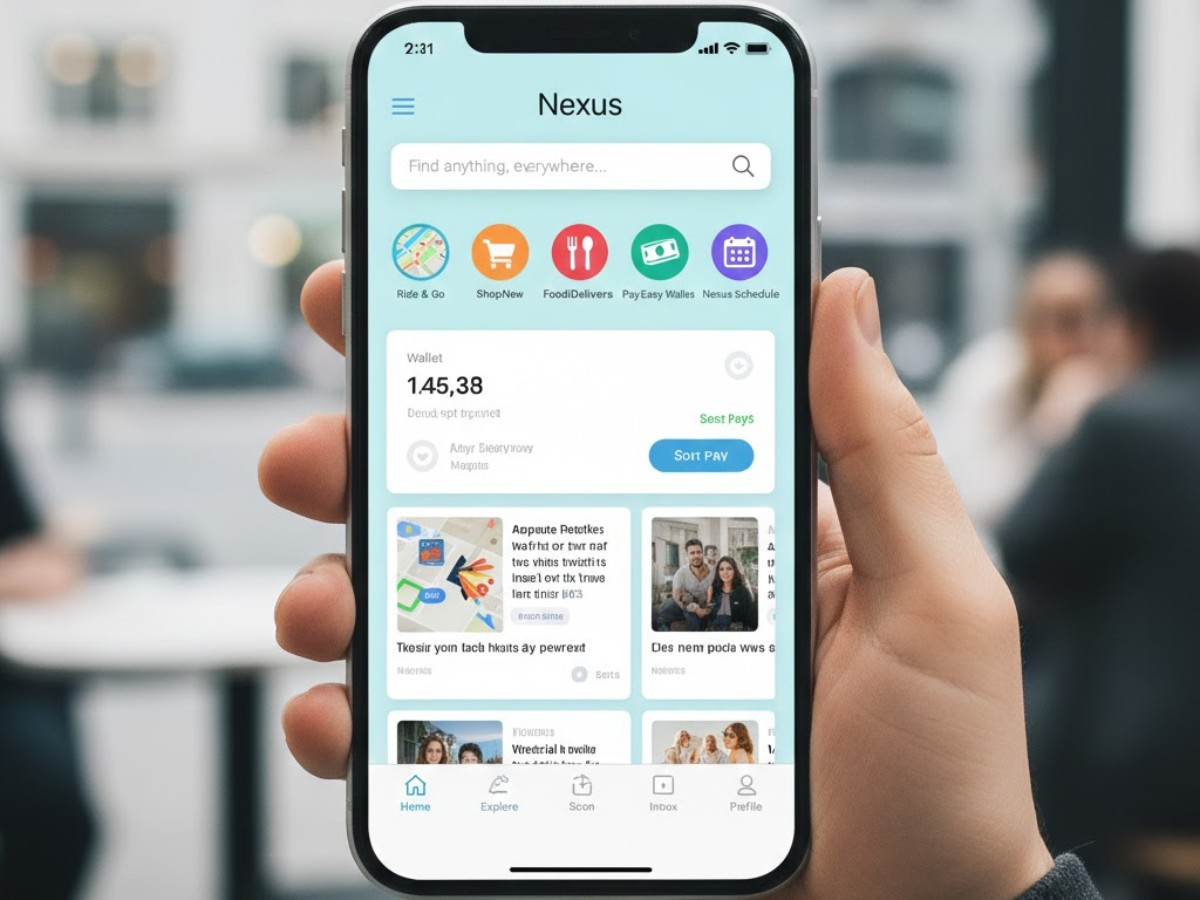
A super app is a single mobile application that bundles multiple services, such as messaging, payments, shopping, transportation, and financial tools, into one platform, replacing the need for several standalone apps.
More services, as you’d expect, mean more users with completely different reasons for being there.
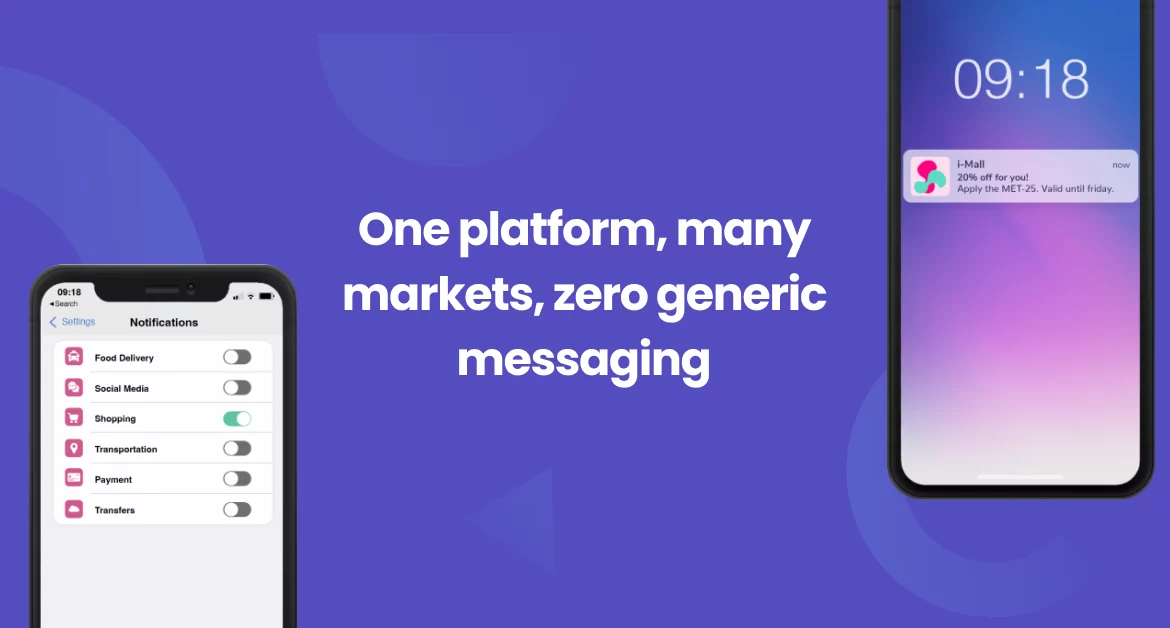
That’s where super app engagement breaks down. A user who opens your app daily for food delivery most probably has no interest in your insurance calculator. Send them enough irrelevant notifications and they stop reading all of them.
The problem, as we see across Netmera’s super app customers, is treating a super app’s diverse user base like a single audience.
A brief history of the super app
BlackBerry founder Mike Lazaridis first introduced the term at Mobile World Congress in 2010, describing super apps as experiences so seamless users wonder how they ever lived without them. These are experiences that replace the need for several standalone apps and eliminate the friction of switching between them.
Asia ran with the model fast. WeChat and Alipay both started as single-purpose apps and absorbed dozens of services until users had little reason to go anywhere else. The West is catching up: in the US and Europe, 57% of consumers value access to multiple services in one app to reduce digital clutter.
What makes a super app engagement strategy work
Super app engagement is the practice of keeping users active across multiple services within a single app, and it’s fundamentally different from engagement in single-purpose apps because the user base is never one audience.
Three things matter more than anything else.
Know why each user is there
Behavioral segmentation is the foundation of any viable super app engagement strategy. A user’s actions tell you which services they value, how frequently they engage, and when they’re most receptive. Super app personalization starts here: without accurate behavioral data at the segment level, every campaign is a guess.
Predictive AI segmentation goes beyond grouping users by past behavior; it identifies which users are likely to engage with a new service before they’ve shown interest, which users are drifting toward inactivity, and when the right moment to reach each segment actually is.
The difference between behavioral and predictive segmentation is the difference between reacting to what users did and anticipating what they’ll do next.
Reach them with relevant messages across the right channels
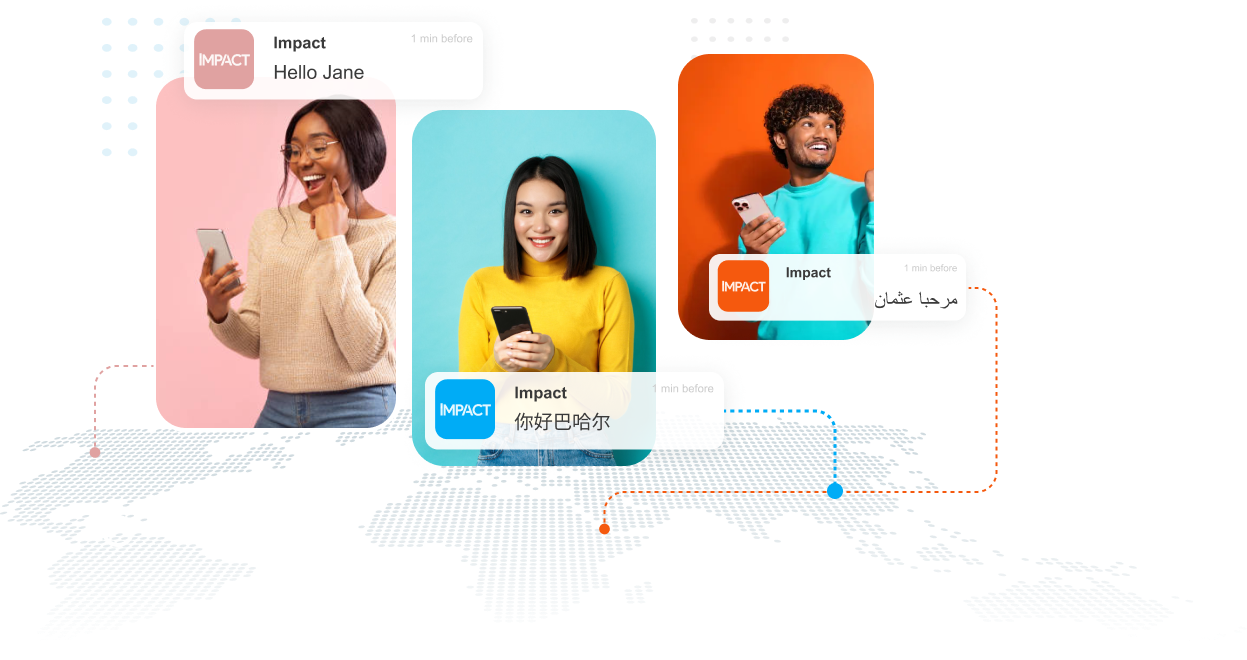
Super app push notifications tailored by service category, region, and language consistently outperform generic blasts. Rich push formats that match the user’s context and language create relevance that a one-size-fits-all message never can.
And when new features or marketplace sections launch, in-app messaging targeted at relevant users drives registrations without alienating everyone else.
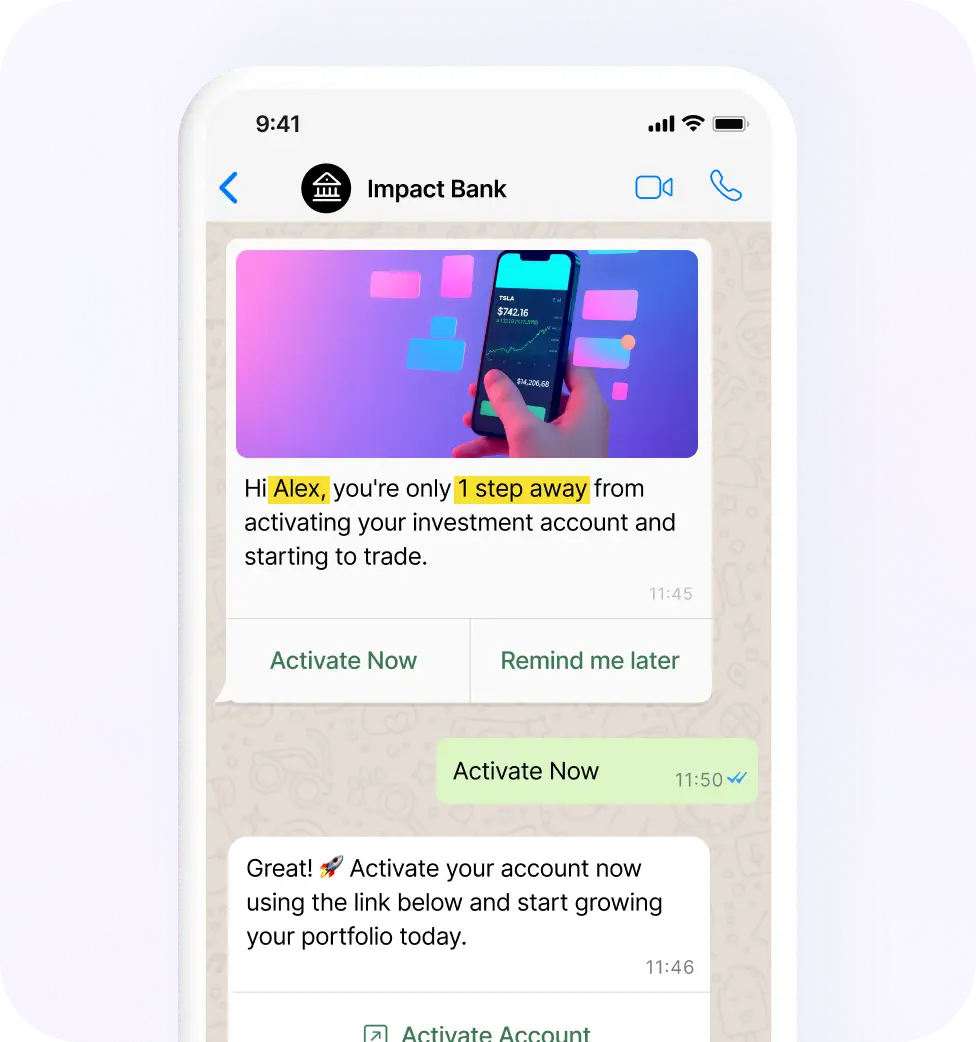
Depending on where your users are, WhatsApp, email, SMS, and even geofence-triggered messages all have a place in a super app engagement. That doesn’t mean using all of them. It means identifying which channels your segments respond to, then building automated journeys that branch based on behavior, escalate across channels when a user doesn’t engage, and stop the moment they do.
Don’t overwhelm them with things they didn’t ask for
With millions of users across multiple services and markets, manual campaign management can’t keep up. Automated, behavior-triggered campaigns are the only way to reach the right person at the right time at scale, and the only way to stop irrelevant outreach from eroding the engagement you’ve already built.
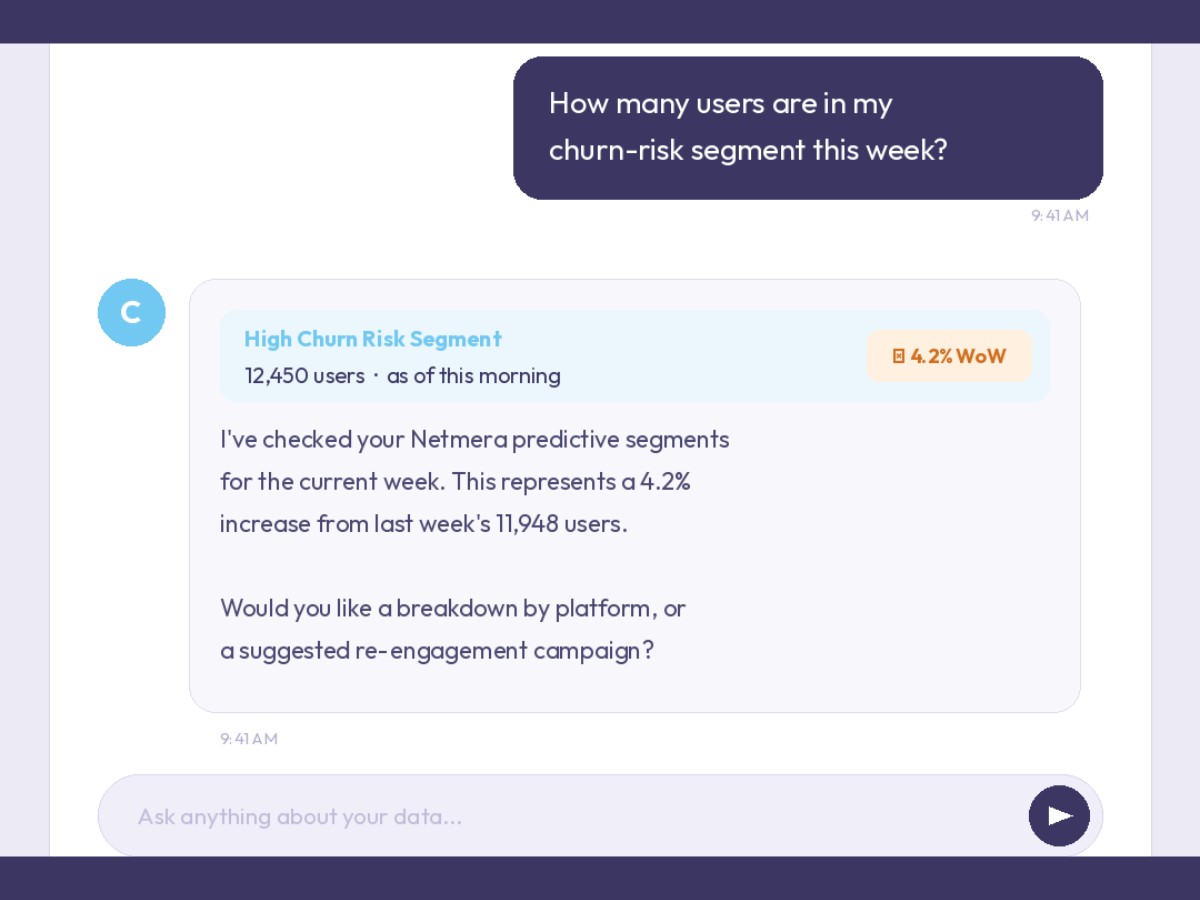
AI makes this operationally realistic at scale. Netmera customers use both the platform’s built-in AI and the Netmera MCP server to analyze campaign performance, query user data, and build and launch campaigns, with review and approval workflows in place so the team stays in control.
How super apps can grow retention from 40% to 66%
This is the reality of almost all super apps: an active user base growing fast, spread across markets with different digital habits, different languages, and different service priorities.
A single campaign strategy doesn’t hold when 40 million users open your app for completely different reasons. Some are there for peer-to-peer payments. Others for content streaming. Others for marketplace shopping. Reach all of them with the same message and you’re not engaging anyone.
The teams that solve this start with infrastructure.
User data gets consolidated into unified profiles, with segments built on actual behavior and preferences. From there, the campaign layer changes completely.
◆ Basic text notifications become rich push messages tailored by region and language.
◆ Automated campaigns identify user patterns and trigger relevant messages without manual intervention.
◆ When a marketplace section launches, in-app messaging reaches the users most likely to act.
◆ Based on your engagement strategy and user data, you add more channels strategically such as WhatsApp, email, or SMS. As your user base is quite varied, you realize some channels don’t work the same for all users.
With that super app strategy in place, you’ll get tangible results. Retention climbs because users stop receiving content that has nothing to do with why they opened the app.
In the engagements we’ve seen with super apps of this scale, retention growing from 40% to 66% over four years is achievable, but only when behavioral segmentation and automated, contextual campaigns replace generic outreach across the board.
Want to talk through what this could look like for your app? We’re happy to chat. And if you want to see real customer stories, explore our case studies.
Frequently asked questions about super app engagement
Super app engagement refers to how effectively a single app keeps users active across multiple services, such as messaging, payments, commerce, and financial tools. It’s harder to optimize than engagement in single-purpose apps because the user base isn’t one audience. Each service attracts users with different habits, needs, and tolerance for outreach, which means a generic engagement approach actively works against retention.
Retention in a super app context depends on relevance. Users stay active when the messages they receive, the features surfaced to them, and the timing of outreach match their actual behavior. Behavioral segmentation, which is the process of grouping users by which services they use, how often, and when, is the practical foundation. Automated, behavior-triggered campaigns then let teams act on those segments at scale without building a separate campaign for every user group by hand.
Super app push notifications are one of the highest-leverage engagement channels, but only when they’re targeted. Rich push formats tailored by service category, language, and region outperform generic broadcasts by a significant margin. The risk runs in both directions: under-messaging leaves re-engagement opportunities on the table, while over-messaging with irrelevant content trains users to ignore all notifications. The balance is achievable with accurate, relevant behavioral, demographical, and predictive data.