A/B Testing for Push Notifications: What to Test & How to Act on Results
TL;DR: Small changes in push notification wording, timing, or format create massive performance gaps. This guide shows you which five elements top brands test most, how e-commerce, banking, media, and telecom companies approach testing differently, and why platforms that combine data, testing, and automation deliver better results than standalone tools.
Last update: January 2026
Promotional push notifications convert fast. Personalized ones keep users engaged longer (Source). That difference changes how push strategies should be tested and evaluated.
A/B testing helps teams see which messages drive immediate action and which support long-term retention, so short-term wins don’t undermine sustained growth. Understanding how to do A/B testing and why A/B testing is important starts with knowing what variables drive engagement and revenue.
We’ll show you what to test, how to measure results, and how to turn those insights into automated, revenue-driving campaigns.
What Push Notification A/B Testing Is and Why It Matters
A/B testing (also called A/B split testing) compares two versions of a push notification to see which performs better. You send variant A to one segment of users and variant B to another, then measure results based on opens, clicks, or conversions. The winning message gets sent to your remaining audience.
Testing prevents losses by identifying what impacts engagement before you send at scale, and reveals which message variants generate conversions. The benefits of A/B testing involves building knowledge about your audience’s preferences, and improving your entire notification strategy over time. When notification budgets are limited and each send represents a touchpoint you can’t take back, testing separates what works from what wastes opportunities.
Five Push Notification Elements Worth Testing
Across hundreds of mobile A/B testing campaigns our customers have run, certain variables deliver the biggest performance lifts. Below, we’ve listed what top-performing brands test most often and which elements generate measurable performance gains.
Message copy and length: Cart abandonment pushes perform differently when you test “Your item is waiting” against “Complete your order—20% off expires in 1 hour.” The first reminds, the second creates urgency with an incentive.
Headlines and emojis: Emojis increase push notification reaction rates by 20%, but not all emojis work equally. Fire, thumbs up, and lightning symbols may drive higher engagement than generic smiley faces.
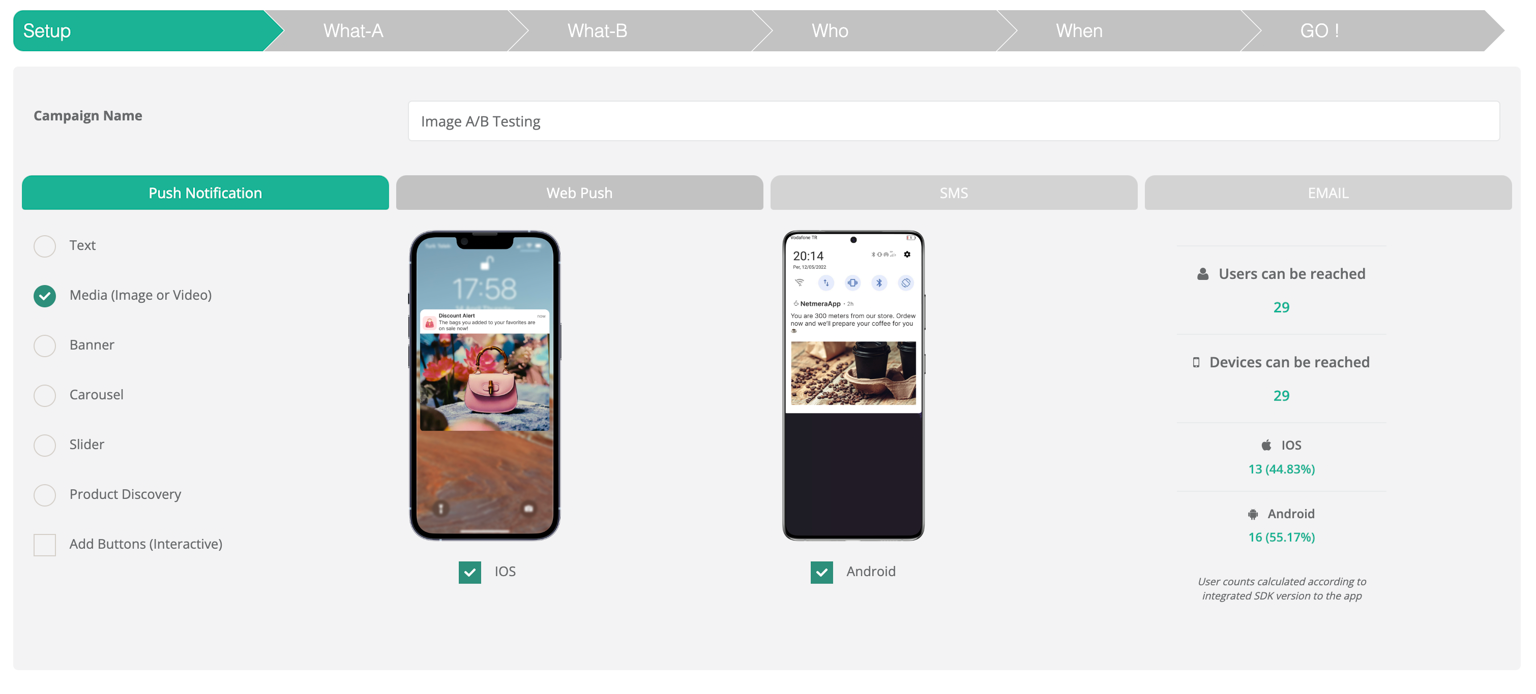
Media elements: Rich push notifications with images or videos improve reaction rates %25. Test whether product images outperform lifestyle photography for your audience.
Send timing: Optimized send times can increase reaction rates by 40%. Some audiences engage during morning commutes, others during evening browsing sessions. Testing reveals these patterns.
If you’d rather test message copy and creative instead of timing, our Best Time Delivery analyzes user behavior and automatically schedules notifications for peak engagement windows. This approach combines personalization testing with automation, so you can focus your A/B testing efforts on message content while timing optimization runs in the background.
CTAs and deep links: Using power words in CTAs can increase conversion rates by up to 12.7%. Active phrases like “Discover more” and “Start now” motivate action better than passive options like “Continue” or “Next.”
Testing these elements works best when your platform handles segmentation, automation, and real-time analysis together. A data analyst using Netmera describes the impact: “We can automate push notification sending, change the sound of push notifications, and split desired segments to take real-time action in A/B testing. Data-driven strategies can be developed thanks to in-app behavior analysis.”
How to Measure A/B Test Success
Delivery success rate shows whether your notifications reached users. Low delivery rates indicate technical issues or permission problems that undermine every other metric.
Open rate measures how many users opened your notification. This tests your headline and preview text effectiveness.
Click-through rate (CTR) reveals whether your message motivated action. A high open rate with low CTR means users saw your notification but didn’t find the offer compelling.
Conversion rate connects notification performance to business outcomes. Did users complete a purchase, sign up, or finish onboarding after clicking?
Revenue per variant proves which message drives financial results. This metric justifies testing budgets and guides future strategy.
Track all five together. A notification with 60% opens but 1% conversions tells a different story than one with 40% opens and 8% conversions. The second variant drives more business value despite lower initial engagement.
Push A/B Testing Examples by Industry
These A/B testing case studies show how e-commerce, banking, media, and telecom brands approach notification testing differently based on their business goals.
E-commerce
Scenario 1: Cart Abandonment Recovery
Test urgency-driven messages (“Only 2 items left in stock”) against discount incentives (“Complete your order and save 15%”) to see which recovers more abandoned carts. Don’t forget the timing. Messages sent within the first hour convert better than those sent 24 hours later.
Scenario 2: New Product Launch Media
Send one segment a lifestyle image showing the product in use, another segment a clean product shot on white background, and a third segment a 15-second video demo. E-commerce brands often assume video performs best, but static images sometimes win because they load faster and communicate value immediately. This is exactly why A/B testing for e-commerce must account for technical performance alongside creative appeal as the best-looking creative means nothing if load times hurt engagement.
Learn how e-commerce brands use Netmera beyond A/B testing.
Banking and Fintech
Scenario 1: Transaction Alert Messaging
Test “Your payment of $42.50 was processed” against “Payment confirmed—view transaction details” to see which version drives more app opens. Financial institutions can also test security alerts, comparing informational language with urgent CTAs that guide users to specific account settings.
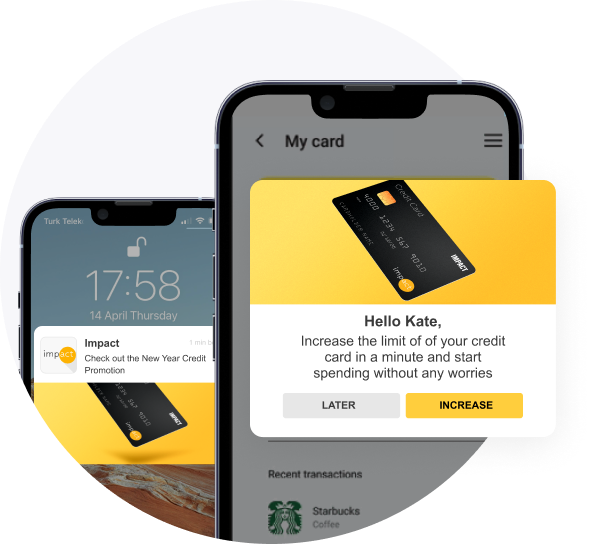
Scenario 2: Feature Adoption Timing
Send “Try mobile deposit now” immediately after account creation, or wait three days until users have explored the app naturally. Netmera’s Funnel Analysis shows which timing drives higher feature adoption without overwhelming new customers during onboarding.
See other customer engagement strategies banks and fintech companies build with us.
Media and Entertainment
Scenario 1: Content Recommendation Personalization
A message highlighting “New thriller series based on your watch history” performs differently than “Top 10 trending shows this week.” Personalized recommendations typically win, but testing confirms this with your specific audience.
Scenario 2: Re-engagement Timing
Send ‘Come back and explore new releases’ after 7 days of inactivity, or wait 30 days and send ‘We’ve added 15 new shows since your last visit.’ Shorter windows catch users before they forget about the service, while longer windows give content libraries time to refresh meaningfully.
Telecom
Scenario 1: Data Usage Alert Strategy
“You’ve used 80% of your data plan” informs users but doesn’t guide action. “Upgrade your data plan now—avoid overage charges” combines information with a clear next step. Testing reveals which approach drives more plan upgrades versus simple awareness.
Scenario 2: Upgrade Offer Framing
One variant emphasizes savings: ‘Upgrade to unlimited and save $15/month on overages.’ Another highlights usage patterns: ‘You’ve exceeded your limit 3 months in a row—unlimited costs less.’ Both reference real data, but one focuses on financial benefit while the other proves the plan matches their behavior.
Turkcell launched in-app surveys through Netmera without needing developers. The feedback they collected helped them increase their Customer Effort Score 13% and boost app store ratings 50%.
Our platform puts A/B testing, customer data, and campaign automation in one place. You test push variants, see which one wins, and build automated follow-ups, all from the same interface where your behavioral data already lives.
How A/B Testing Drove 10x CTR Growth for DenizBank
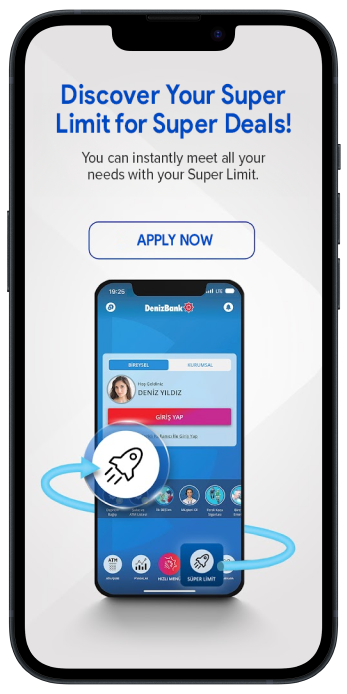
DenizBank launched a new Super Limit feature but struggled with visibility. Users couldn’t find it despite promotional efforts. The bank needed a more effective way to drive awareness and adoption.
They used Netmera’s in-app messaging and A/B testing to find the optimal placement. Instead of guessing where the message would perform best, they tested pop-ups on different screens throughout the app. The winning variant appeared on the login screen, immediately upon app launch before users logged in.
Results were immediate. Super Limit applications jumped from 34,000 to 357,000 within months, averaging 200,000 monthly applications. Click-through rates increased 10x. The visibility boost translated directly to business impact: card sales rose 4x, consumer loan sales climbed 6x, and total loan disbursements increased 7x.
How to Create Push A/B Tests in Netmera
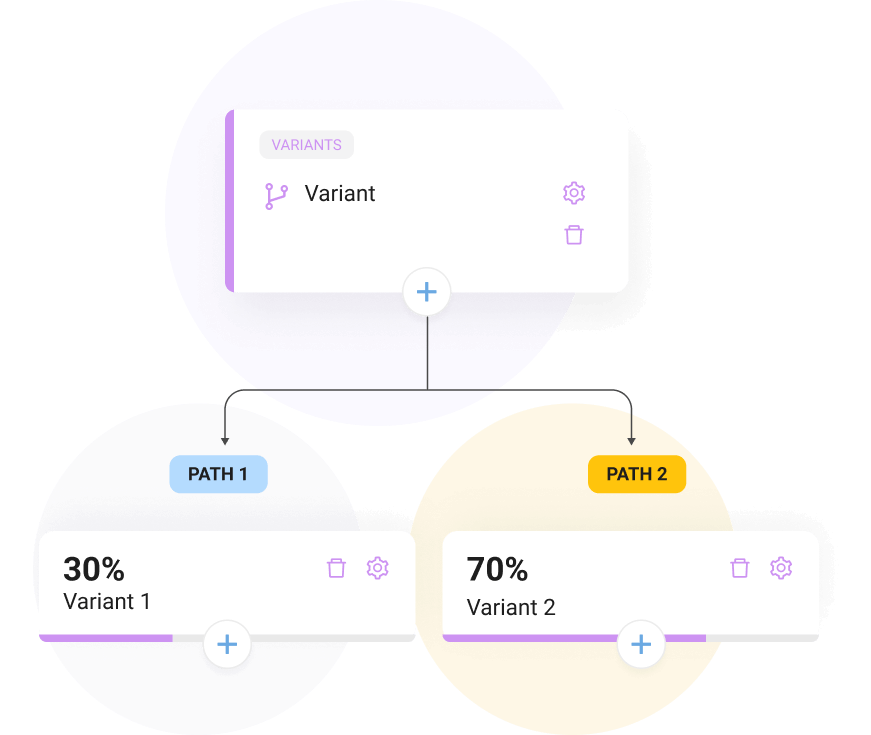
Creating a notification test in Netmera follows a straightforward process: Create two push variants in Netmera’s interface, define test groups (each variant reaches 10-30% of your target audience), set success metrics (clicks, conversions, revenue), launch the campaign, and analyze results. The platform displays performance side-by-side: target audience size, messages sent, delivery success, clicks, conversions, and revenue generated. Once you identify the winner, send it to your remaining audience with one click.
This A/B testing analytics approach connects each variant to revenue outcomes and shows which message drives measurable business value.
For a more detailed explanation of setting up A/B testing in Netmera, check our user guide.
Turning A/B Test Winners Into Automated Customer Journeys
Netmera’s Journey Builder, a customer journey orchestration tool, connects your best-performing push to automated sequences across email, SMS, and in-app messages. If a user clicks your winning cart abandonment push but doesn’t complete checkout, trigger an email with a personalized discount code two hours later. If they still don’t convert, send an SMS reminder before the offer expires. These sequences run automatically based on user behavior, with no manual intervention required.
Here’s what one fashion rental company did with Journey Builder:
They automated their entire registration flow. Users downloaded the app, opened it once, and Journey Builder took over: checking consent, selecting the best channel for that user, sending reminders at the right times. Over 10,000 people entered this journey. 14% completed registration, all without the team manually managing campaigns. When your A/B test identifies the winning message, it feeds into automated customer journey workflows that handle everything from onboarding to re-engagement campaigns without manual intervention.
Netmera’s Predictive AI goes further by analyzing behavior patterns to identify churn risk or conversion likelihood before users act. Combine AI segments with winning push variants to reach high-risk customers proactively or target high-value prospects at optimal moments across channels.
What to Look for in Push A/B Testing Software: Five Key Capabilities
Not all platforms handle push notification testing equally. When evaluating mobile app A/B testing platforms, features that matter for sustained results include unified customer data, cross-channel testing capabilities, no-code setup, revenue attribution, and automation readiness.
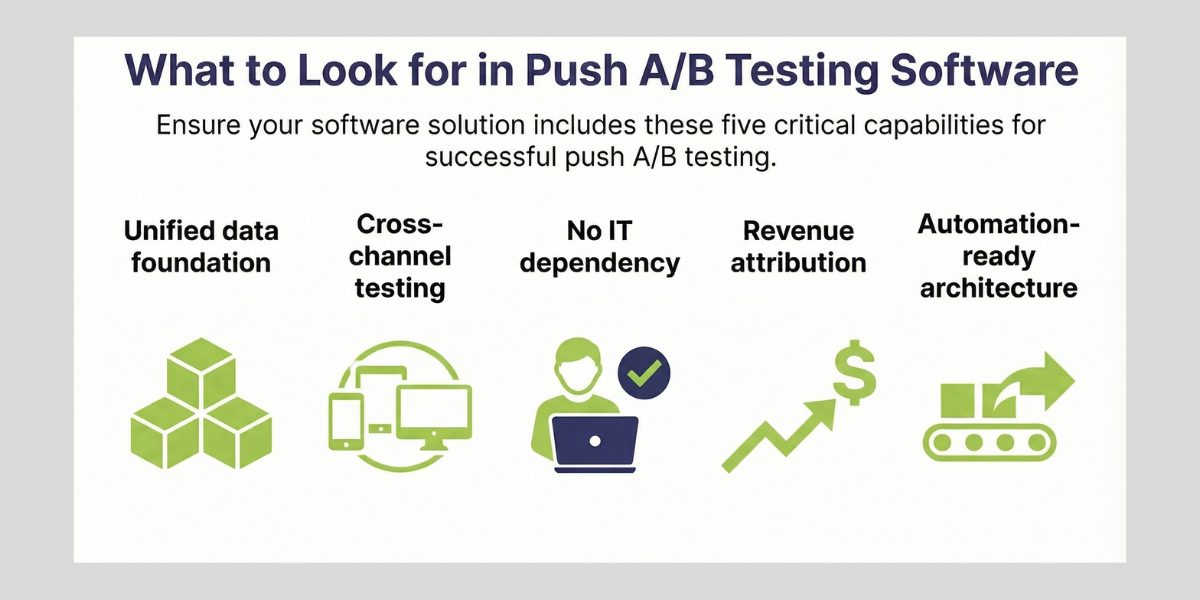
Unified data foundation: When your A/B testing tool operates separately from your customer data platform, you’re either testing on incomplete profiles or manually exporting segments, and both slow down iteration and introduce errors. For teams searching for mobile app A/B testing solutions that scale, data unification isn’t a nice-to-have, it’s the foundation that makes rapid testing possible. Netmera consolidates customer data collection, storage, and activation in one system. Tests run on complete user profiles, and winning variants feed directly into campaigns without data exports or manual syncing.
Cross-channel testing: Mobile and web push often target the same users across different devices. Testing both channels simultaneously reveals which platform drives better results for specific audience segments. Netmera handles both in one campaign interface.
No IT dependency: Marketing teams need to test fast without filing developer tickets or waiting in engineering backlogs. When every test requires technical resources to set up tracking, create segments, or deploy variants, testing velocity drops and opportunities pass. Netmera’s no-code interface and Tagless Data Capture eliminate technical bottlenecks. Track new user behaviors, create segments, and launch tests within minutes. This is critical for A/B testing best practices: the faster you can iterate, the more tests you run, and the more you learn about what drives engagement.
Revenue attribution: Netmera tracks conversions and average revenue per user for each test variant, connecting push performance to business outcomes. This data justifies budgets and guides resource allocation.
Automation-ready architecture: Test winners should trigger immediate action. When your platform combines testing, data management, and campaign orchestration, insights flow directly into automated sequences across all channels. Separate tools require manual handoffs that slow execution and introduce errors.
Integrating Push A/B Testing With Your Customer Engagement Strategy
A/B testing for push notification campaigns delivers the highest value when integrated into a broader customer engagement software platform. Testing messages in isolation reveals which variant performs better. Testing within a unified system shows how that variant contributes to user journeys, conversion funnels, and revenue growth.
Our AI spots which users are worth testing on: high-value shoppers, churn risks, whatever matters for your campaign. This AI-driven customer engagement approach means your A/B testing efforts focus on segments most likely to convert, maximizing the ROI of every test you run. Teams set up tests themselves without filing IT tickets. Once you identify your winning push variant, you can build automated sequences that combine it with follow-ups across email, SMS, and in-app messages based on how people respond. And you can see exactly how much revenue each variant generated.
When your testing platform also handles data collection, segmentation, analytics, and orchestration, you move from guessing what works to knowing what drives results. That’s the difference between running isolated notification tests and building a comprehensive customer engagement strategy. One highlights short-term wins, the other enables sustained revenue growth across every channel.
Your next winning campaign starts with the right test. See how Netmera brings it all together. Contact Us.
FAQs on A/B Testing for Push Messages
A/B testing for push notifications compares two message variants to see which performs better. You send version A to one user segment and version B to another, measure results like clicks and conversions, then send the winning variant to your remaining audience.
Test message copy and length, headlines with emojis, media elements like images or videos, send timing, and call-to-action phrases. Using power words in CTAs can increase conversion rates by up to 12.7%, while optimized send times boost reaction rates by 40%.
Look for unified customer data, cross-channel testing for mobile and web push, no-code journey setup, revenue attribution that tracks conversions, and automation that triggers follow-up campaigns based on test winners.
Track delivery success rate, open rate, click-through rate, conversions, and revenue per variant. These metrics connect push performance to actual business outcomes instead of vanity metrics like impressions.
Yes. Platforms like Netmera let you build automated sequences triggered by user responses to your winning push variant. If someone clicks but doesn’t convert, you can trigger email or SMS follo-ups automatically based on their behavior.
A/B testing and split testing are the same thing: both terms describe comparing two variants to see which performs better. Some platforms use ‘split testing’ to refer to multi-variant tests (A/B/C/D), but functionally, the concepts are identical.
Test one variable at a time to isolate what drives results, run tests until you reach statistical significance, focus on metrics that connect to revenue (not just opens), and automate winning variants into broader customer journeys. The faster you iterate, the more you learn about your audience.
Burcu Ulucay – Content Marketing, Netmera