Predictive engagement: AI marketing for lifecycle growth & higher retention
Last update: March 2026
TL;DR: Predictive engagement uses AI to forecast customer behavior and automate timely, personalized campaigns. This post explains how AI-powered predictive analytics identifies churn risk before customers leave, how precision settings balance reach with accuracy, and why unified platforms eliminate the gap between insight and action. You’ll see banking, retail, telecom, and media use cases showing how predictive marketing decreases churn, increases app usage, and drives measurable ROI through behavioral forecasting and optimal send-time delivery.
Marketing AI Institute asked nearly 2,000 marketers: what are the primary outcomes your organization wants to achieve with AI? 65% said more actionable insights from marketing data. 82% said reducing time spent on repetitive, data-driven tasks. That’s exactly what predictive engagement delivers.
Predictive insights are valuable but only when you can act on them timely. If your AI calculations happen in one platform, campaigns launch in another, and analytics live in a third, this creates a lag between prediction and action.
Netmera’s Predictive AI analyzes behavioral data from events and attributes, adjusts message timing for the highest engagement, and gives teams the insights they need to automate customer journeys. You’ll see how precision choices impact campaign ROI and how retailers find VIPs early while media platforms stop drop-offs before users cancel.
What is predictive engagement?
Predictive engagement combines AI forecasting with automated campaign execution. The AI predicts what customers will do next (such as churn risk, purchase intent, and feature abandonment), then the customer engagement platform automatically triggers personalized messages across email, push, SMS, and in-app channels based on AI predictions.
Unlike rule-based automation (if/then logic you manually program) or scheduled campaigns (messages sent at fixed times), predictive engagement uses machine learning to identify patterns and optimal timing automatically.
In Melissa Russell words, predictive models “use machine learning and statistics to extrapolate historical data and forecast future events, allowing marketers to analyze consumer behavior and market trends.” The models work by quickly analyzing vast amounts of data, segmenting audiences with precision beyond demographics, and predicting emerging trends that inform when and how to reach each user.
What manual segmentation can’t see (and AI-powered predictive engagement can)
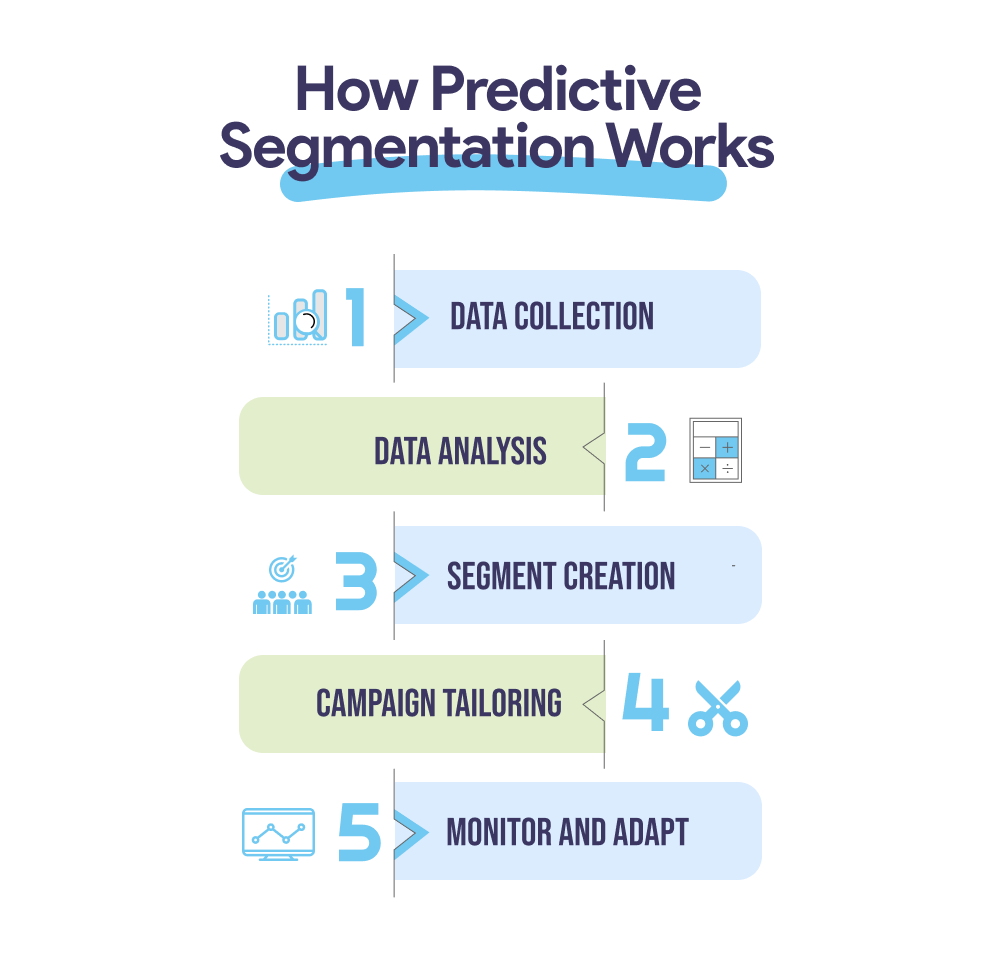
Churn signals are subtle. Disengagement builds slowly as logins stretch from every two days to six and usage fades over weeks. Manual segments catch it too late, after customers have already compared options and decided to switch.
To decrease churn effectively, you need AI that identifies at-risk users while they’re still recoverable, then triggers retention campaigns automatically based on behavioral signals rather than arbitrary timelines.
Over half of marketers say relying on IT for data analysis and insights slows their work. For every new behavioral segment, submit a ticket, wait in the backlog, implement weeks later. By the time the segment is live, user behavior has shifted.
Without unified data and AI-driven insight, segmentation stays reactive. You miss emergent patterns AI detects automatically such as correlations between multiple behaviors and timing patterns that predict future actions.
Predictive AI changes how brands respond to behavior. As Melissa Russell puts it in Harvard Professional, they “can now predict it and create personalized campaigns.”
How AI uses behavioral data to forecast customer moves
Predictive models build living, data-driven segments that evolve with user behavior, purchase history, and engagement patterns. Researchers call this shift one of the most transformative uses of AI in marketing, and platforms built for this approach give teams flexibility in what they track.
Netmera’s predictive analytics work with any event you define. Purchase completed, loan application, abandoned chart, content viewed, form submitted. You decide what to track because every business defines success differently.
Our AI prediction framework uses three time windows.
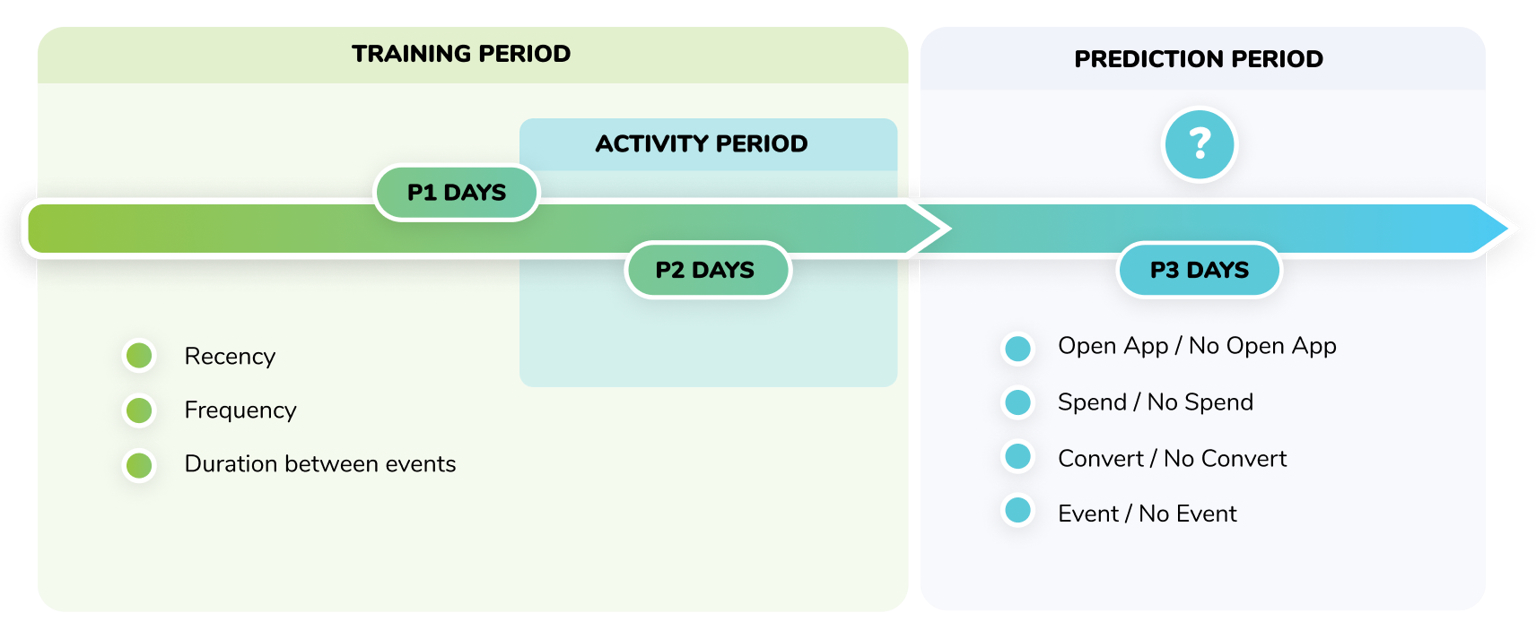
• P1 (Past): Historical behavior window you define (last 7 days, 14 days, or 30 days of activity).
• P2 (Present): The moment analysis occurs.
• P3 (Future): Prediction timeframe you set (next 3 days, 7 days, or 14 days).
What this means for you: A short P1 (7 days) and short P3 (3 days) capture quick, high-intent actions such as purchases. A longer P1 (30 days) and longer P3 (14 days) help analyze gradual decisions, like loan applications or subscription upgrades.
The AI analyzes three behavioral metrics within your chosen windows: recency (how recently users acted), frequency (how often they act), and duration (time gaps between actions).
Recency measures how recently a user performed an action. When a user’s last action was 6 days ago versus their typical 2-day cadence, that signals declining engagement.
Frequency tracks how often an event occurs. Five actions in your P1 window versus a typical two shows high engagement or an emerging habit.
Duration between events measures time intervals between actions. When a user’s gap between actions increases from 1 day to 5 days, that shift suggests fading interest.
Each metric alone provides limited insight. Combined, they form a complete behavioral pattern that predicts future actions with statistical confidence.
Suggested resource for more details about Netmera’s Predictive AI: https://user.netmera.com/netmera-user-guide/ai-features/predictive-segments
Finding the right balance between precision and reach in predictive marketing
As CX strategist Jessica Hawthorne-Castro observed in 2026 trends analysis, AI adds the most value when it enhances prediction, prioritization and decision-making. Predictive insights and journey optimization often outperform surface-level personalization. That principle shows up directly in how you configure precision settings.
When using Netmera’s Predictive AI for segmentation, you control the confidence threshold through precision levels. The interface shows you segment size at each precision setting, so you see the tradeoff between accuracy and reach before launching campaigns.
High precision creates smaller segments with higher accuracy, around 85-95% confidence. You get fewer users, but you’re almost certain they’ll take the predicted action. Low precision creates larger segments with lower certainty, around 60-75% confidence. You reach more users, but some won’t convert.
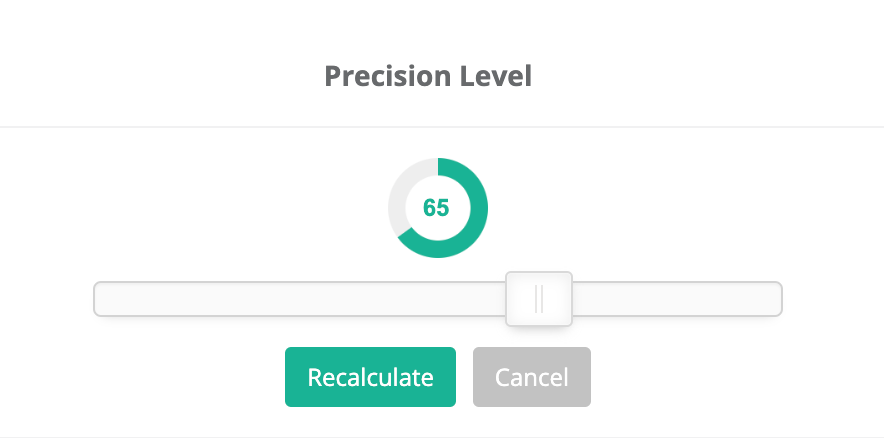
If accuracy is critical, keep your precision high. This applies to costly retention offers, premium upgrades, or regulated industries.
Use low precision when you want to reach more people and test ideas. It’s ideal for new messages, broad research, or awareness campaigns where engagement volume matters more than perfect targeting. Once you’ve chosen your precision level and the segment populates, you’re ready to build campaigns.
How to use Netmera to connect AI insights directly to campaign action
Teams using Netmera move from prediction to live campaign without switching tools or waiting on integrations. AI updates segments every night and the segment appears in your dashboard, ready to use.
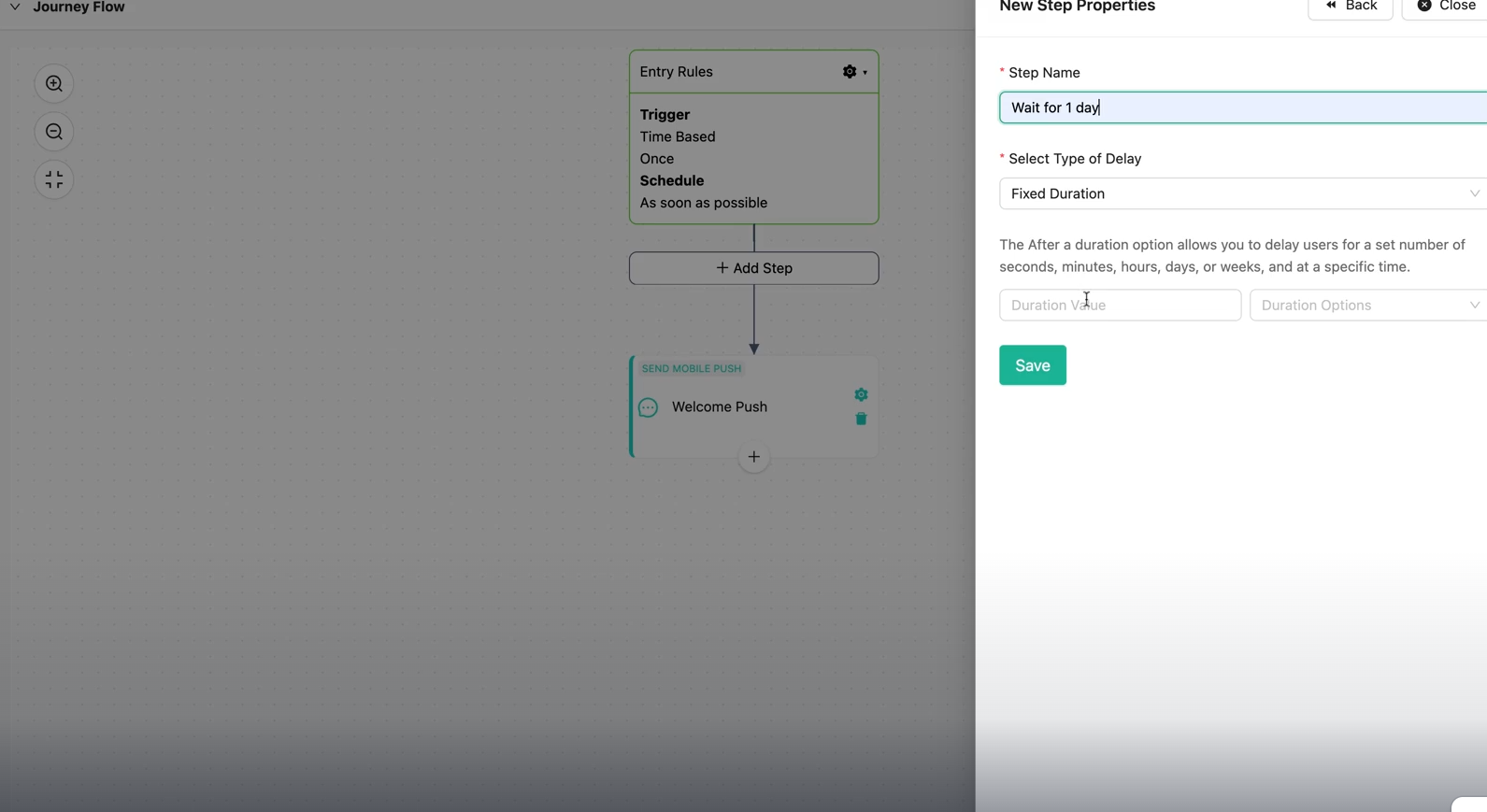
From there, you build journeys in the no-code Journey builder. A possible scenario: A user who enters your “High Churn Risk” segment triggers an automated sequence. One hour later, they receive an in-app message highlighting an unused feature they might value. If they engage, the journey stops.
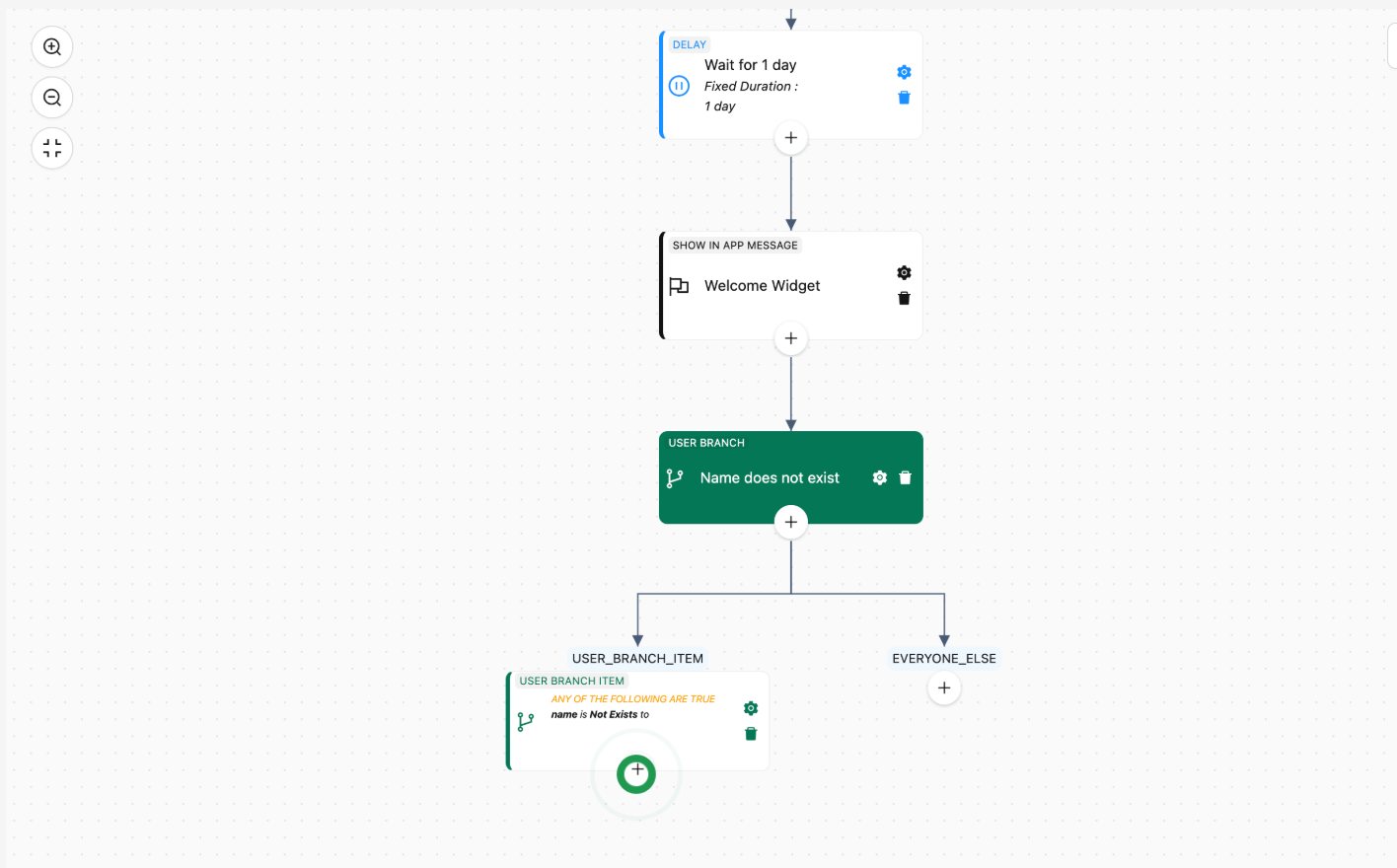
If 24 hours pass with no action, an email arrives with a retention offer tailored to their account history. Still no response after three days? An SMS with a direct contact option from their account manager goes out.
Watch this video to see how to use Journeys to bring back inactive users to your platform or app.
You decide when each journey starts, how long to wait between steps, and when users exit based on their actions. The drag-and-drop interface makes it easy to map journeys visually, while real-time branching logic adapts as users interact. You can launch push, email, SMS, and in-app messages from one place instead of switching between tools or manually syncing timing across channels.
The role of timing in predictive AI marketing campaigns
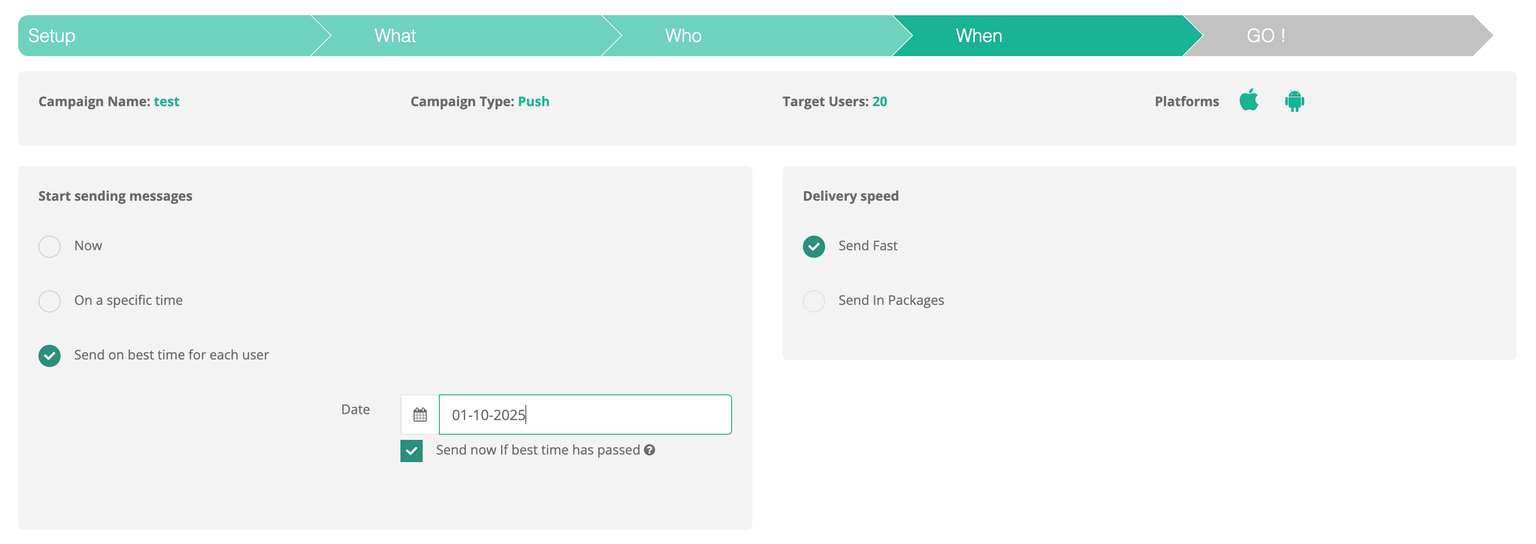
Predictive segments tell you who to target. Optimal timing tells you when. Netmera’s Best Time Delivery analyzes each user’s last 60 days of app activity to identify their most active hours per weekday.
The system calculates Daily Best Time (single most active hour overall for that day), AM Best Time (peak morning activity between 00:00-11:59), PM Best Time (peak evening activity between 12:00-23:59), and App Global Best Time (when most users are active, used as fallback when individual data isn’t available).
How delivery decisions happen:
Daily Best Time: Campaign scheduled at or before user’s Daily Best Time → Send at that hour
AM/PM Best Time: Daily Best Time passed → Check if user’s AM or PM Best Time falls after campaign time → Send at valid window
App Global Best Time: All personal best times passed → Check if App Global Best Time falls after campaign time → Send then
No Activity Data: User has no data for that weekday → Use App Global Best Time
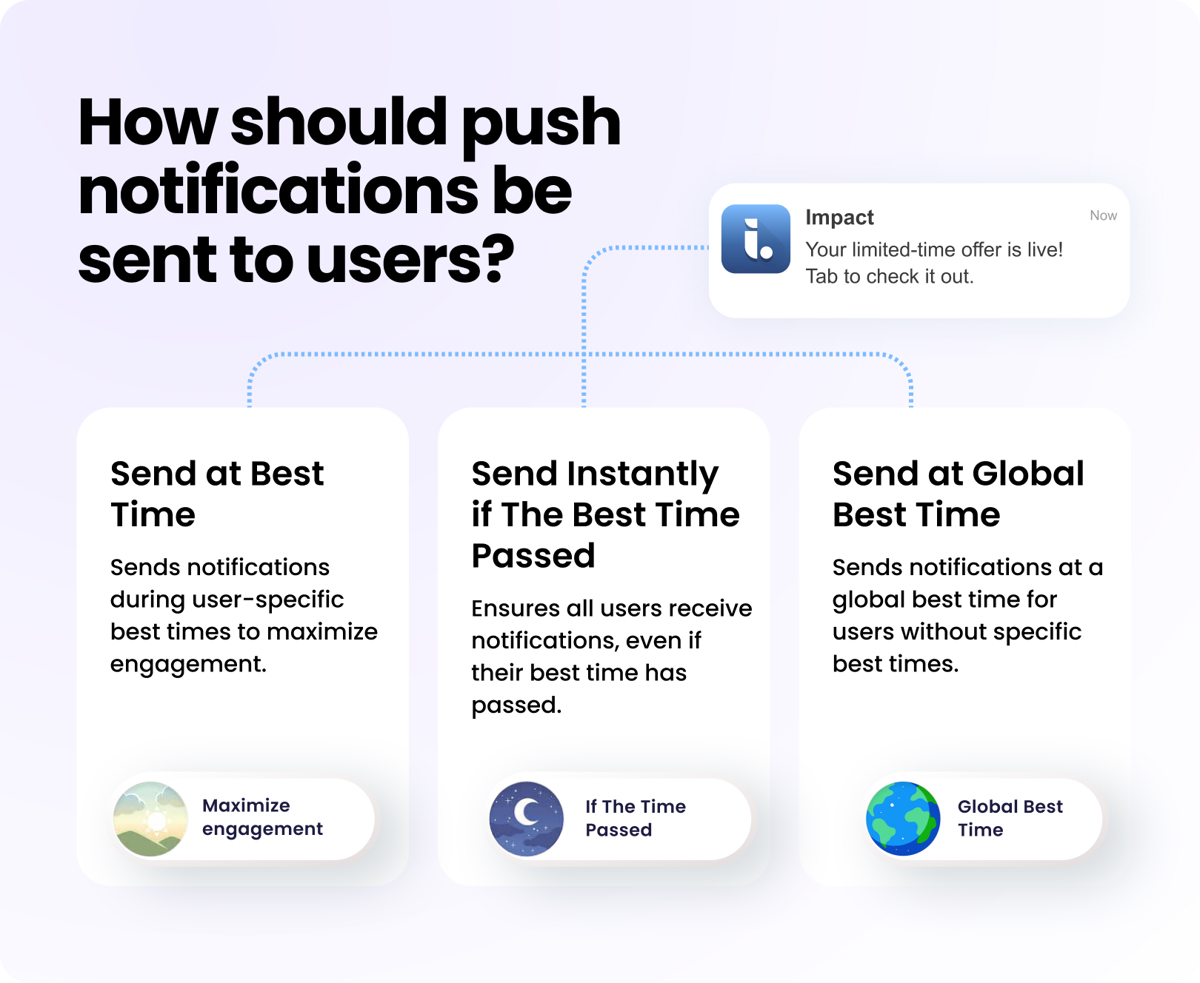
No Matching Best Times: Campaign scheduled after all best times → User skipped unless fallback enabled
Fallback Behavior: “Send Instantly if Best Time Has Passed” option delivers the message immediately when all windows close.
If a user’s calculated best time or App Global Best time lands in a predefined quiet window, the message will not be sent at that time.
This approach replaces send time guesswork with behavior-based decisions. Each user receives messages when their individual activity patterns show they’re most likely to engage.
Predictive marketing use cases: fintech, retail, telecom, media
Netmera’s event-driven, time-based, and attribute-level flexibility means different industries apply predictive engagement across the entire marketing lifecycle, from acquisition and activation to retention and win-back, with use cases tailored to their specific business outcomes
Fintech: catching disengagement before users leave
A fintech app serving international transfers watches transfer frequency drops. Users stop engaging with cashback offers and cross-border features entirely. Predictive AI flags them as likely to churn within 30 days. A time-based journey starts: value-focused messages arrive every few days, and branching logic stops the sequence the moment a user returns.
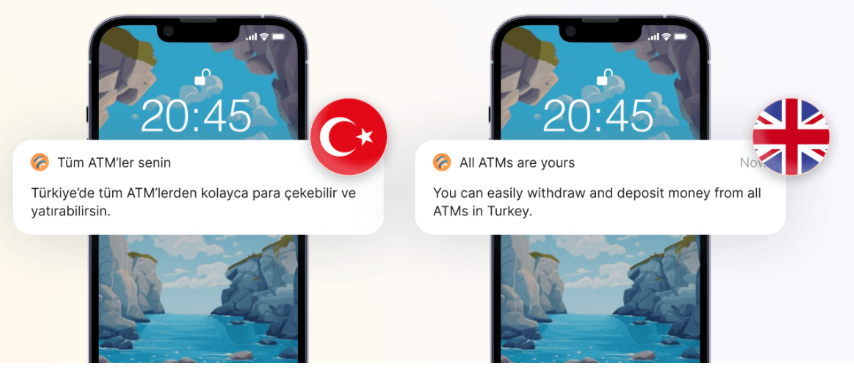
UPTION ran exactly this. Using Netmera’s AI churn prediction trained on six months of behavioral data, they launched a 10-message recovery journey without involving their development team. The churn segment shrank 16.6%. Among users who entered the journey, 22.6% converted. Re-engaged users averaged 14 app opens.
“Netmera gave us two critical capabilities in one place: AI to predict churn risk and Journeys to automate recovery,” said Elif Zeynep Pehlivaner, CDO at UPTION.
Retail: spotting VIP customers early
Browsing premium electronics for five minutes per product is a clear signal of intent. Retailers track Product viewed, Add to cart, and Purchase completed, then analyze cart value, session depth, and category preferences with attribute-level predictions.
Personalized recommendations arrive in the customer’s email inbox. If the cart stays idle, a WhatsApp offer follows. After the first purchase, a web popup reveals the loyalty program. Each message lands when engagement patterns peak. Loyalty builds from the second interaction, reducing acquisition costs over time.
Keep in mind: Moderate-cost VIP campaigns allow teams to set 75-80% confidence for broader reach.
Netmera features used: Predictive AI segments, Best time delivery, campaign channels (WhatsApp, web popup, email)
Telecommunications: acting on usage decline
Data consumption falls 40% over 30 days while app logins drop from weekly to monthly and support calls spike. Those combined signals precede churn. Telcos track data usage, app logins, and support calls, then segment users by plan type and device to spot the shift early.
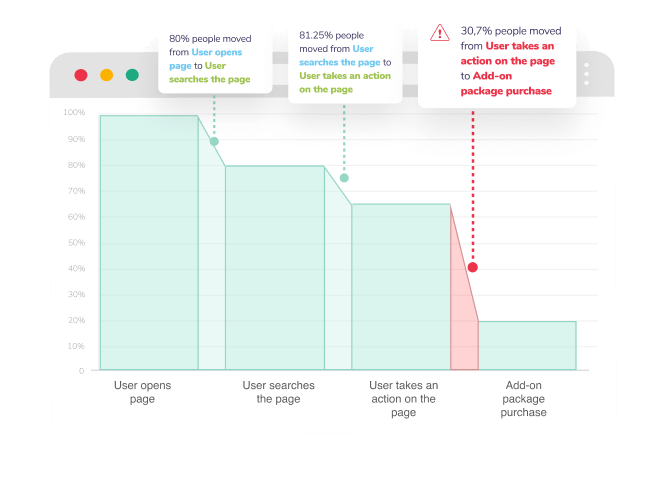
Week one brings an in-app benefit reminder. Week two delivers a push with plan recommendations. Week three sends SMS with targeted data add-ons. Delivery times follow each user’s account management habits. Acting by week two or three helps prevent users from exploring competitor plans while campaigns increase app usage through timely feature reminders and personalized plan recommendations.
Keep in mind: Proactive retention offers justify 80-85% confidence settings.
Netmera features used: AI predictions, best time delivery, cross-channel messaging (in-app widget, mobile/web push and SMS.)
Media: re-engaging viewers before cancellation
A subscriber starts three episodes of a new thriller series but abandons each one at the 20-minute mark. The platform tracks Content viewed, Episode abandoned, and Subscription tier, analyzing genre preference and viewing time to identify waning interest.
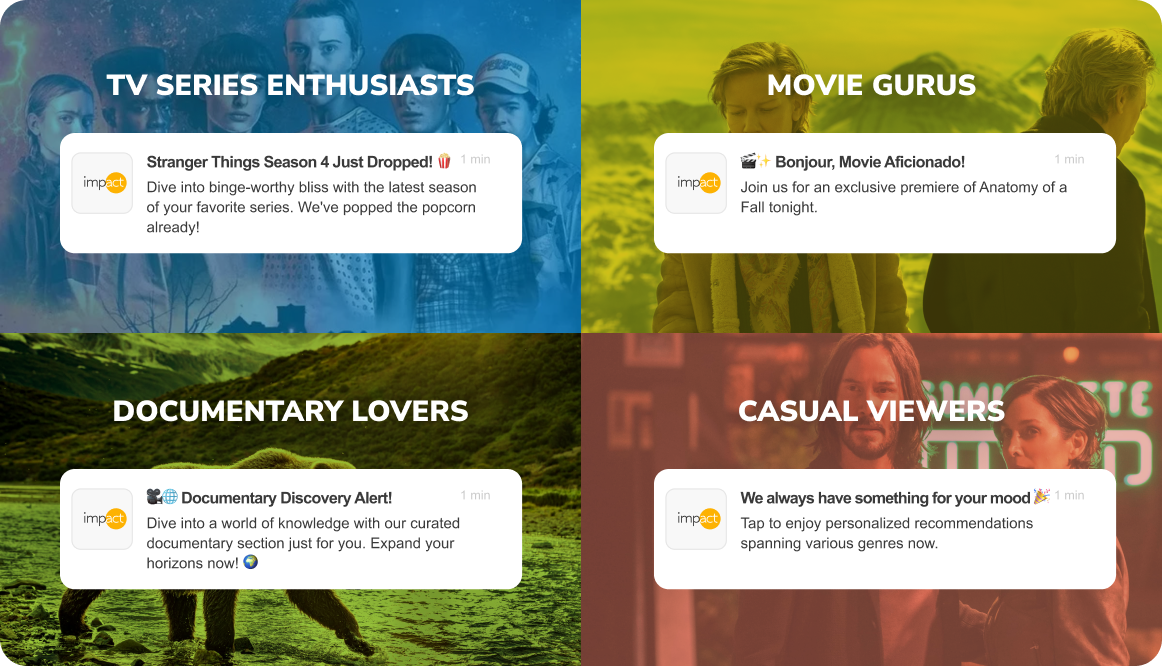
An in-app message appears 24 hours later. At 48 hours, an email recommends similar shows. After seven days of inactivity, a web push promotes an upgrade offer. Morning commuters see alerts at 7–8am; evening TV users get theirs between 8–10pm. Re-engagement rises and upgrade timing matches real viewing behavior.
Keep in mind: Low-cost content recommendations allow 65-75% confidence for maximum reach.
Netmera features used: Predictive analytics, best time delivery, messaging across channels (in-app pop-up, email, web push).
From AI prediction to execution: no more platform switching
Richard Wright, Senior Banking Advisor, notes the transformation: “Banks are moving from descriptive (what happened) to predictive and prescriptive analytics (what will happen, what to do about it).” This requires AI models that process behavioral patterns, real-time data integration that captures signals as they occur, and cloud-based systems that execute campaigns automatically.
That’s the fundamental change. Instead of analyzing last month’s churn after customers leave, predictive segments identify at-risk users while they’re still recoverable.
Traditional workflow requires multiple platforms. Data analysts pull segments and export CSVs. Marketing automation imports the data. Email campaigns get built in one ESP while push notifications configure in another tool. Results live in a separate analytics dashboard. Each handoff adds delay between prediction and action.
Netmera removes those handoffs as a unified customer engagement and personalization software. AI calculates segments overnight using behavioral data collected via SDK and Tag Manager. Marketers, product owners, and CX teams see segments in the same dashboard where they build journeys, launch campaigns across channels, and track results. Best Time Delivery applies automatically per user. Same-day launch becomes possible.
See how Netmera’s predictive AI works for your business goals.
FAQs About using predictive segments in customer engagement
Predictive marketing uses AI to forecast future customer actions based on past behavior. It helps brands target the right users, anticipate intent, and plan personalized campaigns at the right time.
Netmera analyzes event, time, and attribute-level data to uncover behavioral patterns. It predicts which users are likely to convert, churn, or engage next. Teams use these insights in Netmera’s Journey Builder to automate campaigns and deliver messages when engagement is most likely.
AI helps brands understand when and how users are most likely to interact. It detects intent, identifies drop-off points, and reveals the best delivery times for each channel so engagement feels timely and relevant.
A retailer uses AI to identify users who browse high-value products but don’t buy. Predictive insights flag these users, and an automated campaign follows up with personalized offers across push, email, or WhatsApp at the right time.
Banking, retail, telecom, and media use predictive AI to prevent churn, spot high-value customers early, and personalize engagement. Any business with user behavior data can apply similar logic for higher ROI.
No. Netmera combines three AI models: Generative AI for content creation, Agentic AI for intelligent assistance, and Predictive AI for behavioral insights. Predictive AI powers advanced segmentation, while the others enhance productivity and campaign automation.
Generative AI generates new content (campaign copy, email subject lines, message variations) based on prompts and training data. Predictive AI analyzes historical behavior patterns to forecast future actions like churn risk, purchase intent, or engagement likelihood. In marketing, generative AI helps you write messages faster while predictive AI tells you who to send them to and when. Netmera integrates both: predictive AI identifies segments, then generative AI helps you craft personalized messaging for those audiences.
Burcu Ulucay – Content Marketing, Netmera