Spotify Wrapped marketing strategy: Why it works and what brands can learn
Last update: June 2026
TL;DR: The mechanic behind the Spotify Wrapped marketing strategy is personalization built on behavioral data collected long before the campaign launched. The format, the timing, and the one-tap sharing path are what make it spread.
Almost any b2c brand can apply the same logic: unify behavioral data first, build the experience around what users did, and design a specific moment worth sharing. A customer engagement platform with built-in predictive segmentation, cross-channel delivery, and in-app story widgets is what makes that replicable outside Spotify’s infrastructure.
Every December, millions of people open Spotify with one specific goal (other than listening to their favourite songs): see their year in data, screenshot it, and share it. That is the Spotify Wrapped marketing strategy in action, a viral marketing campaign built entirely on personalization, timing, and the human instinct to share.
In 2025, Wrapped hit 200 million engaged users and 500 million shares within its first 24 hours, up 41% year over year in shares alone. Those numbers reflect mechanics any brand can study and, with the right customer engagement platform, replicate in their own context.
In this post we answered: what the actual mechanics behind Spotify Wrapped are, why the sharing behavior repeats at scale every year, and what any of that has to do with how your brand engages customers the other 364 days. If you run campaigns on behavioral data and want to understand how Wrapped’s model translates outside of Spotify’s context, this is the breakdown.
Why Spotify Wrapped became a viral marketing campaign
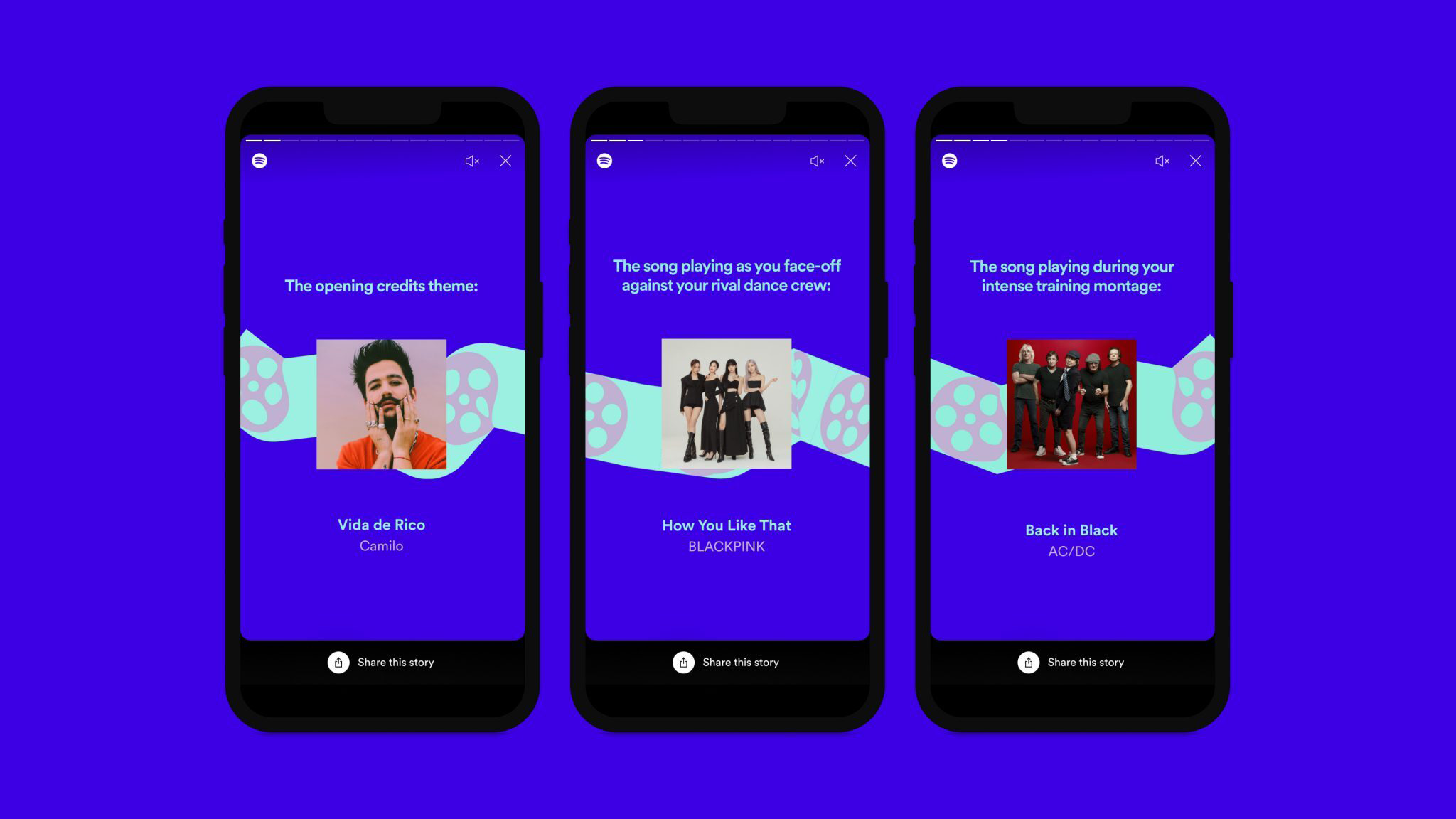
Spotify Wrapped is an experience. That explains why it generates the kind of organic reach that most brands spend heavily to approximate.
The campaign has run every year since 2016, and its core mechanic has stayed consistent: take the data users already generated passively through listening, and give it back to them as a personalized story. The effort is entirely on Spotify’s side, and the reward lands entirely on the user’s side.
That asymmetry is what makes sharing feel natural. When someone posts their Wrapped, they are expressing something about themselves: their taste, their year, their identity. Spotify becomes the vehicle for self-expression, and in doing so, turns hundreds of millions of listeners into willing participants in its viral marketing campaign.
Wrapped 2025 reached 200 million engaged users,19% faster than the previous year, and growth was up across every major market, including the US, India, Indonesia, Japan, Colombia, and Thailand. That kind of year-over-year compounding does not happen with a campaign that relies on media spend. It happens when the product itself becomes the distribution.
The role of personalization and data in Wrapped’s success
Wrapped works because Spotify already knew its users before the campaign launched. Every listen, every skip, every late-night playlist session fed into a profile that made the final story feel accurate enough to be surprising. That is data-driven personalization at its most effective: the user recognizes themselves in the output.
Frans Riemersma, a leading MarTech analyst, captures the underlying principle well: “Flip the script from sending campaigns to listening to the customer. Many companies and brands are sending campaigns about stuff they want customers to hear, but if you ask customers, it’s not what they want to hear.”
Wrapped is the answer to that challenge. Spotify listened first, then spoke. The campaign reflects users’ own behavior back at them, framed as a story worth sharing.
First-party data is the foundation
Spotify’s personalization runs entirely on first-party data: listening history, session patterns, genre shifts, time-of-day behavior. The data is behavioral, specific, and collected directly through product usage.
This is the part most brands struggle to replicate, and the reason is structural. When customer data sits across separate analytics tools, CRM systems, and campaign platforms, building a unified picture of any individual user becomes a manual, slow process. The data catches up eventually. The campaign window does not.
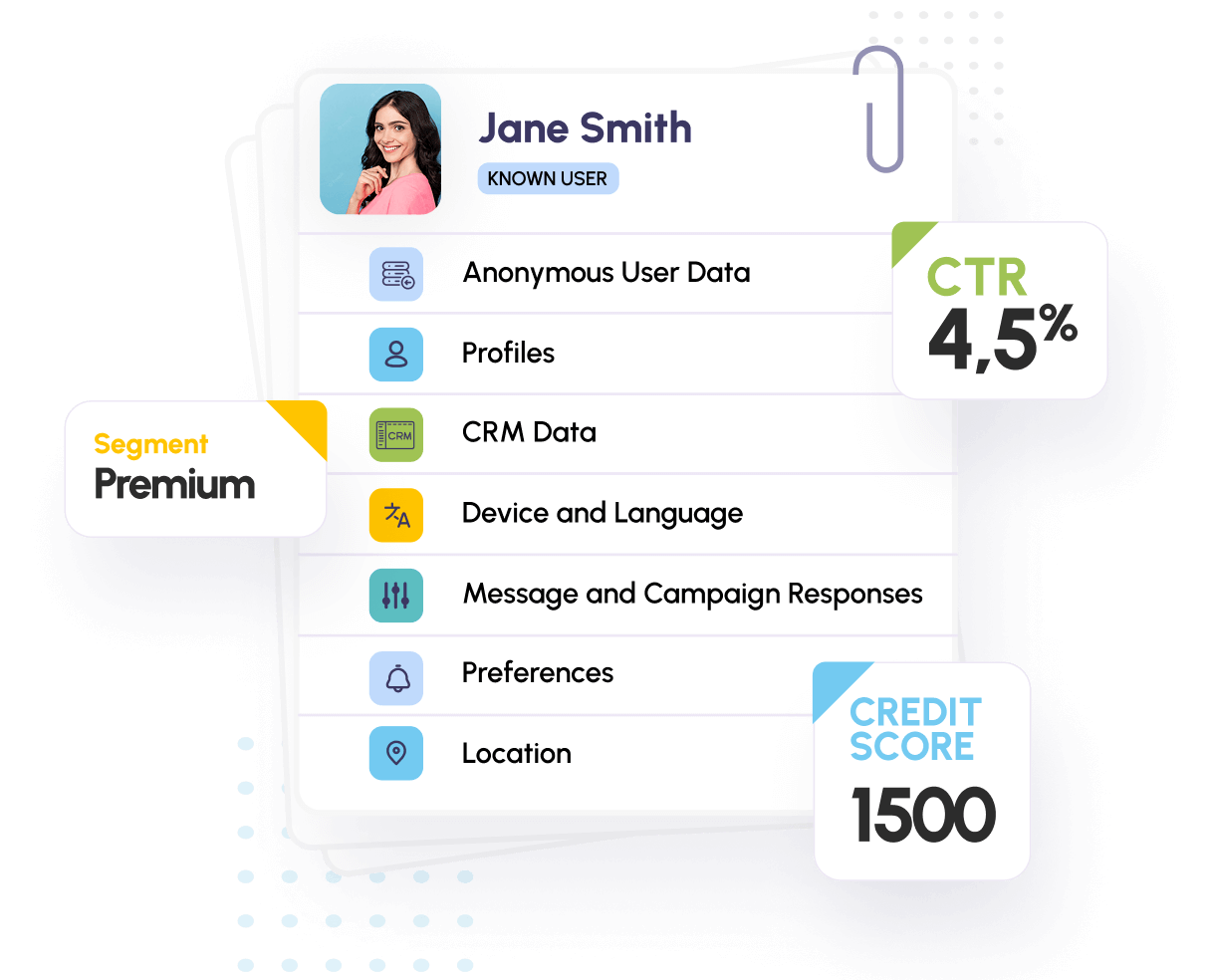
Customer engagement platforms with a built-in CDP, like Netmera, solve this at the infrastructure level. Instead of stitching data together across tools, behavioral events from mobile apps, websites, and offline sources flow into a single profile that updates in real time. That unified view is what makes genuinely personalized campaigns possible across channels, without silos and without waiting on integrations to catch up.
Predictive segmentation: act before the moment passes
Spotify’s prediction engine is proprietary: built in-house, expanded through acquisitions, and maintained by dedicated ML engineering teams. For most B2C brands, that infrastructure is not a realistic investment. Building predictive capability from scratch means data science hiring, model development, and years of behavioral data before the output is reliable enough to act on.
The more practical answer is already inside your customer engagement platform. Netmera’s predictive segmentation analyzes behavioral data collected from your app and website to identify users likely to churn, users approaching a conversion point, and users ready for a product recommendation.
Those segments update as behavior changes, so you are always working from a current picture. Build the segment, define the message, and launch across push, in-app, email, or WhatsApp, all from the same platform. Or connect your AI tool of choice to Netmera via MCP and do all of that with plain language prompts.
Personalization that travels across channels
Wrapped does not live in one place. It appears in the app, on social media, in outdoor advertising, and in artist-to-fan video messages. The personalized data point is the same across every surface; only the format changes.
That kind of cross-channel messaging requires more than good creative. It requires that the underlying customer data is accessible at every touchpoint from a single source.
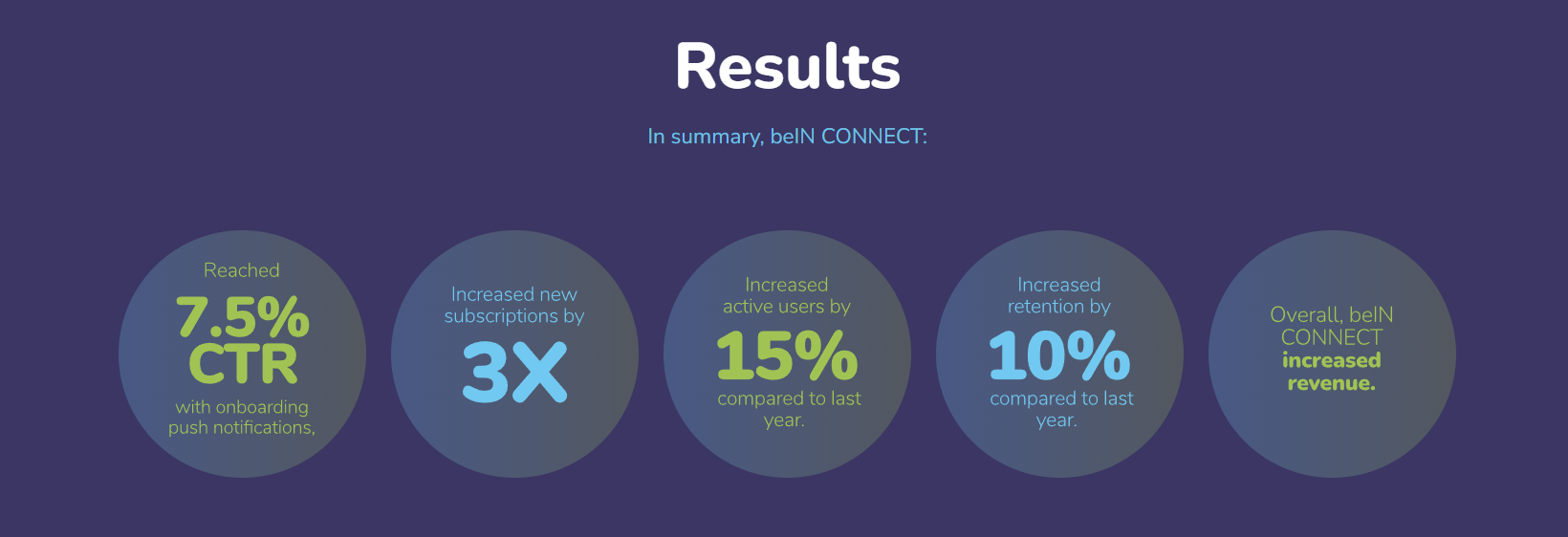
beIN CONNECT, one of Netmera’s customers in the media & entertainment space, applied this principle to a very different retention challenge. Facing churn among subscribers who had signed up primarily for sports content, the team used behavioral segmentation to identify users at risk and served them personalized alternative content recommendations across email, web, and mobile push, all coordinated from Netmera. New subscriptions increased 3x, active users grew 15%, and retention improved 10%. The campaign worked because the data that identified the risk and the tools that acted on it were in the same platform.
See beIN Connect success story.
How the story format drives social sharing
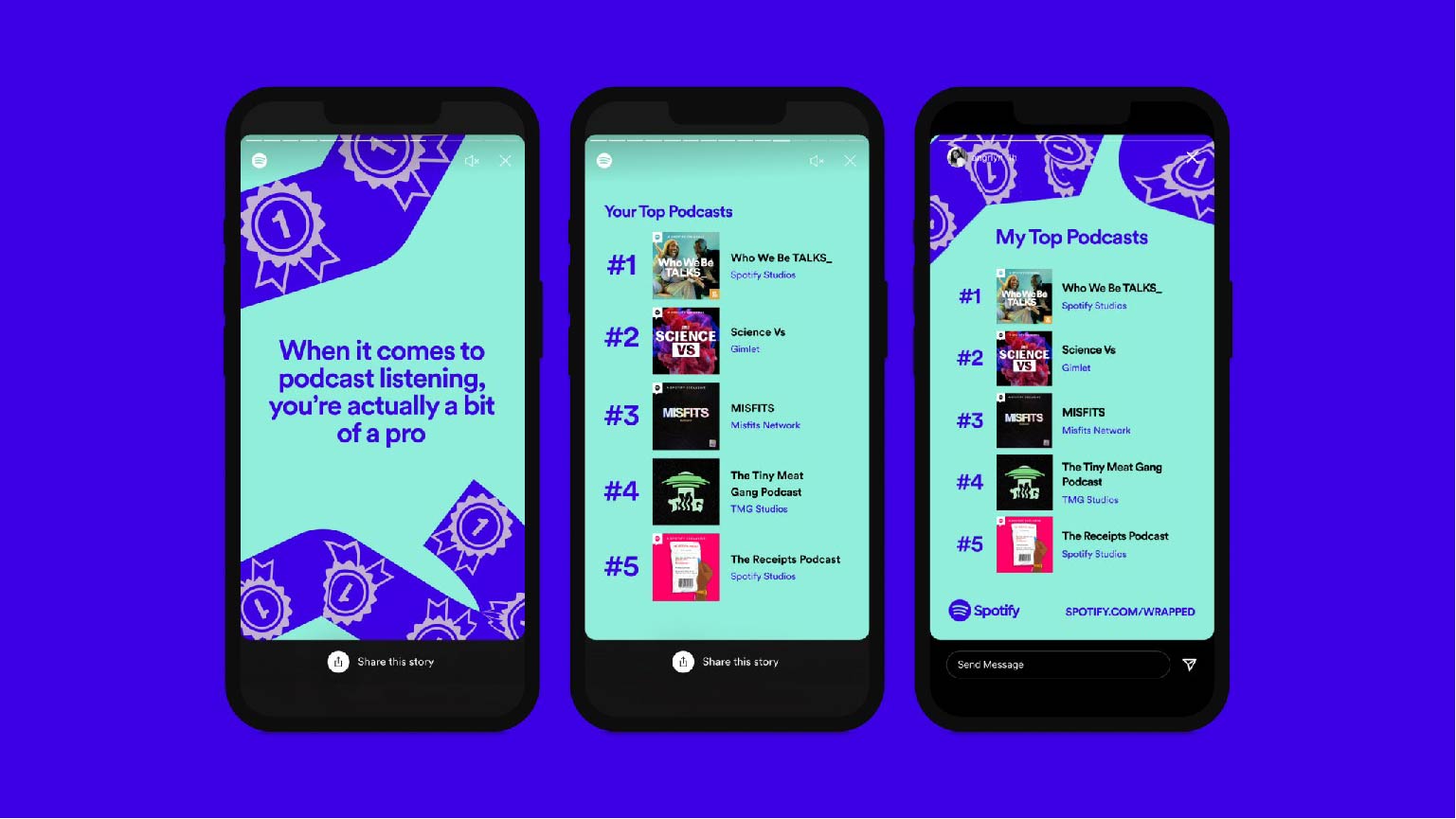
In Wrapped, Spotify presents user data as a sequential story with bold visuals, a clear arc, and a shareable endpoint. Users move through their year like a narrative, and the final card is designed to be posted.
Three mechanics make this work:
Identity expression over brand promotion. The shareable output says something about the user. People post because it reflects who they are.
Zero additional effort from the user. The data was already there. Wrapped just surfaces it in a format worth sharing.
Platform-native sharing with minimal friction. Custom TikTok and Instagram integrations mean the path from “see your stats” to “posted” is a single tap.
This is the social sharing marketing loop that runs itself. Each post reaches people who may never have opened Spotify, creating FOMO that drives new installs and re-engagement among lapsed users.
What brands can learn from Spotify Wrapped
1. Build on behavioral data you already have. Your users are generating signals every session: what they browse, what they skip, how long they stay. A data-driven personalization strategy starts with capturing and unifying that data before you need it for a campaign.
Netmera’s built-in CDP collects behavioral events from mobile apps, websites, and offline sources into a single customer profile that updates in real time, so when you are ready to build a Wrapped-style campaign, the data foundation is already there.
2. Make the experience about the user, not the product. Campaigns that reflect user behavior back at the individual outperform campaigns that broadcast brand messages. Show people their own story and let them decide to share it.
3. Design for a specific sharing moment. Wrapped works partly because it arrives at a culturally loaded time. Year-end reflection is already happening. Brands can find equivalent moments: anniversaries, milestones, loyalty tier upgrades, or seasonal behavior peaks.
4. Reduce friction between the experience and the share. A personalized marketing campaign loses impact when sharing requires extra steps. Deep links, pre-formatted templates, and native channel integrations keep the momentum intact.
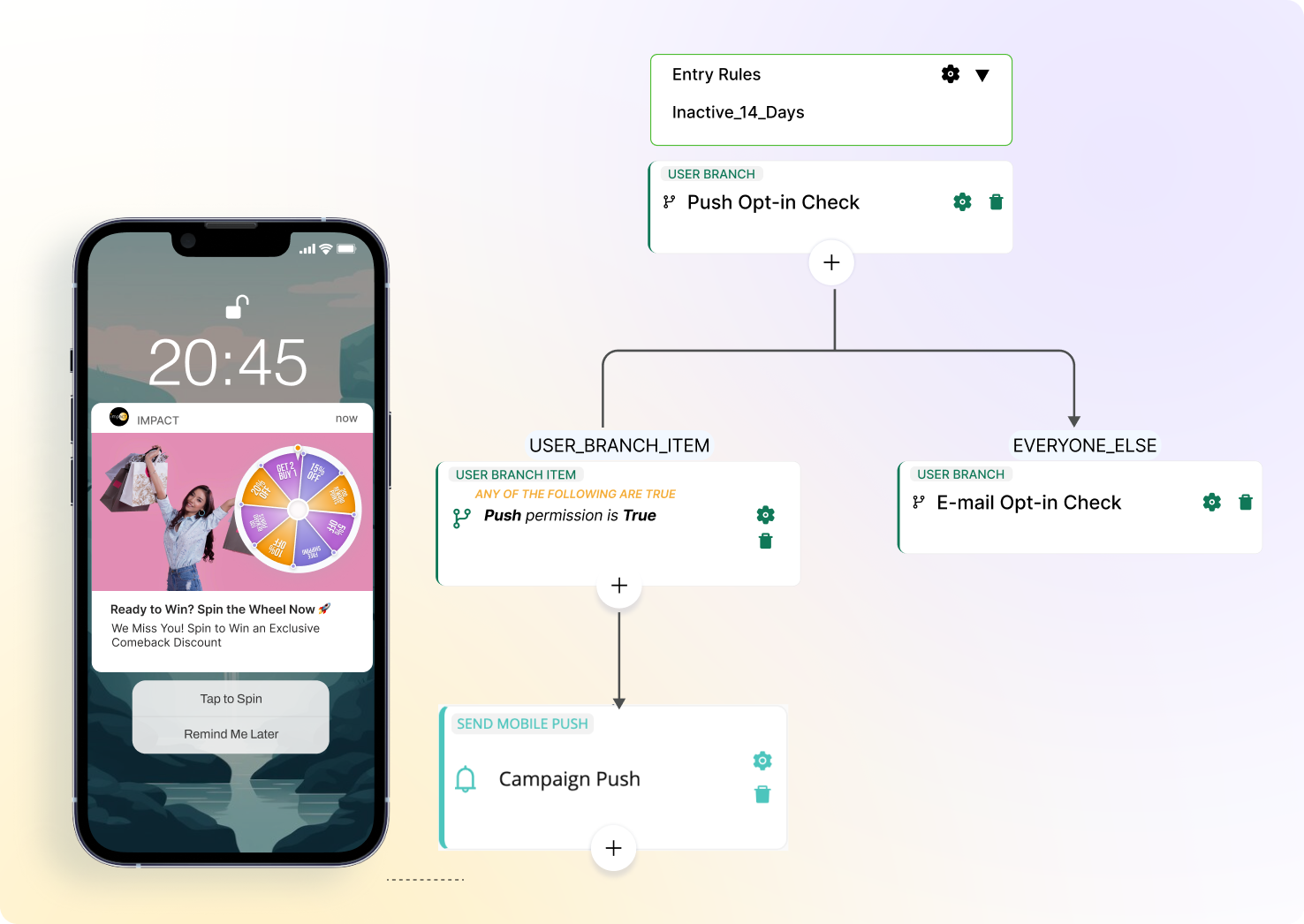
With Netmera, you can coordinate the full sequence across push, in-app, email, WhatsApp, and web from one place, so the experience your user sees is consistent regardless of where they encounter it. Our Journey Builder lets you create and launch omnichannel experiences across all customer touch points, without needing developers.
5. Let consistency compound. Wrapped’s power grew because it showed up every year, without fail, in the same cultural window. Users began anticipating it months in advance. That is what a viral marketing campaign built on repetition earns over time: it stops being something users discover and becomes something they wait for.
How to apply the Spotify Wrapped model with in-app widgets
Wrapped’s core mechanic is a personalized story delivered inside the product at exactly the right moment. That is what Netmera’s in-app story widgets are built for.
Give users their own story
Spotify surfaces behavioral data as a narrative. Brands can do the same. A retail app can show a user their top purchases of the year. A fintech app can recap how much a user saved. A media platform can highlight their most-watched content. The data is already there. The story widget is the format that makes it feel personal.
What Netmera’s Story Widget enables
Sequential, swipeable stories inside your mobile app or website, built through a no-code interface
Rich media support including images, GIFs, and video in each story frame
Behavioral targeting so the story a user sees reflects their actual in-app activity
Interactive buttons that drive the next action, a purchase, a share, a profile completion
Keep it shareable
Wrapped works because the endpoint is designed to leave the app. Build your story widget with a clear final frame: a personalized summary card users can screenshot or share directly. That single design decision turns a contained app engagement campaign into a distribution channel.
The platform requirement
Building this kind of experience requires behavioral data and campaign execution in one place. Netmera collects user behavior, builds the story, and delivers it through the same platform, so the data feeding the experience is always current and the experience itself goes live in hours.
Beyond story widgets: surveys, feedback, and in-app messages
Wrapped succeeds partly because it feels like a two-way moment. Users see their data and feel heard. Brands can extend that dynamic year-round with Netmera’s broader in-app messaging toolkit.
Surveys and feedback forms trigger at high-value moments: after a purchase, after a milestone, after a user completes onboarding. Conditional logic routes satisfied users toward app store reviews and routes detailed feedback internally, so every response goes somewhere useful.
See how beIN Connect & beIN Sports increased their app ratings with Netmera’s feedback widgets.
Gamified widgets like Spin-to-Win create the same earned-reward dynamic that makes Wrapped feel like a payoff. Bi’Talih used this approach and saw a 30% increase in both daily and monthly active users, with retention reaching 70% after 28 days.
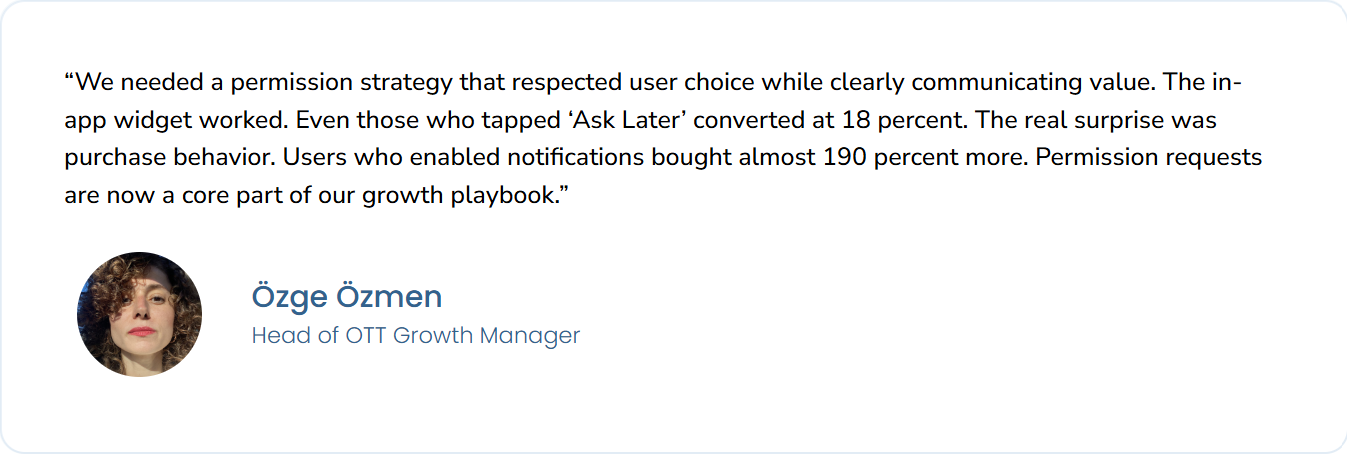
Mobile in-app messages are also one of the most reliable ways to grow push notification opt-ins. TOD, a streaming platform, used Netmera’s in-app widgets to prompt push opt-in at moments when users were already engaged with high-value content. Over 120,000 devices opted in, and users who enabled push notifications drove a 187–190% increase in purchases compared to their pre-opt-in behavior.
The through-line across all of these formats is the same principle Spotify proved at scale: users engage when the experience reflects their behavior back at them. The brands seeing the strongest retention and conversion results treat every session as a data point worth acting on.
What would your users’ “Wrapped moment” look like? Talk to Netmera and we can help you build it.
FAQs: Spotify Wrapped marketing strategy
Spotify Wrapped is a personalized marketing campaign that turns each user’s annual listening data into a shareable story. Released every December, it generates organic reach by giving users a reflection of their own behavior rather than a brand message, which makes sharing feel personal rather than promotional.
Three mechanics drive it: the experience is deeply personal, sharing requires minimal effort, and the release timing aligns with a moment users are already reflecting on their year. Each of these reduces friction between seeing the campaign and sharing it, which compounds reach without paid distribution.
The core lesson is to build campaigns around first-party behavioral data users have already generated. When a campaign reflects what someone actually did, rather than what a brand wants them to hear, engagement follows. Timing, shareability, and consistency across years are the execution factors that make that principle scale.
Spotify analyzes listening history, session frequency, genre shifts, and time-of-day behavior collected directly through product usage. That behavioral data is unified into a single user profile and translated into a personalized story format without requiring any input from the user at the moment of the campaign.
Start with a unified behavioral data layer so you have an accurate picture of each user before the campaign builds. From there, in-app story widgets let you present that data as a personalized, sequential experience inside your app. Platforms like Netmera combine the data collection, story widget creation, and cross-channel delivery in one place, so the campaign reflects current behavior rather than exported snapshots.